



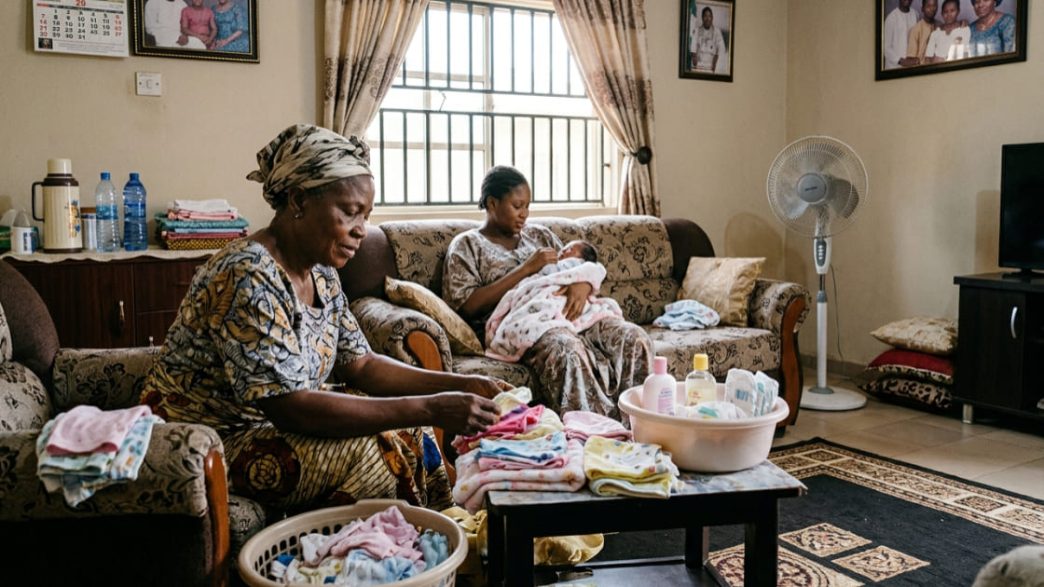
After a baby arrives, many Nigerian families rally around the new mother. They do not expect her to manage recovery, newborn care, cooking and visitors alone. An older woman often joins the household. She may be the mother, mother-in-law, aunt or another trusted relative. Igbo people call this period Omugwo, also written Ọmụgwọ.
People often use Omugwo as a broad label. Yet families do not follow one fixed routine. Community, faith, health, money and family relationships shape the arrangement. A 2026 Guardian overview of Nigerian birth traditions describes Omugwo alongside related Yoruba customs such as Ojojo Omo.
What Omugwo means after childbirth
Omugwo gives the mother, baby and household a period of practical care. The caregiver may stay for several weeks or longer. Some relatives visit during the day. Others share the work in turns. 
The arrangement reduces the physical and mental load of the first weeks after birth. The older caregiver handles much of the cooking, cleaning and household work. She also helps with the baby. That support gives the new mother time to sleep, eat, heal, bond with her baby and regain confidence.
Families often ask the baby’s maternal grandmother to lead Omugwo. However, another woman can take the role when circumstances require it. A mother-in-law may help when the new mother’s own mother cannot come. An aunt, older sister or trusted family friend may also step in.
Family relationships and practical needs shape each arrangement. No single rule governs every Igbo household. Some mothers welcome a long stay. Others prefer visits, shared duties and more privacy.
YOU MIGHT ALSO LIKE: Shadi: The Nigerian Tradition of Beating Men to Prove Their Love
What the caregiver actually does
The caregiver usually starts with the household. She cooks for the new mother and the wider family. She washes clothes, cleans the home and organises meals. She may also fetch water or help manage visitors.
These tasks give the new mother room to focus on herself and the baby. She does not have to return to every domestic responsibility immediately after childbirth.
The caregiver also helps with the baby. She may bathe, dress, soothe, carry and watch the child while the mother sleeps or eats. An experienced grandmother can show the new mother how to hold the baby, change clothes and settle the child.
She may also share advice about feeding, hygiene, rest and family expectations. This guidance can help a first-time mother feel less anxious. It can also help an experienced mother manage the demands of another birth.
Omugwo includes emotional support as well. The older woman listens, offers reassurance and keeps the mother company. She may receive relatives who come to congratulate the family. She can organise food and limit pressure on the new mother during busy visits.
Food, warm water and other routines
Many families treat food as an important part of Omugwo. Depending on the locality and family, the new mother may eat pepper soup, pap, yam, vegetable soups or other familiar dishes. Recipes differ widely. No single dish represents what every Igbo mother eats.
Some families also use warm-water bathing, massage or other body-care routines. These practices can carry deep cultural meaning. However, they do not guarantee medical recovery. Very hot water, forceful massage and unverified herbs can cause harm.
The new mother can refuse anything painful or uncomfortable. The caregiver should also respect advice from a midwife or doctor. Cultural care should support professional postnatal care, not replace it.
The central gift of Omugwo does not come from one recipe or treatment. It comes from having someone take responsibility for the work around the mother. That support keeps her from managing everything alone after birth.
SEE ALSO: 6 Forgotten Nigerian Traditions That Sound Almost Unbelievable Today
A slight Igbo and Yoruba Omugwo comparison
Igbo and Yoruba families share a broad idea about childbirth. A new mother and her baby need support from older women. The two traditions still have different names, histories and local details.
Omugwo is the Igbo term. In many Igbo families, the mother of the new mum leads the care. She stays for a period and teaches her daughter about the early weeks with a baby. She may cook, clean, bathe the baby, receive visitors and offer guidance about motherhood.
Some families mark the end of Omugwo with gifts or a family gathering. Others keep the period private and practical. The length and closing customs vary by family and community.
In Yoruba communities, related postpartum care often appears under names such as Ojojo Omo or Olojojo. Other families use different local expressions. The central work remains familiar. A mother, mother-in-law or another experienced female relative helps the new mother rest, eat, care for the baby and adjust after childbirth.
Some Yoruba families involve both grandmothers. Others rely on one relative or a wider group of women. Food, timing, prayers, bathing practices and family roles can all change from one household to another.
These traditions share a purpose, but they do not form one identical Nigerian ritual. Omugwo remains an Igbo word. People sometimes use it in English as a general label for Nigerian postpartum support. Yoruba families may use their own language and customs to describe a similar kind of care.
Why the tradition still matters
An open-access study of Ọmụgwọ in southeast Nigeria describes the practice as unpaid postpartum caregiving and mentoring. The researchers interviewed older grandmothers about their experiences. Their findings show that Omugwo involves more than household chores.
The practice gives elders an active role in family life. It also transfers knowledge between generations. At the same time, it creates a circle of care around the mother and baby.
Tradition still needs communication. An older caregiver may hold strong views about bathing, feeding or recovery. The new mother may prefer different methods or follow advice from a healthcare professional. Families can respect tradition while allowing the mother to make informed choices about her body and baby.
At its best, Omugwo does not mean that a grandmother takes over motherhood. It creates a temporary family support system. An experienced woman carries the heavier work while the new mother heals, learns and settles into her new role.
Related Yoruba practices express the same belief in their own cultural language. A new mother and baby should receive care, company and practical help. They should not face the early weeks alone.
READ ALSO: From Water Yam Lumps to Caterpillar: 5 Ijebu Foods Many People Have Never Tried

About The Author