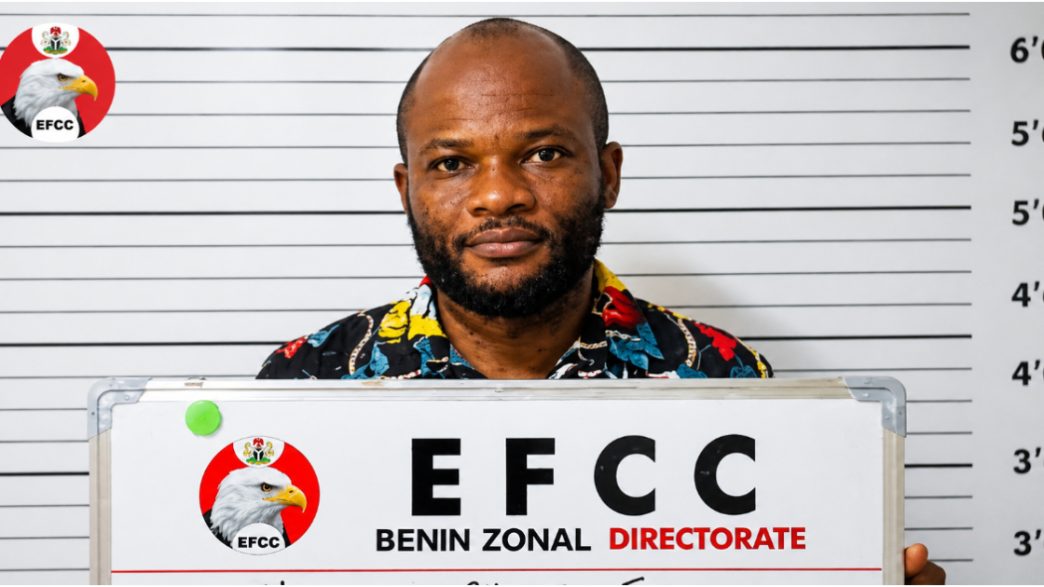
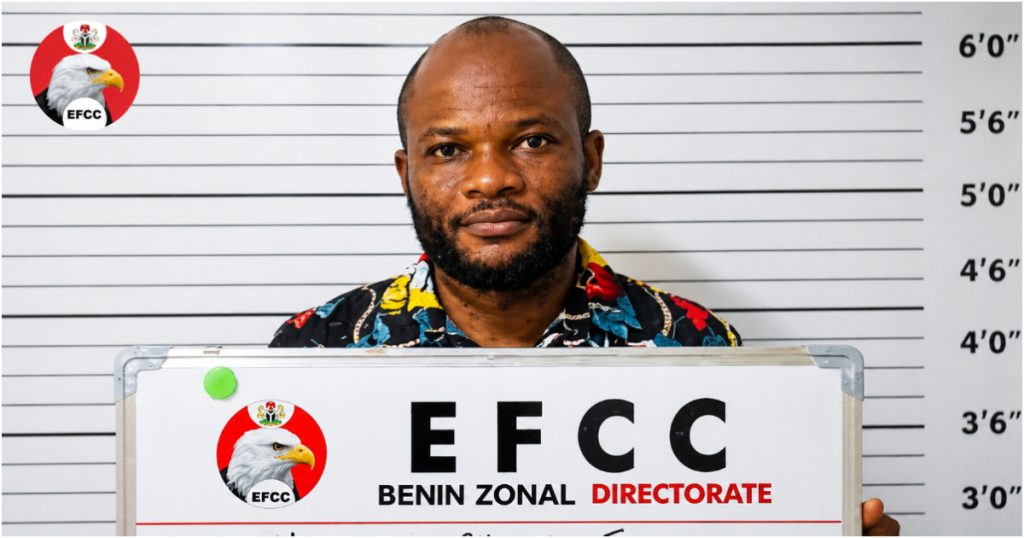
An Edo State High Court has sentenced Chinedu Francis Nwabuisi to two years in prison after he spent N21.9m mistakenly credited to his First Bank account.
Justice Irele Ifijeh handed down the sentence on Tuesday, November 10, 2026, and ordered Nwabuisi to refund the full amount to the bank, according to the Economic and Financial Crimes Commission (EFCC).
Nwabuisi converted a sum of N21,939,237.27 that First Bank erroneously credited to his account after a system glitch. He claimed he believed the money was a benefit linked to operating a POS with the bank. However, the court rejected his defence. 
The anti-graft agency said that the prosecution counsel presented evidence from a senior First Bank official and an EFCC operative. The judge convicted him, ordered full restitution of the amount to First Bank, and sentenced him to two years in prison without the option of a fine.
This conviction landed just weeks after the Central Bank of Nigeria (CBN) issued a clear public warning on the same issue.
SEE ALSO: What to Do If You Accidentally Transfer Money to the Wrong Bank Account in Nigeria
CBN’s Clear Warning on Wrong Credit to Bank Account
In October 2026, during a stakeholders’ meeting under the CBN Listens Programme in Ibadan, the apex bank stated that a customer who fails to refund money wrongly deposited into their account risks between five and ten years’ imprisonment.
As reported by NBG Africa, CBN’s warning in simple terms means that unexpected credits do not become your property or yours to keep. You are expected to report them and return the funds through the proper banking process.
Nwabuisi’s two-year sentence and the order to repay the full amount show the real-world consequence.
What You Should Do If Money is Mistakenly Credited to Your Bank Account
- Do not spend or transfer the money out.
- Contact your bank immediately through official channels and report the credit.
- Cooperate fully with the recovery process. Banks have clear procedures for reversing erroneous transfers when the funds are still available.
- Keep records of every conversation and correspondence with the bank.
- Ignore any stranger who contacts you claiming the money and asking you to send it elsewhere. That is a common follow-up scam.
- If your bank fails to act within the required timelines, you can escalate the matter to the CBN’s Consumer Protection and Financial Inclusion Department.
Money that lands in your account by mistake is not yours to keep.
SEE ALSO: Fake Lawyer Arrested in Ebonyi After 11 Years of Alleged Practice

About The Author