



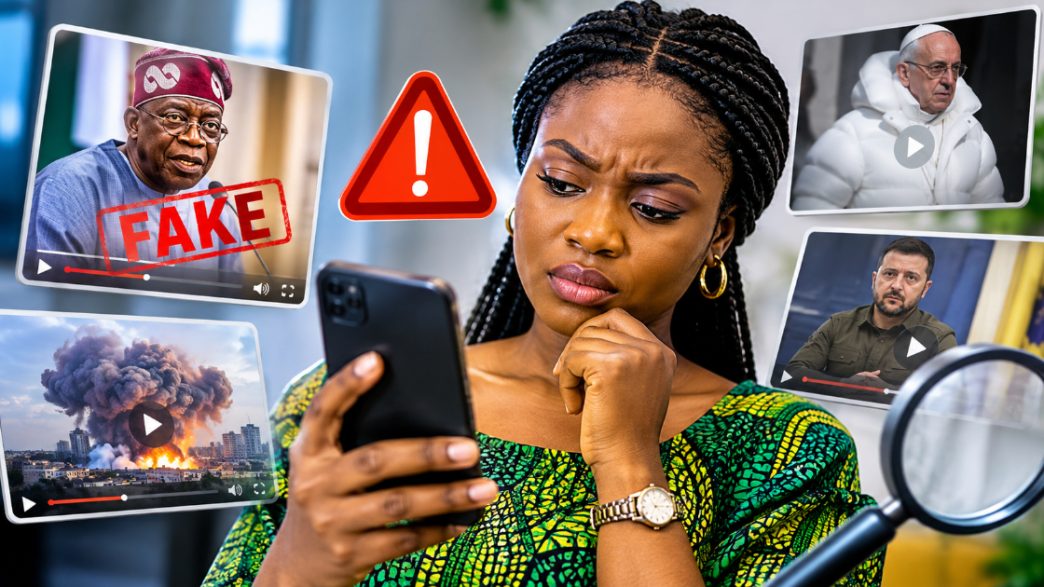
Knowing how to spot fake news has become an essential survival skill, now more so than ever. Because imagine waking up one morning to a video of President Bola Tinubu announcing that every Nigerian will receive ₦200,000 and petrol subsidy is back.
You watch it. His face looks familiar, the voice sounds convincing, and he even appears to be speaking from the presidential villa. And even though some rational part of you knows it most likely is not true because… well, it is out of character for our dear president, IT JUST LOOKS SO REAL.
So you decide to forward it to your family WhatsApp group, or repost it. 
Congratulations. You may have just become an unpaid distributor of premium-grade nonsense.
Welcome to the internet in 2026, where artificial intelligence can manufacture realistic photographs, clone voices and create videos of people saying things they have never said. Meanwhile, old footage can resurface with a fresh caption and convince thousands of people that something happened yesterday.
These days, seeing is no longer believing, and that WhatsApp aunty who always says she has reliable information may need a little supervision.
How to spot fake news: Why fake news has become harder to identify
Fake news is not exactly new. People have lied, exaggerated and invented stories since long before Mark Zuckerberg decided to give everybody a platform.
What has changed is the technology available to people spreading misinformation.
Generative AI tools can now create realistic images, imitate human voices and manipulate videos with relatively little technical knowledge. Deepfakes, in particular, use artificial intelligence to generate or manipulate someone’s face, voice or movements to make it appear that they did or said something they never did.
This has created two major problems.
First, people can manufacture entirely fictional events using convincing images and videos. Second, they can take genuine footage and attach a completely false explanation to it. The second trick is especially effective because the video itself may be authentic. Only the caption is lying through its teeth.
And Nigerians have become an attractive target.
A Premium Times investigation published in October 2026 documented Facebook adverts using deepfakes of Senator Natasha Akpoti-Uduaghan, Peter Obi and Ngozi Okonjo-Iweala to promote fraudulent investment schemes. One fake video featuring Akpoti-Uduaghan promised viewers ₦14 million monthly returns from a one-off ₦430,000 investment.
The problem is not limited to Facebook. A separate Premium Times investigation in July 2026 documented AI-generated TikTok adverts impersonating companies such as OPay and using familiar Nigerian personalities to promote fake grants and giveaways.
So, if a billionaire suddenly appears on your phone promising to make you richer than Dangote himself, remember that the real billionaire probably has better things to do.
SEE ALSO: What to Do If You Accidentally Transfer Money to the Wrong Bank Account in Nigeria
How to spot fake news: Famous deepfakes that fooled people online
If you think these technologies are only useful for making funny celebrity memes, here are a few examples that should encourage you to investigate before forwarding anything.
1. The Pope’s designer jacket
In March 2023, images showing Pope Francis wearing an oversized white puffer jacket went viral. The pontiff looked like he was preparing to attend a fashion show rather than lead the Catholic Church.
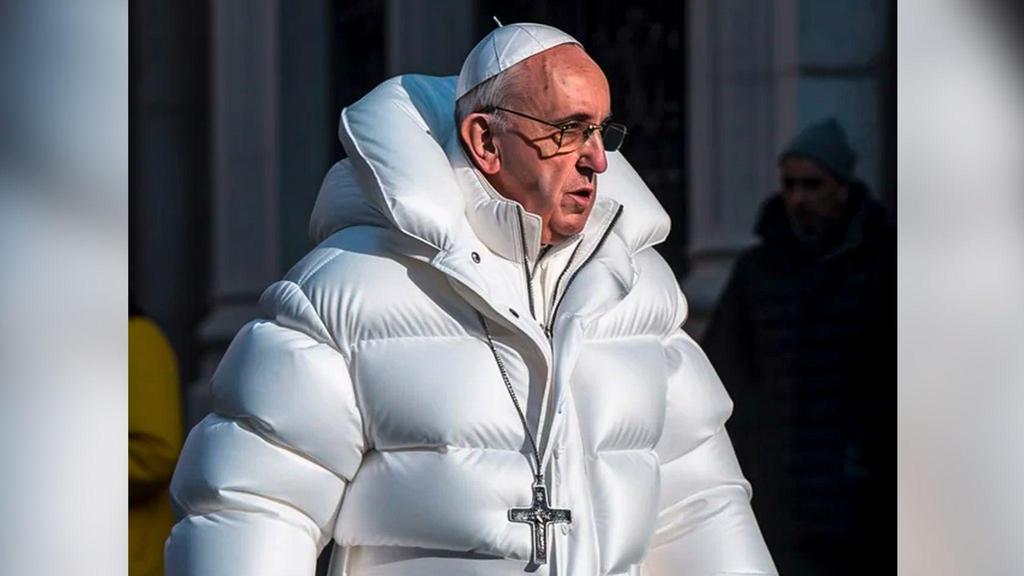
Unfortunately for fashion enthusiasts, the pictures were AI-generated using Midjourney.
The images looked convincing enough to fool plenty of social media users, including people who initially believed they were genuine photographs.
2. The fake video of Volodymyr Zelensky surrendering
In March 2022, a manipulated video appeared online showing Ukrainian President Volodymyr Zelensky supposedly telling his soldiers to surrender to Russian forces. The video surfaced during Russia’s invasion of Ukraine and was even broadcast on a hacked Ukrainian news platform.
It was quickly exposed as a deepfake. Zelensky himself dismissed the video, while Ukrainian authorities warned citizens about the manipulation.
3. The fake Pentagon explosion
In May 2023, an AI-generated image claiming to show an explosion near the Pentagon circulated on social media.
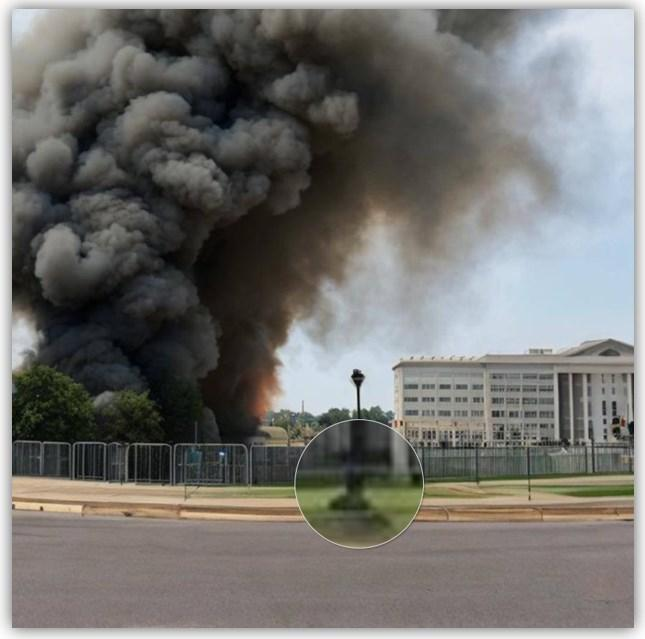
The image attracted attention from major accounts, including a page impersonating Bloomberg’s news feed. It even contributed to a brief dip in the US stock market before authorities confirmed that no such explosion had occurred.
4. Joe Biden’s cloned voice
In January 2024, voters in New Hampshire received robocalls featuring an AI-generated imitation of then-President Joe Biden’s voice.
The calls urged voters not to participate in the state’s presidential primary. The US Federal Communications Commission later imposed a $6 million fine on political consultant Steve Kramer over the illegal robocall scheme.
5. The $25 million deepfake video meeting
In another disturbing example, an employee at engineering firm Arup in Hong Kong attended a video conference in 2024 featuring what appeared to be the company’s chief financial officer and other senior colleagues.
Unfortunately, the colleagues were AI-generated impersonations.
The employee authorised 15 transfers totalling approximately HK$200 million, or about $25 million, after the fraudulent meeting and subsequent instructions. The company later confirmed that criminals had used fake voices and images.
If a fake video meeting can help criminals steal millions of dollars, perhaps that suspicious video of a celebrity begging you to invest in a cryptocurrency deserves more than a casual glance.
ALSO READ: Binance Hack: How $6.36 Billion Breach Exposes Crypto Custody Risks
Nigerian examples: When politicians and billionaires become scam merchants
Nigeria has already experienced its own deepfake problem.
In September 2025, the Advertising Regulatory Council of Nigeria warned about an AI-generated advertisement using President Bola Tinubu’s image to promote a fraudulent investment scheme. The council clarified that Tinubu had not endorsed the investment offer.
The problem continued into 2026. Premium Times documented fake videos featuring prominent Nigerians, including Natasha Akpoti-Uduaghan, Peter Obi and Ngozi Okonjo-Iweala, supposedly endorsing investment platforms.
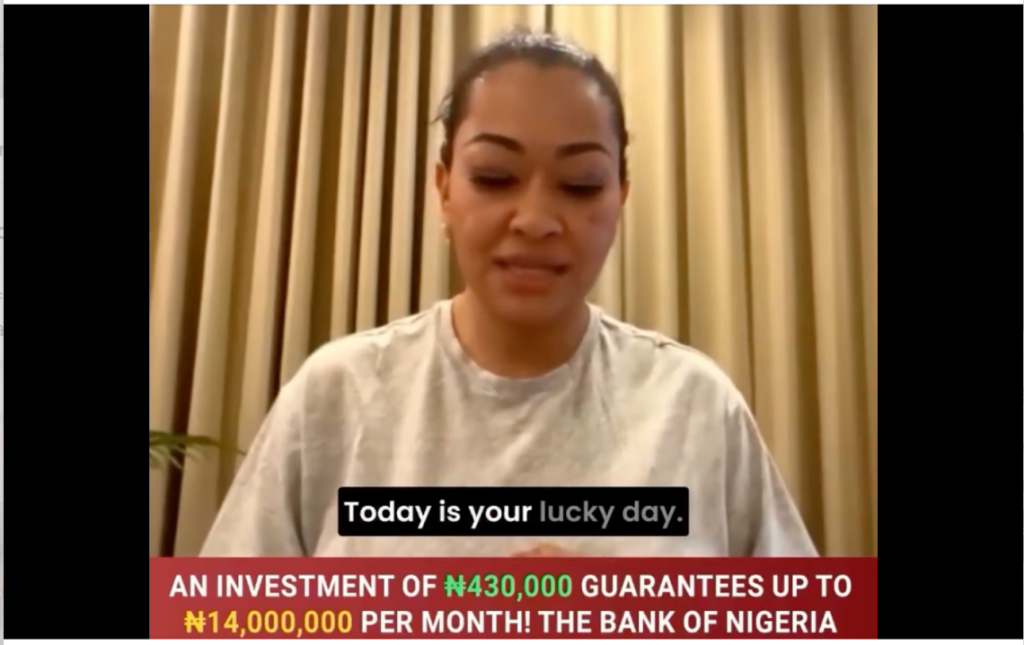
Some videos promised extraordinary returns, while others directed viewers to suspicious websites designed to collect personal information.
These scams exploit something criminals understand very well: Nigerians are more likely to pay attention when a familiar face appears to recommend an opportunity.
But a famous person’s face and voice do not make an investment legitimate. Sometimes they are simply the decorations criminals use to package rubbish.
How to spot fake news and AI-generated videos
There is no magic button that identifies every fake. However, a few simple checks can save you from becoming the family group’s resident misinformation minister.
1. Check who originally posted the video
Before believing a viral clip, investigate the account that first shared it.
Does it belong to a recognised news organisation, eyewitness or official institution? Is it a newly created account that appeared yesterday and has spent its entire existence posting dramatic claims?
Search for the original upload rather than relying on somebody who reposted it with the caption: “This is happening right now!”
2. Look for strange visual details
AI-generated images and videos can contain inconsistencies, including distorted backgrounds, unnatural facial movements, strange reflections and objects that appear to merge into one another.
Pay attention to how the person’s mouth moves when they speak. Does it match the audio? Do their facial expressions look natural? Are their hands, clothing and surroundings consistent throughout the clip?
However, do not rely exclusively on the old trick of counting fingers. Modern AI tools have improved considerably, and some generated images no longer display those obvious errors.
ALSO SEE: 2 AM Emergency in Nigeria: 9 Steps To Prepare for a Midnight Crisis
3. Listen carefully to the audio
AI voice cloning can make somebody sound remarkably similar to a public figure, relative or business associate.
Listen for unnatural pauses, strange pronunciation, inconsistent accents and background sounds that do not match the environment.
But remember that a convincing voice is not proof of authenticity. The Biden robocall demonstrated how easily criminals can imitate a familiar public figure.
If someone important suddenly calls asking you to transfer money or reveal confidential information, verify the request through another trusted channel.
4. Use reverse image search
This is one of the simplest ways to investigate suspicious pictures.
Google Lens, TinEye and other reverse image search tools can help you discover where an image appeared previously.
Upload the picture or take a screenshot from the video and search for matching images. You may discover that the supposedly breaking news photograph actually appeared online five years ago. For video investigations, the InVID-WeVerify browser extension can extract keyframes, allowing you to search individual frames from a clip.
5. Check the location, date and background
A video may be genuine but have absolutely nothing to do with the event described in its caption.
Check visible landmarks, road signs, weather conditions, uniforms, vehicle registration plates and languages. Search distinctive phrases from the caption to see whether the footage appeared online earlier. A video supposedly showing a recent attack in Lagos might turn out to be footage from another country or an entirely different year.
The UK Parliament’s 2026 guide to verifying images and videos highlights the importance of checking original sources, metadata, locations and other independent evidence.
6. Check whether credible news organisations have reported it
If a video supposedly shows the president resigning, a major bank collapsing or a celebrity announcing something extraordinary, search for independent confirmation.
Check established news organisations, official government accounts and recognised fact-checking platforms such as Africa Check, AFP Fact Check and Full Fact.
A story does not automatically become true because 50,000 accounts have shared it. Sometimes 50,000 people are simply wrong together.
How to spot fake news: Useful tools for verifying viral videos
| Tool | What it does |
| Google Lens | Searches for matching images |
| TinEye | Finds earlier appearances of photographs |
| InVID-WeVerify | Extracts video frames for verification |
| Africa Check | Investigates misinformation and scams |
| Dubawa | Fact-checks claims circulating in West Africa |
| AFP Fact Check | Investigates viral claims, photographs and videos |
Remember that AI-detection websites are not infallible. They can mistakenly label genuine material as fake or fail to recognise manipulated content. Treat their findings as clues, not final verdicts.
How to spot fake news: Why Nigerians should be extra careful ahead of 2027
The problem extends beyond fake investment adverts and celebrity endorsements. AI-generated misinformation could become a serious headache during Nigeria’s 2027 general elections.
INEC Chairman Joash Amupitan warned in November 2026 that AI-generated videos, cloned voices and digital manipulation could threaten electoral information integrity.
The potential damage is obvious. Imagine a fake video showing a presidential candidate announcing withdrawal from an election, a cloned voice declaring results or a fabricated INEC announcement claiming that voting has been postponed.
Such content could spread rapidly before the truth catches up. This is why verifying political claims matters just as much as checking suspicious financial offers.
How to spot fake news: Think before you forward
The easiest way to avoid spreading fake news is to slow down.
Do not share a sensational video simply because it confirms what you already believe. Do not transfer money because a familiar face appears to endorse an investment. And do not mistake thousands of shares for proof that a story is accurate.
Ask three questions: Who originally published this? Can I establish when and where the footage was recorded? Has another credible source confirmed the claim?
If you cannot answer those questions, leave the forward button alone.
The internet is already crowded enough with fabricated scandals, recycled disasters and AI-generated politicians doing things they would probably deny under oath.
You do not have to contribute to the madness.
READ ALSO: DO NOT Share These 7 Things With ChatGPT, Gemini and Other AI Tools!!!

About The Author