



Picture this scenario: you snap a photo of your lab results and paste it into Gemini because the medical jargon makes no sense. Seconds later, you get a calm, plain-English explanation telling you exactly what the result means, and you sigh in relief.
Well, if I were you, I wouldn’t be giving that testimony just yet, because that image also carries your full name, date of birth and the hospital that treated you. Which means you might have just exposed yourself to something worse than whatever ailment you just dodged.
Millions of people make this trade every day, and it is why knowing things you should not share with ChatGPT and other AI tools has become a basic digital skill. 
Nigeria’s National Information Technology Development Agency (NITDA), through its CERRT.NG team, recently issued an advisory (NITDA-0926-003). It urged people to be careful about feeding sensitive data to ChatGPT, Gemini, Claude, Copilot and Meta AI.
Why your AI chats may not stay private
A chatbot often feels like a private conversation, a personal Alfred to your Batman. Every little thing that ails or troubles you, your chatbot is the first to know about it, even before the love of your life. You probably would have even married Sheila by now (of course you named it), except she’s not real; just a software run by a company.
And yes, these companies always preach and extol privacy, but in reality they may keep, log or use what you enter, especially to train their chat models. Exposing personal data this way to such organisations could amount to a data breach.
Real incidents show the risk. In 2025, OpenAI pulled a feature that let shared ChatGPT conversations show up in Google results. Fast Company had found more than 4,500 indexed links, some containing names, resumes and confidential work content. OpenAI’s CEO, Sam Altman, has also noted that chats with ChatGPT lack the legal confidentiality of talks with a doctor or lawyer.
An Ohio Attorney General consumer notice adds that, unless you opt out, your conversations may be stored and analysed, and that AI platforms can be hit by breaches like any other company.
Be security conscious: Things you should not share with ChatGPT
None of this means you should abandon AI. It means being selective. Here are seven things you should not share with ChatGPT and to keep out of your prompts.
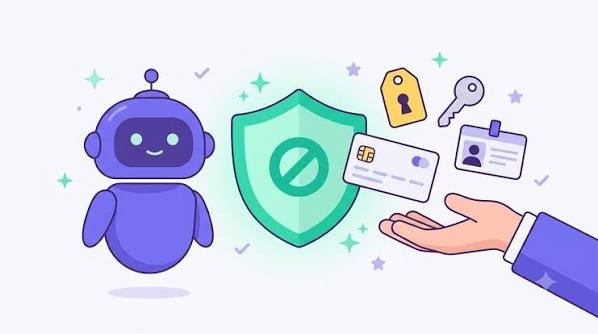
1. NIN, BVN and bank or card details
These details are the keys to your identity and your money. In the wrong hands, they can fuel identity theft, impersonation and fraud.
The danger is often accidental. You upload a bank statement to “analyse your spending” or photograph a form with your NIN visible in the corner.
Do this instead: Black out your name, account number and ID numbers before uploading anything. Ask general questions, such as “how do I budget on ₦300,000 a month?”, instead of handing over the statement.
READ: The Scholarship May Be Fully Funded, But Chasing It Is Not Always Free
2. Passwords, PINs and one-time codes
This is the item many people forget, yet it is one of the (if not the) most important of the things you should not share with ChatGPT.
A password or OTP pasted into a chat is a key left on the table. If your account is breached, if you share the chat, or if the tool is tricked by malicious web content, that key could be exposed.
NITDA has previously warned about prompt-injection flaws reported in GPT-4o and GPT-5. Attackers could hide instructions in web pages to manipulate a chatbot and even affect what it remembers.
Do this instead: Use a password manager. If you want advice, ask “how do I create a strong password?” without sharing a real one. No legitimate service will ever ask you to send an OTP to a chatbot.
3. Medical records and test results
A medical report holds far more than the result you want explained. It can include your name, birth date, hospital, medications and diagnoses, all of which are deeply personal.
A chatbot can give a helpful general explanation, but it does not have your full clinical picture and can be wrong.
Do this instead: Remove your name and identifying details first, treat the answer as background reading, and take medical decisions to a qualified doctor.
4. Personal photographs
Uploading a photo to fix the lighting or swap the background feels harmless. But a picture can reveal your home, workplace, school or location, and people who never agreed to be uploaded.
Photos of children deserve extra caution, as images can be misused for impersonation, bullying or exploitation.
Do this instead: Ask whether the image needs to go online at all. Crop out bystanders, children, street signs and house numbers.
5. Private details about family, friends and colleagues
You paste a heated WhatsApp thread and ask the AI to help you reply. In doing so, you may have shared your partner’s full name, phone number and the details of an argument.
The same applies when you describe a problem with your child and mention their school, age and location.
Do this instead: Use placeholders. Write “my 12-year-old daughter” or “Person A” instead of real names, and delete phone numbers before pasting.
READ: How to Authenticate Nigerian Certificates Online: Step-by-Step Guide
6. Confidential work documents and code
Summarising a report or debugging a spreadsheet with AI is tempting, but work files often hold customer data, contracts, financial records, internal plans and passwords.
This risk has already played out. Samsung restricted staff use of ChatGPT in 2023 after engineers were reported to have pasted internal source code into it. NITDA now advises staff to use only organisation-approved AI tools for official work.
Do this instead: Check your employer’s AI policy first. If there isn’t one, assume the answer is no for anything confidential.
7. Secrets, confessions and anything you would not want public
Many people now use chatbots as a diary or a therapist, pouring out secrets, regrets and things they would never tell a friend. However, unlike a counsellor or lawyer, an AI service offers no legal confidentiality. Chats can also be exposed through shared links, and deleting a chat does not necessarily delete a link you already shared.
Do this instead: Use the “would I be comfortable if this appeared on a billboard?” test. If not, keep it to yourself or take it to a trusted person or professional.
How to keep using AI safely
On the things you should not share with ChatGPT, a few habits go a long way:
- Redact first. Remove anything the AI does not need to do the job.
- Check your settings. Look for options such as ChatGPT’s “Improve the model for everyone” toggle under Data Controls, or Gemini Apps Activity in your Google account. Menu names change, so review them periodically.
- Audit shared links. Delete any conversation links you no longer want live.
- Stay current. Privacy features change often, so recheck what your tool of choice does with your data.
The rule of thumb is simple: an AI does not need your NIN to rewrite an email, your BVN to build a budget, or your child’s name to help with a parenting dilemma. When in doubt, leave it out.
READ: The October Reset: 7 Simple Habits to Help Nigerians Finish 2026 Strong

About The Author