


Nigeria’s presidential and National Assembly elections hold on January 16, 2027, with governorship and state assembly polls following on February 6. Between now and then, you’ll hear the same political terms on the radio, on TV and in your family WhatsApp group. Some of these political terms sound simple until someone asks what they actually mean.
Here are 15 political terms from campaign talks to courtrooms.
1. Stomach Infrastructure
“Stomach infrastructure” is used by politicians for meeting voters’ immediate needs with food, cash, clothing, household items or other gifts instead of persuading them with policies and ideas. It is not a legal term. The important question is whether a gift is ordinary campaign outreach or an inducement intended to influence how someone votes. When a candidate offers money or gifts in exchange for electoral support, the act can become vote buying. 
2. Zoning
Zoning means sharing political offices among Nigeria’s regions, states or groups, so the presidency moves between the North and the South. Parties have used the arrangement since the return to civilian rule. Still, the Constitution does not recognise zoning, so it remains a political arrangement rather than a legal right.
A party may use zoning to guide its choice of candidate, but the arrangement cannot override the Constitution or stop a qualified person from contesting under the law.
3. Godfatherism
Godfatherism describes a political relationship in which a powerful sponsor helps a candidate secure office and later expects influence over appointments, contracts, policies or political decisions. People often call the candidate using “godson” or “god-daughter” in political terms.
The arrangement may appear stable while both sides benefit. Trouble usually starts when the elected office-holder wants to govern independently or refuses to follow the sponsor’s instructions.
4. Party Defection
Party defection, also called decamping or cross-carpeting, means leaving one political party to join another. For a lawmaker, the move can have constitutional consequences. Sections 68 and 109 of the Constitution provide that a member of the National Assembly or a State House of Assembly may lose their seat if they join another party before the end of the legislative term.
There are exceptions. The Constitution recognises situations involving a division within the original party or a merger involving parties or factions. However, not every disagreement or factional quarrel automatically satisfies that exception. Courts have said the division must be serious enough to affect the party’s ability to function.
The rule applies to legislators. The Constitution does not treat the defection of governors or the President in exactly the same way.
YOU MIGHT ALSO LIKE: 5 Governors Who Left PDP in 2025
5. Running Mate
A running mate is the person who contests alongside a presidential or governorship candidate on the same ticket. For a presidential candidate, Section 142 of the Constitution requires the nomination of an associate from the same political party to occupy the office of Vice-President. Section 187 contains a similar requirement for a governorship candidate and a Deputy Governor.
That means a running mate is not an optional campaign accessory. For these offices, the ticket is constitutionally structured around the principal candidate and the associate candidate.
6. Consensus Candidate
Consensus candidate is not very common like other political terms. A political party chooses a consensus candidate when it agrees on one aspirant without holding a contested primary. The word “consensus” can sound simple, but the Electoral Act 2026 sets conditions for using it.
A party must obtain the written consent of all cleared aspirants, showing that they voluntarily withdrew and endorsed the agreed candidate. If the party cannot secure the written consent of all cleared aspirants, it must hold a direct primary. A special convention or nomination congress must also ratify the consensus choice.
7. Direct Primary
A direct primary is a party nomination contest in which eligible registered party members vote directly for the aspirant they want to represent the party. This is different from an indirect primary, where a smaller group of delegates chooses the candidate on behalf of party members.
Under the Electoral Act 2026, parties may nominate candidates through direct primaries or consensus. The former indirect, delegate-based method is no longer one of the listed options under the new law.
8. BVAS
BVAS means Bimodal Voter Accreditation System. Election officials use it to verify a voter’s identity before the person receives a ballot paper. Under Section 47 of the Electoral Act 2026, the presiding officer must use BVAS or another technology prescribed by INEC for voter accreditation.
If the device fails and officials cannot deploy a replacement, the law requires INEC to cancel the election in that polling unit. INEC must schedule a fresh election within 24 hours only if the Commission decides that the result from the affected unit could substantially affect the overall result in the constituency.
9. IReV and Form EC8A
Officials complete Form EC8A at the polling unit after counting the votes. The presiding officer signs and stamps it, while candidates or their polling agents may countersign it if they are present.
The presiding officer then transmits the result electronically to the INEC Result Viewing Portal, commonly called IReV. IReV allows the public to view polling-unit result sheets. It is not the same thing as BVAS: officials use BVAS mainly for voter accreditation, while IReV displays election results.
If communication failure makes electronic transmission impossible, the Electoral Act 2026 treats the signed and stamped Form EC8A as the primary source for collation and declaration.
ALSO SEE: Before You Forward That Election Voice Note, Check These Five Things to Avoid Fake News
10. Vote Buying
Vote buying happens when someone offers money, gifts or another benefit to influence a person’s vote. Vote selling is the other side of the same transaction.
It may happen openly at a campaign event, near a polling unit or through transfers, food and other material inducements. A promise of future employment or a public benefit can also raise questions about undue influence, depending on the facts.
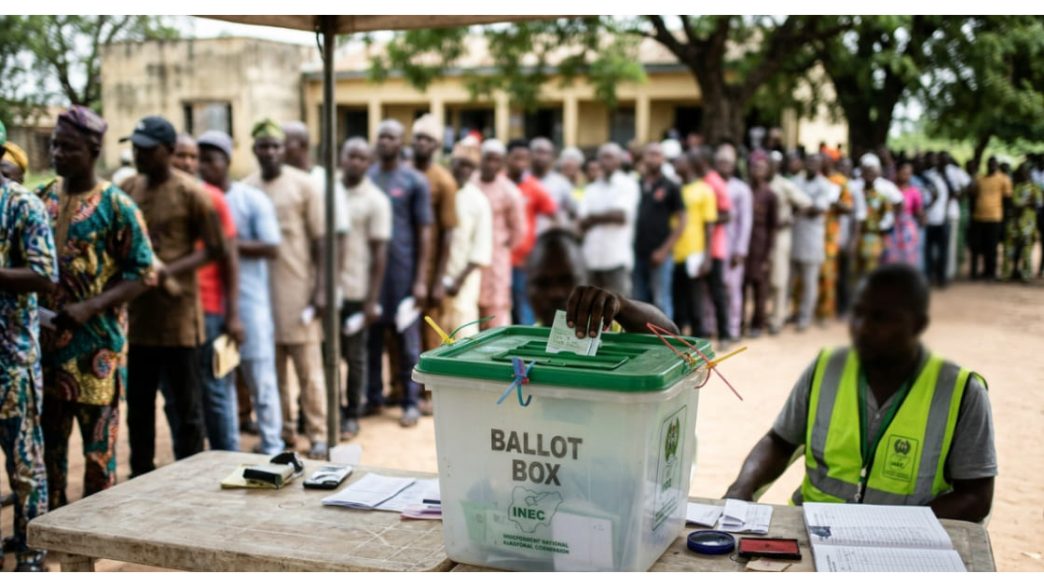
Under the Electoral Act 2026, it reportedly carries a two-year prison term or a fine of ₦500,000 to ₦2 million. So that ₦5,000 at the polling unit isn’t free money.
11. The 25 Per Cent Rule
Winning the presidency requires more than receiving the highest number of votes. Under Section 134 of the Constitution, a candidate must have the highest number of votes and not less than one-quarter of the votes cast in at least two-thirds of all the states and the Federal Capital Territory.
If no candidate satisfies the constitutional conditions, the Constitution provides for another election between qualifying candidates. The wording of the provision, especially the role of the FCT, has generated legal arguments after past presidential elections, so it is likely to return to public debate in 2027.
12. Inconclusive Election
INEC may describe an election as inconclusive when officials cannot declare a final winner because they cancelled or could not complete voting in units where the outstanding votes could change the result.
In simple terms, if the number of affected or cancelled votes is larger than the leading candidate’s margin, officials may need to complete voting before INEC can declare a winner. “Inconclusive” does not mean that the entire election has failed or that voters across the whole state must return to the polls. It usually points to specific polling units or areas where another vote is necessary.
13. Supplementary Election
INEC holds a supplementary election in affected polling units after officials cancel or disrupt voting, or fail to hold it as planned. It normally covers only the units involved, not every polling unit in the state or constituency.
Once officials count the supplementary votes, they add them to the earlier results before INEC makes the final declaration.
14. Rerun
A rerun is a fresh contest that follows a court or tribunal decision to nullify an election, set it aside or require officials to conduct it again in a particular area.
People often use “rerun” and “supplementary election” interchangeably, but they do not always describe the same process. A supplementary election usually completes an unfinished poll. A rerun usually follows a legal decision or another formal decision requiring officials to hold the contest again.
15. Election Tribunal
An election tribunal is a special judicial panel that hears petitions challenging governorship and National or State House of Assembly election results.
A presidential election petition begins at the Court of Appeal, which has original jurisdiction over presidential election disputes. Candidates or political parties generally must file election petitions within 21 days of the declaration of results, and the tribunal or court must deliver judgment within the constitutional time limit.
Filing a petition does not automatically remove the person INEC declared winner from office. The winner remains in office while the legal process continues, subject to the outcome of the case and any appeal.
READ ALSO: 8 Major Changes in the Nigerian Electoral Act 2026 You Should Know Before Voting
These political terms will be used a lot during the election period. Stay informed by understanding their meanings.

About The Author