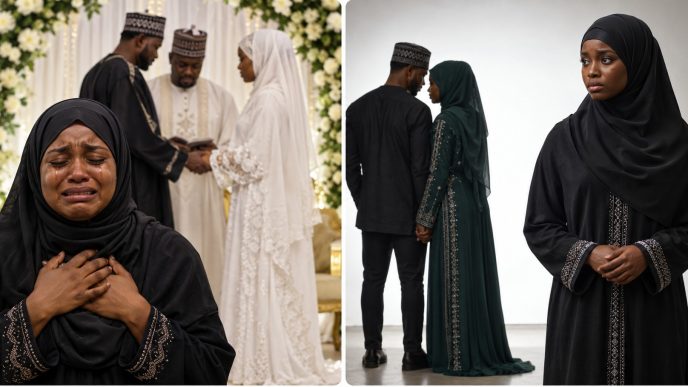
Ask around at any owambe and someone will tell you, “If the first wife agrees, there’s no problem.” Under Nigerian law, that is only sometimes true. Whether a man can legally take a second wife depends on one question: what kind of marriage does he already have?
Nigeria recognises three types. A statutory marriage happens at a registry or a licensed church under the Marriage Act. Customary marriage is the traditional rite between two families. Then there is Islamic marriage, the nikah. Each comes with its own rules.
1. Statutory marriage under the Marriage Act
A registry or licensed place may celebrate a statutory marriage under the Marriage Act. It cannot end except by “a valid judgment of divorce.” A later marriage before dissolution may amount to bigamy.
Section 33(1) addresses a prior customary marriage. It refers to a party “married under customary law to any person other than the person with whom such marriage is had.” A statutory marriage to that same customary wife can be a “double-decker” marriage. The Act sets five years under section 46 for marrying another woman. 
Section 35 bars a person married under the Act from contracting a valid customary marriage. It calls that person “incapable, during the continuance of such marriage, of contracting a valid marriage under customary law.” Section 47 sets five years. Sections 39 and 45 cover known married persons and void ceremonies. First-wife agreement cannot remove those bars.
Under section 3(1)(a) of the Matrimonial Causes Act, a later marriage fails when one party is “lawfully married to some other person.” Remarriage requires a decree absolute. Separation or a religious ceremony does not end a statutory marriage.

2. Customary-law marriage
Nigeria has no single customary-marriage code. Communities set rules for capacity, consent, family involvement, bride-price and handing-over. Customary marriages are generally potentially polygamous. A man may take another wife, subject to custom and evidence.
The applicable custom decides whether the first wife receives notice or gives consent. One community may require participation; another may not. The proposed wife’s consent and capacity are separate. Section 18 requires a parent or guardian, not the first wife to consent when a statutory party is under 21, unless widowed.
ALSO SEE: Jarvis Threatens to Sue Peller Over Alleged Second-Wife Plan
3. Islamic-law marriage
The constitution does not itself grant a blanket right to multiple wives. Section 38(1) protects religion. It begins: “Every person shall be entitled to freedom of thought, conscience and religion,” including practice and observance.
The constitution also protects privacy. Its section 37 protects “the privacy of citizens, their homes, correspondence, telephone conversations and telegraphic communications.” Section 42(1) bars discrimination based on sex or religion. It says a citizen “shall not, by reason only that he is such a person” face the specified restrictions.
These rights do not create automatic permission to marry multiple wives. Section 277(2)(a) covers “any question of Islamic personal Law regarding a marriage concluded in accordance with that Law,” including validity or dissolution.
Islamic marriage follows personal-law rules, not the Marriage Act. Where Islamic personal law governs, in many interpretations, a Muslim man may marry up to four wives without first-wife consent for a later nikah. The new wife still needs consent, capacity, offer and acceptance, mahr, witnesses and guardianship under the applicable rules.
Two Court of Appeal decisions complicate the debate. Both arose from succession or jurisdiction disputes. In Mohammed v Mohammed (2024) and Adekunle v Ahmad (2025), the court treated Islamic law as distinct from customary law and recognised Islamic-law marriage and succession claims despite a subsisting Marriage Act marriage. These decisions materially complicate the statutory analysis. They do not grant a blanket licence or make a religious label an automatic workaround.
Before Anyone Says ‘I Do’ Again
If you are about to become, or take, a second wife, first find out what kind of marriage already exists. Ask to see the certificate or proof of the traditional or Islamic rites. Where there was a divorce, confirm that it became final.
This article is general information, not legal advice. Anyone facing a real dispute should speak to a qualified Nigerian lawyer.
READ ALSO: Mohbad: ‘DNA Is Not Recognised’ – Lawyer Explains How Nigerian Law Determines a Child’s Father

About The Author