


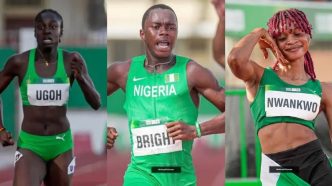
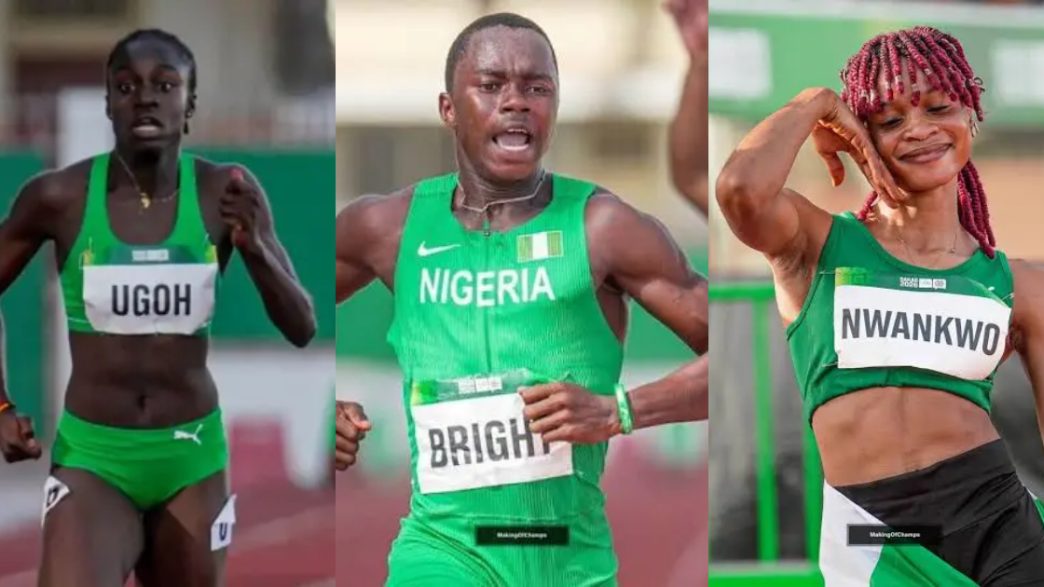
Nigeria’s rising stars at Dakar 2026 are giving the country plenty of reasons to smile, which is a welcome reprieve, because the country has spent plenty of time giving its sports fans reasons to pull their hair out. Between disappointing international campaigns, administrative wahala and the seemingly endless search for the next generation of sporting heroes, patience has become an unofficial requirement for supporting Nigerian sports.
But, as mentioned, something rather interesting is happening in Dakar, Senegal.
A group of Nigerian teenagers have turned the 2026 Youth Olympic Games into their personal audition, delivering record-breaking performances, historic victories and enough excitement to remind Nigerians that the country’s sporting future might not be as gloomy as it sometimes appears. 
From a 15-year-old sprinter who is already rewriting records to a 16-year-old quarter-miler making history, Nigeria’s rising stars at Dakar 2026 are providing a refreshing reminder that sporting talent in the country has hardly disappeared.
And the interesting part? Some of these youngsters are only getting started.
Nigeria’s Rising Stars at Dakar 2026: 5 Young Athletes Making History
Gift Bright: The schoolboy who became Nigeria’s sprint sensation
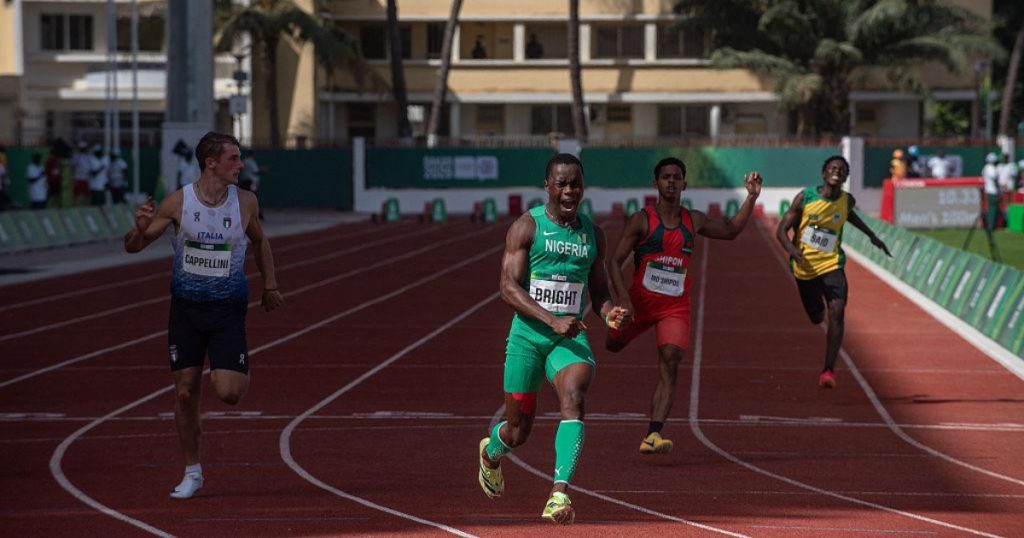
At 15, Gift Bright has already achieved something Nigerian athletics has waited years to celebrate: winning the men’s 100m title at the Youth Olympic Games.
Bright stormed to victory in 10.28 seconds, setting a new Games record and becoming the first Nigerian male athlete to win the event at the competition. He finished ahead of China’s Zhang Hangyu, who clocked 10.57 seconds, and Poland’s Szymon Dolega, who settled for bronze in 10.61 seconds.
SEE ALSO: 5 Historic Moments Burna Boy Took Afrobeats to Global Stages
However, Bright’s journey to international recognition did not begin in some sophisticated athletics academy with expensive equipment and an army of sports scientists.
A school relay race at Osadenis Mixed Secondary School in Asaba, Delta State, did the trick.
Coach Terry Irivieda spotted his talent during the competition and invited him to train. Bright subsequently won the boys’ 200m at the 2024 National Youth Games, representing Delta State, in 22.35 seconds.
His rise has not been entirely smooth, either. The teenager reportedly struggled with a thigh injury in the weeks before Dakar, making his eventual victory even sweeter.
Now, with a Games record under his belt, Bright has given Nigerian athletics another name worth following.
Rosemary Nwankwo: Nigeria’s sprint queen completes historic double
If Bright supplied the fireworks in the men’s race, Rosemary Chigozie Nwankwo made sure the women did not miss out on the celebration.
The 17-year-old won the women’s 100m gold in 11.16 seconds, completing a remarkable Nigerian sprint double in Dakar. She finished ahead of the United Arab Emirates’ Arwa Ali, who clocked 11.41 seconds, while Qatar’s Dana Salem took bronze in 11.48 seconds.
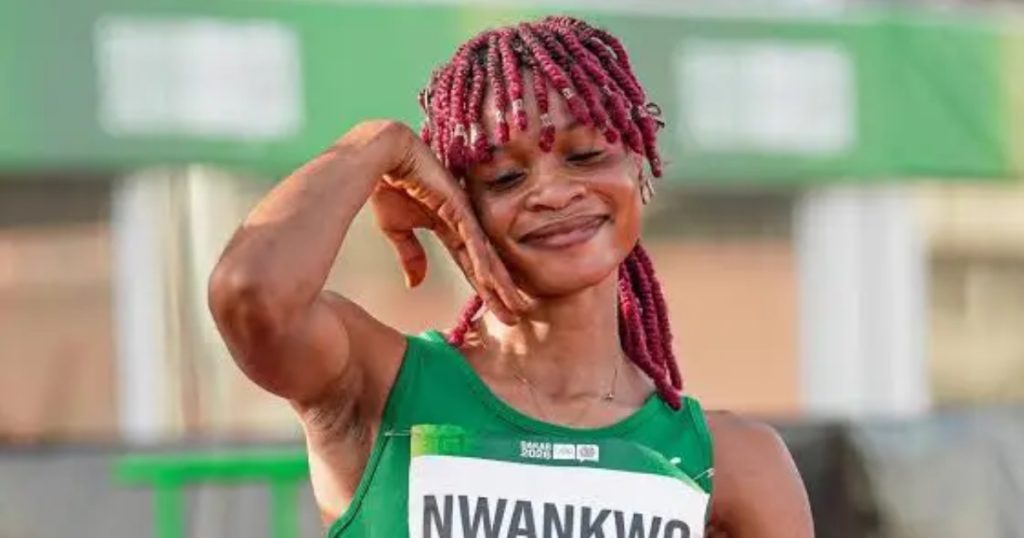
Nwankwo’s triumph also continued a Nigerian tradition in the event. Josephine Omaka won the inaugural Youth Olympic women’s 100m title in Singapore in 2010, while Rosemary Chukwuma repeated the feat in Buenos Aires in 2018.
There is another interesting detail about Nwankwo’s performance. Her winning time came with a wind reading of +2.4 metres per second, above the permitted +2.0m/s limit for record purposes. That technicality does not take away her gold medal, though.
More importantly, Nigeria became the first country to win both the men’s and women’s 100m titles at the same edition of the Youth Olympic Games.
Not a bad weekend’s work for two teenagers.
Praise Ugoh: The 16-year-old making Nigerian 400m history
While Bright and Nwankwo dominated the shorter sprints, Praise Ugoh provided another reason for Nigerians to celebrate.
The 16-year-old won the women’s 400m gold medal on November 9, becoming Nigeria’s first-ever female 400m champion at the Youth Olympic Games. Ugoh clocked a personal-best 52.76 seconds, narrowly beating Venezuela’s Osmary Pacheco, who finished in 52.85 seconds. Aisha Muhammed of the UAE took bronze in 53.06 seconds.
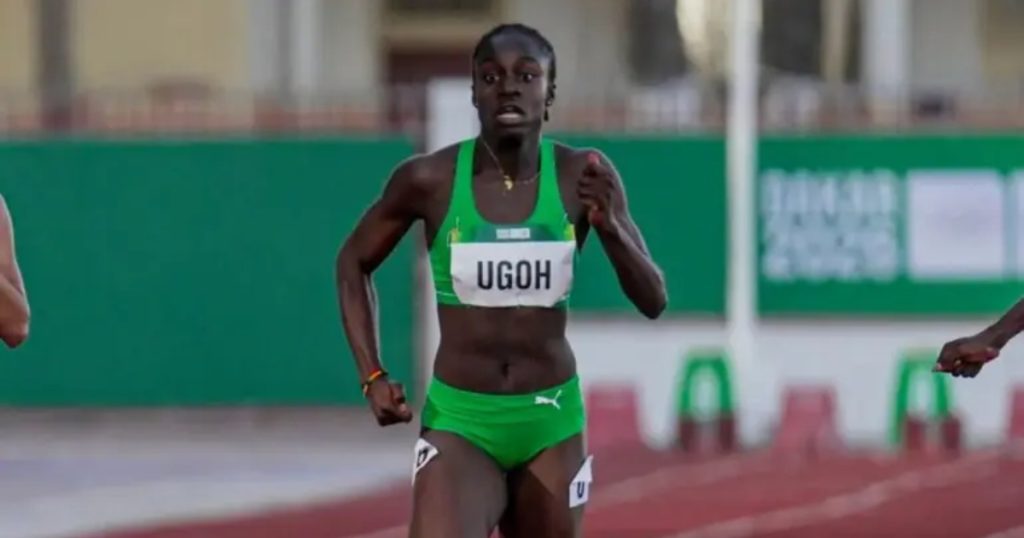
What makes the achievement particularly impressive is how much she improved between the semi-final and final. After recording 54.38 seconds in the semi-final, Ugoh returned the following day to produce a much faster performance and secure the biggest victory of her young career.
At 16, she has already announced herself on an international stage. The challenge now is to build on that achievement rather than allow one spectacular afternoon to become the highlight of her career.
ALSO READ: Farewell, Cristiano Ronaldo: 10 Unforgettable Moments That Defined 23 Years With Portugal
Rita Ezeh and Obanla Ehuwa: The youngsters who also deserve attention
Not every promising athlete gets to stand on a podium, and Nigeria’s other emerging talents in Dakar deserve recognition too.
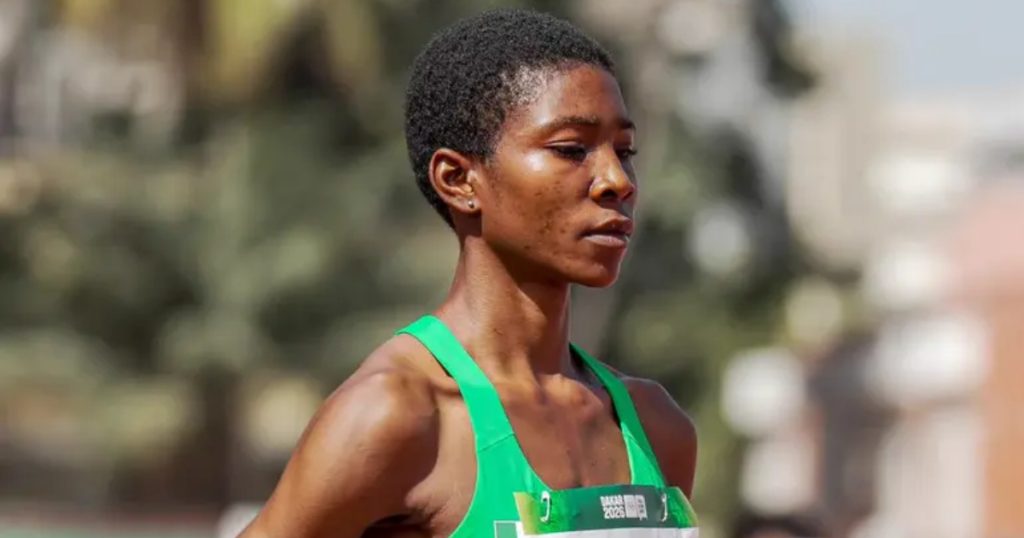
Rita Chisom Ezeh competed in the women’s 400m hurdles, finishing seventh in her semi-final heat in 1:01.66.
Although she missed out on the final, she improved considerably on her previous personal best of 1:05.63. That is a difference of almost four seconds, which is hardly something to dismiss.
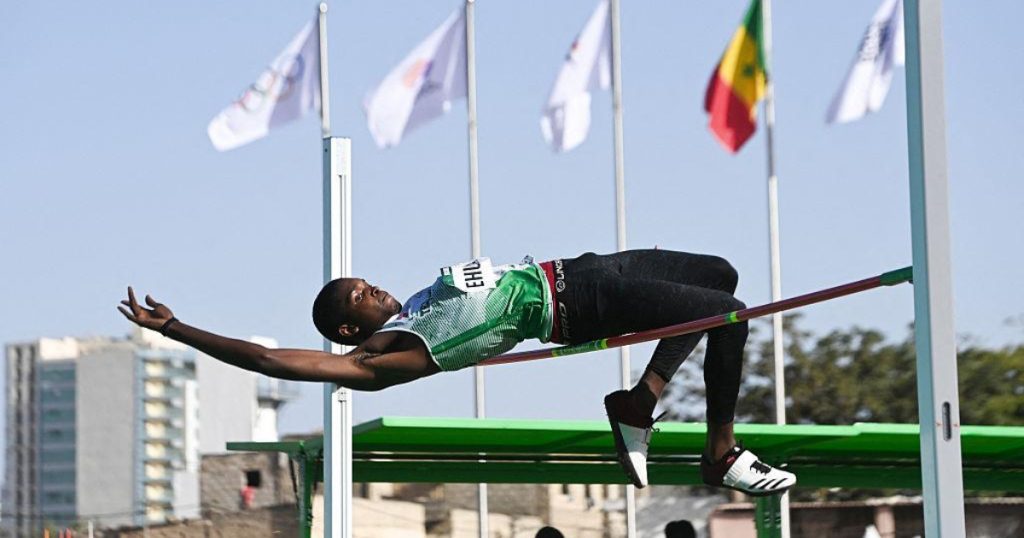
Then there is Obanla Ehuwa, who represented Nigeria in the men’s high jump.
Ehuwa cleared 1.97 metres to finish eighth in the final, improving on his previous personal best of 1.95 metres.
Neither athlete secured a medal, but international competitions are not exclusively about collecting shiny objects. For young athletes, competing against international opposition, improving personal records and learning to handle pressure are all valuable parts of development.
Nigeria’s rising stars Dakar 2026: Three gold medals tell a bigger story
The performances of Bright, Nwankwo and Ugoh have given Nigeria three athletics gold medals at Dakar 2026.
But the significance extends beyond the medal table.
The Youth Olympic Games provide a platform for athletes aged up to 17 to compete internationally, develop their skills and gain experience that could eventually prepare them for senior competitions.
Dakar 2026 is particularly significant because it is the first Olympic sporting event ever hosted on African soil. The competition runs from October 31 to November 13, bringing together approximately 2,700 young athletes from around the world across 25 competition sports.
Nigeria’s preparations also involved a 21-day training camp, medical screening, anti-doping education and technical preparation, according to the Federal Ministry of Information. The Nigerian contingent featured athletes across six sports, including athletics, swimming, table tennis, boxing, road cycling and beach volleyball.
That broader representation matters. Nigeria needs to develop talent across several sporting disciplines rather than depend on athletics and football to do all the heavy lifting.
Nigeria’s rising stars Dakar 2026: Can these victories turn into something bigger?
Here is where the real conversation begins.
Nigeria has never suffered from a complete absence of sporting talent. The country has produced Olympic champions, world-class sprinters, footballers, basketball players and athletes who have represented the nation with distinction.
The bigger problem has often been what happens after these talents announce themselves.
Young athletes need consistent coaching, quality facilities, medical support, international exposure and financial backing. They also need administrators who understand that developing a champion requires considerably more than organising a competition, taking photographs and issuing congratulatory statements.
Bright, Nwankwo and Ugoh have given Nigeria something worth celebrating. But their achievements should also serve as a reminder that identifying talent is only the beginning. If the country can provide the right environment, these teenagers could become serious contenders at senior African championships, World Athletics competitions and eventually the Olympic Games.
For now, Nigeria’s rising stars at Dakar 2026 have done their part. They have won medals, broken records and given the country a glimpse of what its next generation could achieve.
The responsibility now falls on those managing Nigerian sports to ensure these victories do not become another collection of forgotten headlines.
After all, it would be rather embarrassing to discover that the biggest obstacle standing between Nigeria’s teenage champions and future Olympic glory is the same old administrative wahala.
ALSO READ: 11 Nollywood Couples Who Found Love Behind the Camera

About The Author