


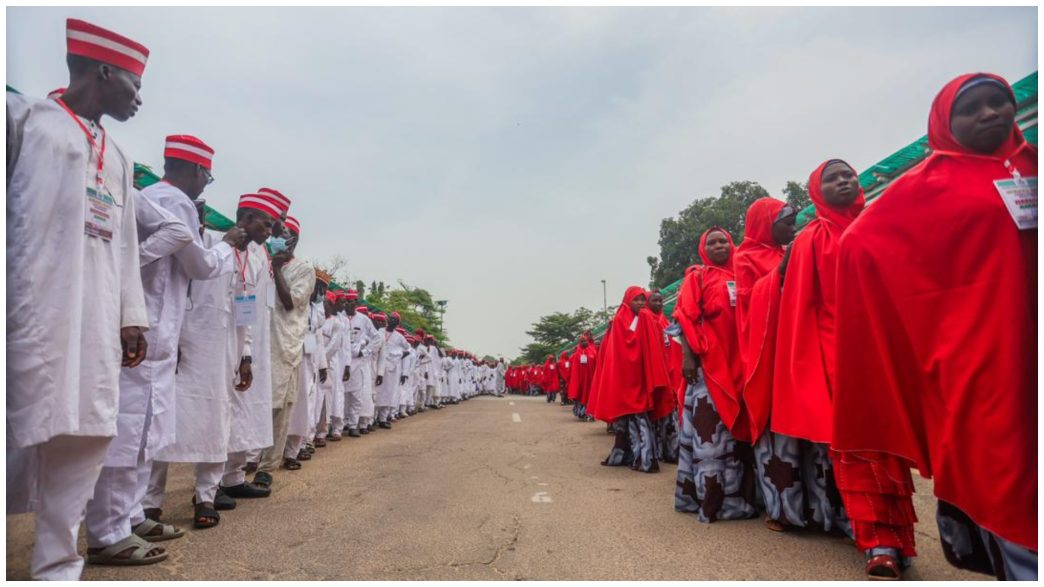
It is a safe bet that somewhere in Kano, Jigawa or another state beyond the Niger, somebody will respond to criticism of Kano State‘s planned mass wedding for 1,500 couples by saying he is simply grateful the government is organising a mass wedding and not a mass burial.
That is how we are. We possess an almost supernatural ability to discover silver linings in photo studio dark rooms. Give us an economic crisis and we rejoice that there is no famine. Give us a leaking roof and we celebrate that the walls are still standing. Give us a 7.5-magnitude earthquake and somebody will thank God it was not 8.0. So it will be with Kano’s latest matrimonial extravaganza. Critics will question the wisdom of the programme. Defenders will accuse them of hating marriage, religion or the North. Yet both sides risk missing the real issue entirely.
The debate is not about whether marriage is a good thing. It is. Nor is it about whether government should support vulnerable citizens. Of course, it should. The real question is whether a state should devote such energy, resources and political attention to organising weddings in a society where large numbers of young people are struggling to attain the most basic conditions of adulthood.
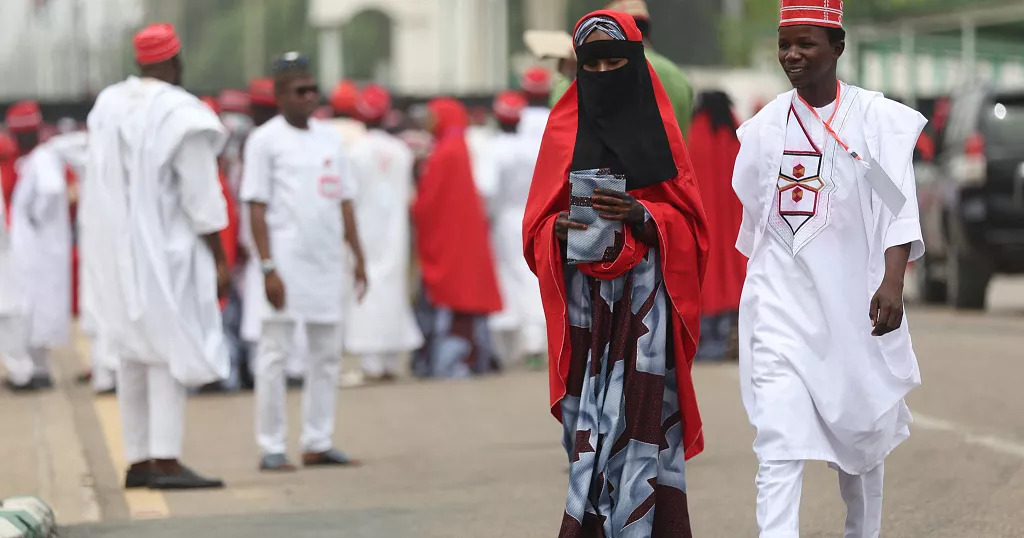
The government says participating couples will receive dowries, furniture, food items and empowerment packages. Each bride is expected to receive seed capital for a small business, while all participants undergo medical screening before the ceremonies. The intention may be noble, while the symbolism is attractive. But symbolism and development are not the same thing.
I cannot help but wonder what sequence of priorities leads a government to conclude that the pressing challenge confronting thousands of citizens is not how to create prosperity, but how to formalise poverty. Kano’s political class has long been enamoured of mass weddings. The programme, introduced under Rabiu Kwankwaso, continued under Abdullahi Ganduje and revived under Governor Abba Yusuf, has gradually evolved into something resembling a permanent institution of government. Over the years, billions of naira have been spent on successive editions. The continuity is remarkable. One only wishes the same could be said of job creation, industrial development and economic transformation.
Perhaps that sounds unfair. After all, marriage is a social good. Stable families matter. Communities benefit when relationships are formalised and supported. Yet even the strongest advocates of marriage would struggle to argue that a wedding is a substitute for economic opportunity. A man struggling to feed himself does not become economically empowered because he acquires a wife. A woman without prospects does not become prosperous because she acquires a husband. Poverty does not disappear because two poor people are placed in the same room and handed Mouka Foam. If anything, poverty has merely acquired company.
Supporters often argue that the programme promotes morality and discourages prostitution. That argument is revealing, though perhaps not in the way its proponents intend. It raises a more troubling question, which is: why are so many young people economically vulnerable in the first place? Why are governments often more enthusiastic about funding weddings than creating jobs? Why does providing dowries appear easier than attracting investment or industries?
A government that spends billions helping citizens get married is, perhaps inadvertently, making a profound admission. It is acknowledging that too many people cannot afford adulthood on their own. That should not be a cause for celebration. It should be a cause for alarm. The religious justification is no less intriguing. Islam encourages marriage. Nobody disputes that. But Islam also places enormous emphasis on work, responsibility, provision and self-reliance. Somehow, politicians rarely struggle to remember the injunctions concerning marriage. They only develop remarkable amnesia when the conversation turns to economic empowerment.
The result is a curious inversion of priorities. The ceremony becomes the achievement. The photographs become the evidence of progress. The marriage itself, with all the financial and emotional responsibilities it entails, becomes somebody else’s problem. What happens afterwards? That is the question rarely asked. Nobody tells us how many of these marriages survive five years later. Nobody publishes detailed studies of their economic outcomes. Nobody tracks whether the businesses funded by the seed capital still exist, whether household incomes improved or whether participants escaped the poverty that made government intervention necessary in the first place.
The wedding receives the press conference. The aftermath receives silence.
Marriage is difficult enough when entered into by two emotionally mature people with stable incomes and realistic expectations. Add unemployment, inflation, economic dependence and social pressure, and the institution becomes even more challenging. A wedding can be organised in a day. Building a sustainable household is the work of decades.
One suspects that governments love mass weddings because they possess an irresistible political appeal. A factory does not make for compelling photographs. A vocational training centre rarely trends on social media. Agricultural reforms are slow, technical and often invisible. But 1,500 brides and grooms gathered in colourful attire? That is spectacle. It looks compassionate. It looks culturally affirming. It looks like government at work.
The trouble, of course, is that looking like action and being action are not the same thing.
A state that devotes enormous effort to helping citizens get married while thousands remain unemployed is behaving like a man who installs elegant curtains in a house without a roof. The curtains may be beautiful. They may even impress the neighbours. But sooner or later, the rains will come.
Mass weddings are not development. At best, they are a social intervention. At worst, they are a highly photogenic distraction from the harder, less glamorous work of creating the conditions under which people can afford to marry without government assistance.
The day Kano invests the same passion, resources and political capital in mass employment as it does in mass weddings, I will applaud enthusiastically. Until then, these ceremonies will remain what they have always appeared to be: elaborate, well-intentioned and visually impressive exercises in marrying poverty to poverty. 
ALSO READ: Why Ghanaian Brides Say ‘Yes’ Three Times at Their Traditional Weddings

About The Author