


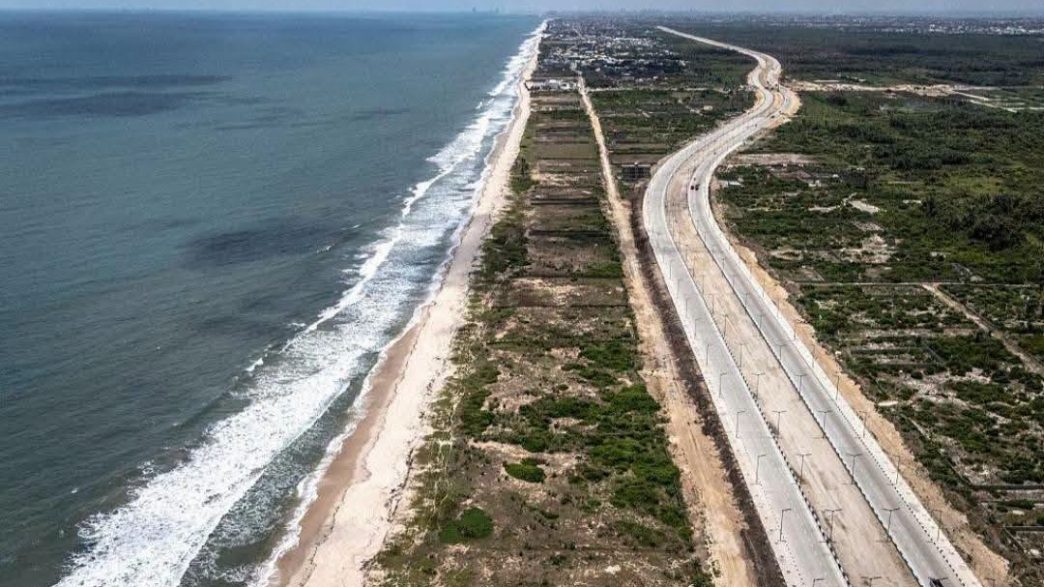
There are few infrastructure projects in Nigeria that have generated as much excitement, argument and suspicion as the Lagos-Calabar Coastal Road. It was announced as a major transport corridor linking communities along the country’s southern coastline. The highway promises to transform travel, trade and economic activity.
It is also one of those projects that can make a Nigerian wonder whether the government is building a road or testing the public’s patience.
More than two years after construction began in earnest, the project remains far from complete. While the Federal Government says work is progressing, questions about its cost, environmental impact, route and delivery timeline have refused to disappear. 
Now, a fresh controversy over a proposed diversion through the existing East-West Road has given Nigerians another reason to ask questions.
Will the Lagos-Calabar Coastal Road ever be completed as originally promised?
The Lagos-Calabar Coastal Road: Two years on, where are we?
The Lagos-Calabar Coastal Road was flagged off on May 24, 2024, as a flagship infrastructure project of President Bola Tinubu’s administration. Designed as a dual-carriage highway stretching approximately 750 kilometres along Nigeria’s southern coastline. It is intended to connect Lagos with Cross River State through several states in the South-West and South-South.
The ambition is considerable. A modern coastal highway could improve movement between commercial centres, support logistics and tourism. It would also open up areas that have long struggled with inadequate transport infrastructure. In a country where a supposedly straightforward journey can become an endurance test, the prospect is understandably attractive.
However, a big promise is not the same as a finished road.
According to the Federal Ministry of Works’ October 2026 update, Section 1, covering approximately 47 kilometres, has been completed. Significant work continues on Section 2, which covers roughly 55 kilometres. The ministry says pavement construction on the latter is nearing completion. Although major flyovers, overpasses and underpasses remain part of the wider work.
That is progress, certainly. But it also illustrates the scale of what remains. Completing an initial stretch is one thing; delivering a highway across several states, with the associated bridges, drainage systems and other infrastructure, is quite another.
The government has previously described the construction timeline as eight years. Even allowing for the scale of the undertaking. The public is entitled to ask whether the pace of delivery matches the ambition. A project does not have to be abandoned to fall behind expectations. Progress reports are not a substitute for a clear, independently verifiable schedule.
READ: NAFDAC Fake Products List: Agency Disowns Viral List of 200 Products
Driving along the road is an experience of its own
On the ground, the experience of navigating the corridor offers a perspective that official progress updates cannot fully capture.
One of the frustrations is the difficulty of finding convenient turning points or cut-offs to leave the road. When you need to change direction or exit the stretch, you cannot always count on an easy, clearly accessible option. I’ve been on the road twice this year, and both times turned a simple journey into an exercise in patience, planning and hoping we had not passed the point where you should have turned.
Imagine getting onto the road around Elegushi on your way to Osapa, and next thing, you’ve driven so far, you can almost already see Calabar in the distance.
Then there are the people waiting around certain turn-off points. Street urchins and police officers are a familiar and uncomfortable part of the roadside experience that the Lagos-Calabar Coastal Road offers. The camp around the few turning points available to harass and extort drivers. It’s a perfect business model for them, as you have no choice but to take the turning, except you want to drive for the next two miles to search for the next one. Where you’ll meet another batch waiting for you.
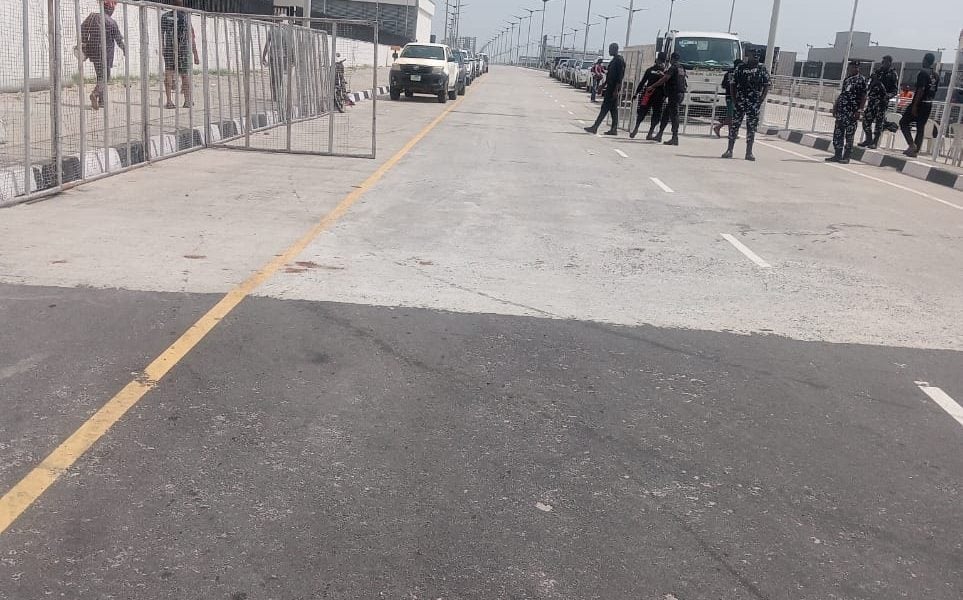
The presence of law enforcement should make a road safer, not leave motorists feeling that every stop or turn presents another opportunity for trouble.
These practical concerns may sound minor beside a multitrillion-naira infrastructure project, but they matter. A road is not judged only by the kilometres of concrete poured or the number of construction vehicles on site. Its usefulness also depends on access, traffic management, safety and how easily ordinary people can navigate it.
The cost controversy has never really gone away
From the beginning, the Lagos-Calabar Coastal Road has faced questions about whether its cost represents value for money.
The contract for the initial 47.474-kilometre phase attracted particular scrutiny. Critics questioned the procurement process, the cost per kilometre and whether the scope of the project justified the expenditure. The Federal Government awarded the contract to Hitech Construction Company, a firm connected to the president, which raised suspicions. Critics argued that a project of this scale demanded greater transparency and stronger evidence that the public was getting the best possible deal.
In October 2025, BusinessDay reported renewed objections from Funso Doherty, who questioned the contract’s cost, procurement arrangements and reported changes to the project’s scope. He also raised concerns about the relationship between the environmental assessment process and the timing of construction.
These are allegations and criticisms, not proof that the project is necessarily wasteful or improperly executed. Nevertheless, they deserve clear answers. The government should be able to explain how the costs were calculated, what the contracts cover, how variations are handled and what Nigerians can expect to receive for the money committed.
The argument about misplaced priorities is equally important. Supporters see the highway as a long-term investment in economic connectivity. Critics point to existing roads in poor condition, pressing social needs and the opportunity cost of committing enormous public resources to one ambitious project.
Both sides raise a legitimate question: how should a government balance transformative infrastructure with the immediate needs of citizens? The answer should be supported by transparent planning, credible economic analysis and measurable public benefits, rather than political assurances alone.
Environmental concerns cannot be paved over
The environmental debate is another reason the coastal highway remains controversial.
Building a major road along a sensitive coastal corridor inevitably raises questions about wetlands, drainage, erosion, flooding, ecosystems and communities whose livelihoods depend on their surroundings. Such concerns are not arguments against development itself. They are arguments for ensuring that development is properly planned and its consequences responsibly managed.
The timing of the environmental assessment process attracted particular criticism. The Federal Ministry of Environment announced public display exercises for draft Environmental and Social Impact Assessment reports for Section 1 in August 2024 and Section 2 in October 2024, after construction had already commenced.
Critics questioned whether the process had been completed early enough to inform the original decisions and protect affected communities. Residents around Okun Ajah also challenged aspects of the proposed alignment and raised concerns about the treatment of properties affected by the project.
The government, for its part, has defended the highway’s environmental design and said drainage and mitigation measures are intended to address flooding concerns.
The important issue is not whether the project has an environmental report somewhere in the paperwork. It is whether the assessments meaningfully influenced the route, construction methods and safeguards, and whether those safeguards are being enforced. Communities should not have to discover the consequences of a development only after the bulldozers arrive.
READ: From ₦20 to ₦1,400: History of Petrol Price Hikes in Nigeria Since 1999
What does the latest East-West road diversion mean?
The latest controversy began when Works Minister Dave Umahi said President Tinubu had instructed that part of the coastal highway should follow the existing East-West Road from Ondo towards Edo State rather than require an entirely new alignment.
Umahi quoted the President as saying: “Divert, do not do any new alignments. Pass the coastal highway through the existing East-West road.”
The explanation was linked to difficult terrain and flooding concerns, including problems around the Ughelli axis in Delta State. Using an existing corridor could, in principle, avoid some of the cost, engineering complications and environmental disruption associated with constructing a completely new route.
But the announcement immediately raised questions. If the original plan required a new alignment, why was the alternative being considered at this stage? Were these challenges not identified sufficiently early? What happens to the original design, its budget and its projected completion date?
The government subsequently sought to clarify the situation. Following a meeting with the President on October 12, Umahi dismissed reports that the Lagos-Calabar Coastal Road was being abandoned in favour of the East-West Road. He said the 750-kilometre coastal highway remained intact and that the proposed reconstruction of approximately 400 kilometres of the East-West Road was an additional project.
That distinction matters. A decision to use an existing road for part of a route does not necessarily mean the entire coastal highway has been cancelled. Equally, the clarification does not eliminate the need for a detailed explanation of the revised alignment, its cost implications and how the two projects will connect.
So, will the Lagos-Calabar Coastal Road ever be completed?
The honest answer is that completion remains possible, but the available evidence does not justify treating it as guaranteed.
The project has recorded tangible progress, including the reported completion of its first 47-kilometre section. The Federal Government also maintains that construction and planning are continuing across the wider corridor. Those facts matter and should not be dismissed.
However, a project of this scale needs more than ambition and concrete. It needs consistent funding, sound engineering, transparent procurement, credible environmental safeguards and realistic scheduling. Route changes must be explained, and the government must demonstrate that they improve the project rather than simply move its problems elsewhere.
Most importantly, Nigerians should be able to distinguish between a road that is progressing and one that is progressing at a pace consistent with its promised delivery.
The Lagos-Calabar Coastal Road could become an important national asset. It could also become a lasting lesson in what happens when grand infrastructure ambitions outrun public confidence and planning transparency.
Which outcome emerges will depend on decisions made now, not merely on the promises that launched the project.
READ: Petrol Discount or Subsidy: What Nigerians and Transporters Need to Know

About The Author