


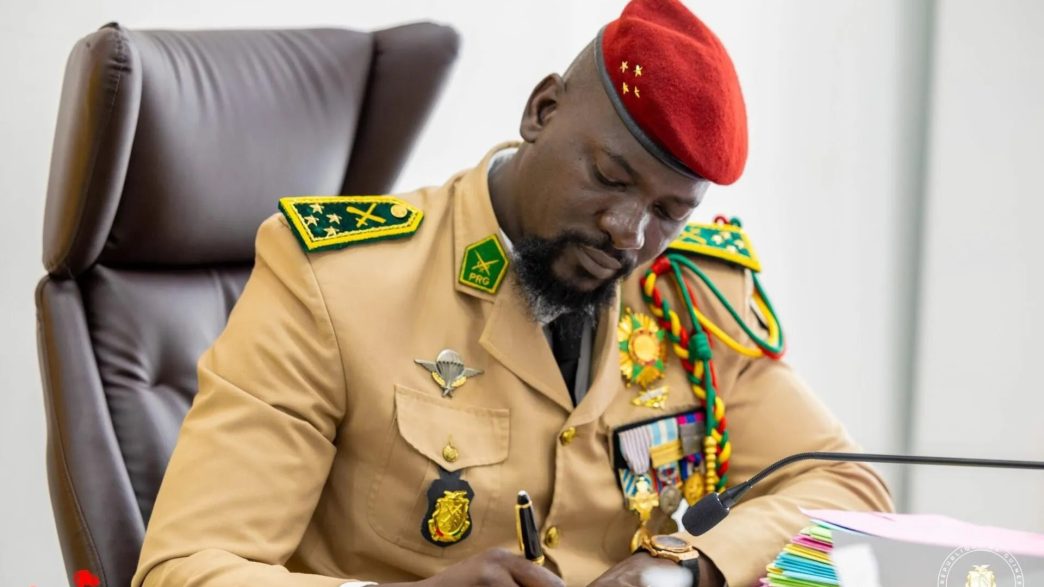
Guinea dissolved 40 political parties following the swearing-in of Mamady Doumbouya as the country’s fifth president on January 17, 2026. The move comes after the government introduced new regulatory requirements for political organisations, which several parties reportedly failed to meet.
In February, the APA News announced that the government of Guinea overhauled its political landscape. It laid down some rules that had to be followed by political parties
Some of the rules included: 
- Submission of comprehensive documentation to the Directorate General of Political Affairs.
- A party’s governing body must be comprised of at least 30% women to foster gender equality.
- Every member of a party’s National Executive Bureau must provide a personal tax clearance certificate to ensure financial transparency.
- Parties are to provide proof of property titles or lease agreements for a national headquarters and regional offices in all 33 prefectures.
SEE ALSO: 19 African Countries that Accepted Trump’s First Global Health Strategy
The Ministry of Territorial Administration says the parties were dissolved because they did not fulfil obligations required under Guinea’s political party laws.
The 40 political parties lost their legal status, their names, and logos. Political activities have also been banned because of the decree. Guinea is now being referred to as a ‘one-party’ state, because the three main opposition parties are part of the 40 political parties that the government of Guinea dissolved.
Doumbouya became president after a controversial election held on December 28th 2025. Before then, he led a coup to overthrow President Alpha Condé, who served for almost 11 years between 2010 and 2021.
Doumbouya justified the coup, saying the then-government was corrupt and misused its position.

About The Author