


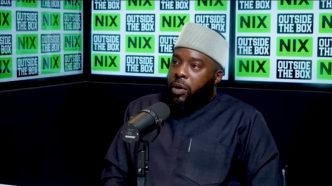
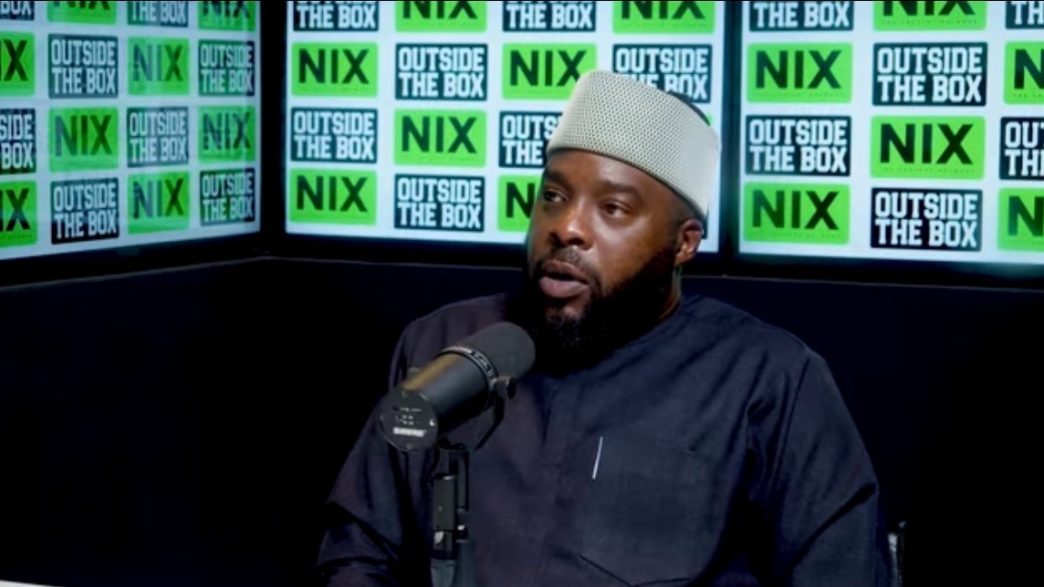
When real estate entrepreneur Morenikeji Abideen Tokunboh “Keji” Giwa sat down on the Outside the Box Podcast, he didn’t hold back.
As the founder of Giwa Gardens, the largest water park in West Africa, and a key player in Digital Landlords, Giwa projected the image of a sharp, intelligent capitalist driven by principles of integrity. However, he used the platform to issue a blunt, unapologetic ultimatum to his financial backers: learn “long suffering” and wait.
Giwa claimed that “love your neighbor as yourself” is a core principle behind his business. 
“And that’s why I can look my investor in the face, who has probably invested with me for the last three to four years and has not gotten anything in return, and I’ll tell him, ‘Wait.’ Why? Because my money is there as well… I’m stuck,” Giwa said.
He added that the investments have simply not reached full capital liquidation yet, noting, “Water parks take seven years to be profitable.”
The ₦27 Million Reality Check
But outside the studio, that philosophical demand for “delayed gratification” looks a lot more like a financial nightmare.
For investors like Adetomiloye Adepoju and Israel Joseph, Giwa’s podcast rhetoric directly clashes with a combined ₦27.16 million in capital that they allege has been withheld from them for years.
According to an investigative report by the Foundation for Investigative Journalism (FIJ), these investors have been facing a cold reality dating back to 2021: unanswered refund requests, vanished promises of 40 percent annual returns, and zero access to their funds.
The report details the specific breakdown of the missing millions:
- Adetomiloye Adepoju: Invested ₦19 million across Giwa’s projects between 2021 and 2023, including Giwa Garden City (₦2.5m), Giwa Garden Water Park (₦7.9m), and Carnelian Lot (₦8.6m).
- Israel Joseph: Invested ₦8.16 million in the Lekki Party Villa project after seeing the company’s promotions on Instagram, which promised a 40 percent annual return on investment (ROI).
Years later, neither investor has received their capital or the promised returns.
“If You Insult Me, I’ll Insult You Back”
From the report, it is evident that the biggest grievance for these investors is not just the delayed money; it is what they describe as Giwa’s dismissive, hostile attitude toward anyone who asks questions.
On the podcast, Giwa openly defended his aggressive stance toward disgruntled clients, chalking up investor frustration to a misplaced sense of “entitlement.”
“And if you insult me, I’ll insult you back,” Giwa declared on air. “Why? Because part of what you paid me wasn’t to disrespect me… if you disrespect me, I’ll disrespect you back.”
To the people who trusted him with their life savings, however, this attitude manifests in much harsher ways than a podcast debate. Investors allege they faced an environment of intimidation, stonewalling, and outright blocking. Adepoju claims she was blocked on Instagram simply for asking about her ₦19 million investment during a live session. Joseph claims that requesting his ₦8.16 million capital yielded insults and threats rather than a financial resolution.
Legal Battles and Corporate Defenses
When contacted by FIJ to address these complaints, Giwa did not directly answer the specific allegations. In Adepoju’s case, he referred all inquiries to his legal counsel.
During a phone call involving Joseph, Giwa reportedly maintained that the business did not record profits when it first started operating and stated that investors could not simply opt out of the venture. His lawyer, Ruth, added a firm corporate boundary: anyone seeking a refund would need to retain a lawyer to formally write to the company.
Following the mounting public scrutiny, Digital Landlords released an official press statement stating it’s all a misunderstanding of their business model and that they would soon start payouts:
“Digital Landlords has noted recent public discussions regarding return-on-investment timelines across some of its projects and wishes to provide further clarity on the structure of its investment model… Digital Landlords operates an investment structure that differs significantly from traditional fixed-return investment products. Under this model, investors participate as equity partners in their specific real estate investment, sharing in both the opportunities and realities associated with the property development.”
The company confirms that payouts have commenced across most projects within its portfolio. However, due to the scale of ongoing developments and the nature of asset-backed investments, it is not operationally feasible to process all payouts simultaneously at this stage.
For flagship developments such as Giwa Gardens, current efforts remain focused on increasing visitor traffic, strengthening operational efficiency, and expanding recurring revenue streams to ensure sustainable long-term profitability for all investors. Similarly, payouts have commenced at Lekki Party Villa despite prevailing economic pressures affecting businesses nationwide.
The Disconnect
Ultimately, Keji Giwa’s podcast appearance shows a disconnect in Nigeria’s real estate ecosystem.
While a developer stands behind a microphone preaching the need for “mind renewal” and a seven-year timeline to achieve profitability, the everyday investors are left with hope and empty bank accounts.
SEE ALSO: Did Social Media Comments Cause World Bank to Cancel Tinubu’s $717.7 Million Loan?

About The Author