


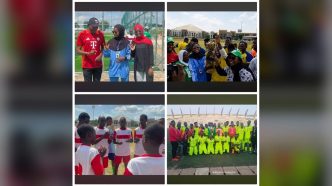
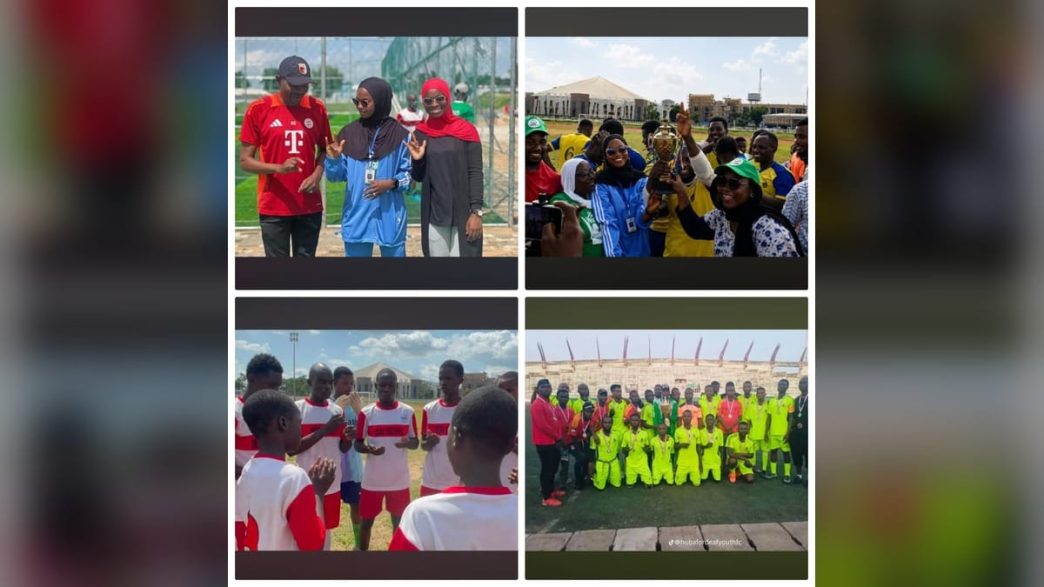
Deaf football in Nigeria is creating opportunities for players to showcase their talents in a game where communication can happen in a split second.
On a football pitch, a striker makes a run, a midfielder spots the opening, and a defender signals to a teammate. Sometimes, a shouted instruction or the referee’s whistle changes everything.
But what happens when a football team cannot rely on sound to communicate? 
In Kaduna, northern Nigeria, HUBA For Deaf Youth FC is answering that question through the universal language of football. The team provides young deaf players with a dedicated space to train, develop their abilities and compete under a program established by HUBA Ear Care Foundation.
The team provides young deaf players with a dedicated space to train, develop their abilities and compete, under a programme established by HUBA Ear Care Foundation.
At the centre of the initiative is Hajara Usman, the foundation’s founder and the coach featured in a DW Africa video that has brought attention to the team.
In this video, DW Africa highlights the work of coach Hajara Usman and her efforts to create opportunities for deaf footballers in Nigeria.
Video credit: DW Africa | YouTube Shorts
For these footballers, the game is not defined by what they cannot hear. It is also about what they can see, understand, anticipate and achieve together.
The Wider Mission Behind Deaf Football in Nigeria
HUBA For Deaf Youth FC is more than a football initiative. It forms part of the wider work of HUBA Ear Care Foundation, a Kaduna-based organisation that says it supports people with hearing loss and other communication-related needs.
According to the foundation’s website, its work includes hearing-care support, sign-language education, speech therapy and educational assistance for vulnerable children.
Its football program , the foundation aims to help deaf young people discover their sporting abilities, build confidence and develop discipline and teamwork. It also hopes to create opportunities for players to compete at national and international levels.
The club’s stated approach combines football training with communication methods designed for deaf athletes. These include visual cues, flags and sign-language-based tactical instructions.
Football is a fast-moving game. Players need to react to teammates, opponents, referees and changes in play, often within seconds.
In deaf football, visual communication is central to how players share information. Eye contact, gestures and sign language can help teammates coordinate, while referees use visible signals to communicate decisions.
HUBA’s own description of its programm refers to visual refereeing signals, flags and tailored sign-language playbooks. These methods are intended to help players communicate during training and matches.
For spectators accustomed to hearing coaches shout instructions from the touchline, the approach offers a different perspective on a familiar sport.
The game remains football. The communication changes.
Deaf Football in Nigeria: A Competitive Sporting Tradition
HUBA FC is part of a wider sporting community whose achievements deserve greater attention.
Nigeria’s Deaf Super Eagles have competed in regional and international tournaments, demonstrating that deaf football in the country extends well beyond grassroots training.
In August 2025, Nigeria won the 13th West African Deaf Football Championship in Abuja, defeating The Gambia in the final to claim the country’s sixth title in the competition.
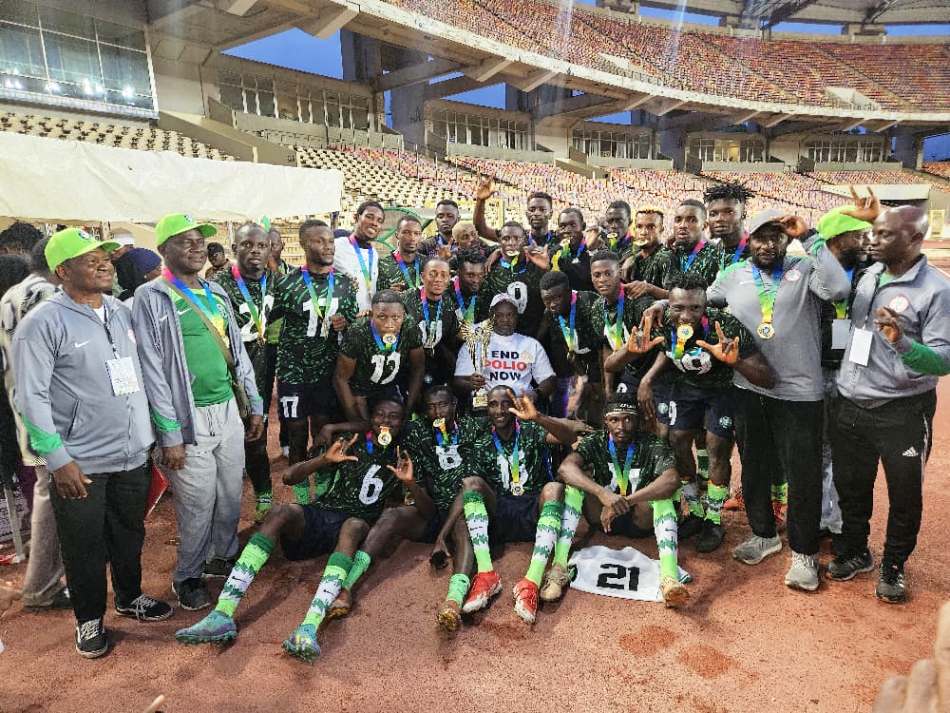
Photo credit: Federal Ministry of Information and National Orientation, Nigeria.
The tournament brought together teams from across West Africa, including Nigeria, Niger, Liberia, The Gambia, Côte d’Ivoire and Togo.
Nigeria’s deaf footballers also made their debut at the World Deaf Football Championship in Malaysia in 2023. The team finished 11th among 25 countries, reaching the round of 16 before losing 2–0 to Ukraine.
These achievements provide important context for the work taking place in Kaduna. A grassroots club such as HUBA FC operates in a country where deaf football already has a competitive history and where aspiring players can look towards state and national representation.
However, the existence of a national team does not automatically mean that every promising young player has access to the training, equipment and opportunities needed to progress.
The challenge beyond the pitch
Football requires more than players and a ball. Clubs need suitable training spaces, kits, boots, protective equipment, transport and the resources to participate in competitions.
HUBA Ear Care Foundation’s website identifies several needs for its football programme, including jerseys, training balls, boots, shin guards, tournament registration and transport.
These requests point to the practical demands of maintaining a grassroots sporting initiative. They also raise questions about how young deaf athletes can access consistent training and competitive opportunities.
For a player with talent and ambition, the next step may depend on more than performance on the pitch. Access to organised competitions, coaching, equipment and a reliable support system can all influence how far that player progresses.
The foundation says it hopes to create pathways towards national and international competition. Turning that ambition into a sustainable programme requires resources and partnerships, as it does for many grassroots sports initiatives.
A different way to hear the game
Football is often described through sound: the roar of the crowd, the referee’s whistle, the coach’s instructions and teammates calling for a pass.
Yet none of those sounds is what makes football football.
At its heart, the game depends on movement, timing, anticipation, skill and cooperation. Players must recognise opportunities, read the intentions of others and act together.
HUBA For Deaf Youth FC is creating a space where deaf young people can pursue those same demands through accessible communication.
Nigeria’s success in regional deaf football shows that the country has athletes capable of competing at a high level. Initiatives such as HUBA FC bring attention to the grassroots work that can help more young players discover what they can do.
Perhaps the most interesting question is not how deaf footballers manage without hearing every instruction.
It is whether more people will pay attention to their football, recognise their talent and help create opportunities for them to take the game further.
Sometimes, the most important conversations on a football pitch do not need to be heard.
They need to be seen.
READ ALSO: Forbes’ Highest-Paid African Footballer Plus 9 Top Earners in 2026

About The Author