


Residents of Ikoyi and Victoria Island (VI) have raised concerns over the growing number of trees and green spaces disappearing to make way for high-rise buildings, sparking renewed debate about the direction of urban development in Lagos.
The conversation gained momentum after actress and CEO of Temple Productions, Ego Boyo, lamented the demolition of plots around Ikoyi. They argued that developers often replace the greenery with towering concrete structures that diminish the area’s natural charm and grandeur.
The thread attracted reactions from other users who shared similar concerns about neighbourhoods such as Festac, Government Reserved Areas (GRAs), Ogudu and Surulere, where residents say redevelopment is gradually changing the character of once-quiet residential communities. 
However, others defended the changes as a natural consequence of development, arguing that people cannot expect neighbourhoods to remain unchanged as Lagos expands.
Residents lament disappearing greenery & rise of Lagos concrete jungle
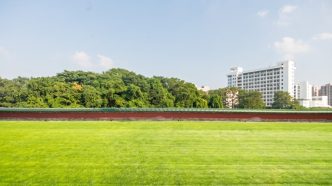
For many residents, the concern goes beyond the appearance of new buildings. They fear that the steady removal of trees, gardens and open spaces will leave neighbourhoods hotter, less peaceful and increasingly dominated by concrete.
Ikoyi and Victoria Island have long attracted high-end residential developments, commercial properties and luxury apartments. But residents who value their greenery and relatively serene surroundings worry that the latest wave of redevelopment could erode the qualities that made these areas desirable in the first place.
Similar concerns surfaced in the X discussion about Festac, Ogudu, Surulere and parts of Lagos’ GRA districts. Commenters described a changing urban landscape in which older buildings and green plots increasingly give way to larger structures.
While individual developments differ, the complaints point to a broader question: how can Lagos accommodate growing demand for housing and commercial space without sacrificing the environmental features that make neighbourhoods liveable?
READ ALSO: Agbero Culture in Nigeria: When Did Public Spaces Become Someone’s Territory?
Lagos’ growing appetite for high-rise buildings
The transformation of Ikoyi and Victoria Island reflects a wider shift in how developers use valuable urban land.
Lagos continues to attract businesses, investors and residents, increasing demand for accommodation and commercial properties. In established districts where land commands a premium, developers can maximise available space by replacing low-rise buildings with multi-storey apartments and mixed-use developments.
The Revised Ikoyi–Victoria Island Model City Plan provides for high-rise residential and mixed-use buildings in designated areas, illustrating how vertical development forms part of the area’s long-term planning framework. The plan also identifies open-space and recreational uses, showing that urban growth and green areas are both considerations in the planning process.
However, residents’ concerns highlight the difference between approving denser development and ensuring that individual projects preserve adequate greenery, landscaping and usable outdoor space.
Development or destruction of Lagos’ character?
The debate has also exposed a divide between those who want to preserve established neighbourhoods and those who believe redevelopment is inevitable.
Some commenters argued that cities must evolve to accommodate population growth, new housing and economic activity. From this perspective, replacing older properties with modern buildings is a normal part of urban renewal.
Others questioned whether development should come at the expense of mature trees, open plots and neighbourhood ambience. They argued that a city can modernise without turning every available parcel into another high-rise development.
Both sides raise legitimate questions, but construction alone does not guarantee better urban living. The quality of development also depends on planning, infrastructure, drainage, access, public spaces and environmental safeguards.
ALSO SEE: Will The Lagos-Calabar Coastal Road Ever Be Completed: What The Latest Diversion Means
Lagos’ tree-planting drive faces a bigger challenge
The concerns come as the Lagos State Parks and Gardens Agency (LASPARK) continues its greening initiatives.
According to the agency, Lagos had planted 13,401 trees by June 30, 2026, representing 67% of its annual target of 20,000 trees. The government said the programme aims to strengthen green infrastructure and improve the state’s climate resilience.
LASPARK also oversees tree planting, maintenance and the regulation of tree felling and pruning across the state.
However, planting new trees does not immediately replace the shade, ecological benefits and established character of mature trees removed during redevelopment. Maintaining existing greenery alongside new planting therefore remains an important part of the conversation.
Can Lagos grow without losing its charm?
The reaction to the X thread reflects a larger debate about what progress should look like in Nigeria’s commercial capital.
Lagos needs housing, investment and modern infrastructure, but residents also need neighbourhoods that remain comfortable, attractive and environmentally sustainable.
The challenge for planners and developers is to balance these priorities rather than treat them as mutually exclusive. Stronger attention to tree preservation, landscaping, open spaces and compliance with approved development plans could help ensure that redevelopment improves neighbourhoods instead of simply making them denser.
As the debate continues, residents’ message is clear: Lagos can grow, but its natural character should not become the price of progress.

About The Author