



In December 2015, Silvia, a divorced Spanish woman in Madrid, met a charming American soldier, Brian. After their meeting on Tinder, he began to send emails to her with promises of love, adventure, and even gold bars delivered to her doorstep. She was in on it. What she didn’t know was that “Brian” was no soldier in Syria. Brian was likely a young man sitting in a cramped room in Lagos, Nigeria, running one of the world’s most sophisticated romance scams.
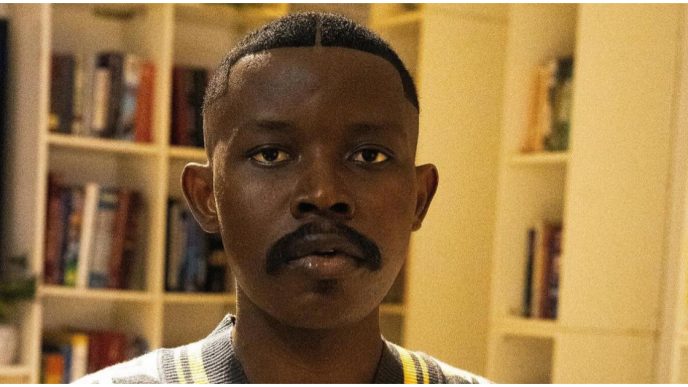
Five weeks later, in January 2016, suspicion grew, and Silvia’s family confronted her. Then, her son, journalist Carlos Barragán, eventually traced the messages to a Nigerian IP address. Lagos, Nigeria, not Syria or the U.S.
Although no money was sent, Silvia had become so deeply emotionally invested that she was left in emotional shambles after the discovery. 
Barragán figured it was the usual method where the scammer builds an emotional connection before asking for money. Instead of stopping at being angry or reporting to the police, he booked a ticket to Lagos and arrived in March 2022.
SEE ALSO: EFCC Says 6 Out of 10 Nigerian University Students Are Yahoo Boys; Is It True?
Carlos Barragan Moved From Madrid to the Streets of Ikotun, Lagos
Barragán didn’t visit Nigeria as a tourist or a distant reporter. He immersed himself in Ikotun, a place where thousands of young men, known as “Yahoo Boys”, have turned online deception into a local economy. They are even known to operate openly. Soon, what started as a quest to find his mother’s scammer became something more ambitious. He wrote a book titled The Yahoo Boys: Love, Deception, and the Real Lives of Nigeria’s Romance Scammers.
The Yahoo Boys are often ambitious, tech-savvy young people trying to navigate crushing poverty. The inequality and limited opportunities in Africa’s largest city, Nigeria, bring them to this. They adopt fake Western identities like businessmen, soldiers, doctors, oil executives, etc., to build emotional bonds with lonely victims across the US and Europe, sometimes extracting hundreds of thousands of dollars.
In the early 2000s, when it started, what was needed was a Yahoo! Mail account and airtime in a cybercafé. And maybe some coffee to stay awake because of the time difference. Now, a laptop or just a phone is all that is needed. And drugs to stay awake.
One of the earliest public references appears in 2005. Then, the Nigerian president, Olusegun Obasanjo, referred to them as “Yahoo-Yahoo boys” during the amendment of laws against unsolicited scam messages.
Although Barragán was in Lagos for a total of six months between 2022 and 2025, he spent years building trust. With the help of Bukky Omoseni, a journalist who brought Biggy, a Yahoo boy, he followed three other specific Yahoo boys. Carlos Barragán was with them through their highs, like sudden cash windfalls and wild parties. He was there during the lows, like busts, betrayals, and moral crises, too.
From Carlos Barragán’s post on X, the Yahoo boys he related with through the years included:
Biggy
A failed rapper and smooth talker who still lives with his parents, battling depression while scamming American truck drivers and smoking drugs with his friends.
Chibuike
A dreamer who scams an Irish woman out of tens of thousands of dollars by posing as WWE superstar Cody Rhodes but his sudden wealth and flashy lifestyle in Ikotun eventually lead to his downfall.
Azeez
A village boy and tailor’s apprentice terrified of Lagos, who learns about the West’s loneliness epidemic by scamming Vietnam War veterans. His mother, a struggling street hawker, discovers what he’s doing and tries to stop him.
Richie
A guilt-ridden young man convinced he caused the death of an American woman he manipulated online for years.
He lived among them, where he witnessed the sleepless nights, the drugs, the music, the ambition, and the desperation that fuel this underground world.
Carlos Barragán didn’t find Brian, his mother’s scammer. However, with over 120 hours of recorded conversations and over 250 interviews with the Yahoo boys and victims in the West, he documented what it’s like to be a romance scammer in Nigeria.

About The Author