In 2016, Ibbifiri (Ib) was a single mom raising three young children in the city of Port Harcourt. As bills kept piling up with little to no help from anyone, a friend, Nimi, finally introduced her to network marketing.
“Ib, if you know you would rather not get to the point of collecting 3k from men just for them to treat you like rubbish, you had better get into network marketing.” Taking her advice, Ib enrolled in the Oriflame network, hustling for downlines and selling beauty products. Network marketing is a business where one meets people from all walks of life. While the industry itself is not illegal, it often exposed people like Ibifiri to circles where high-risk investment schemes were heavily promoted. 
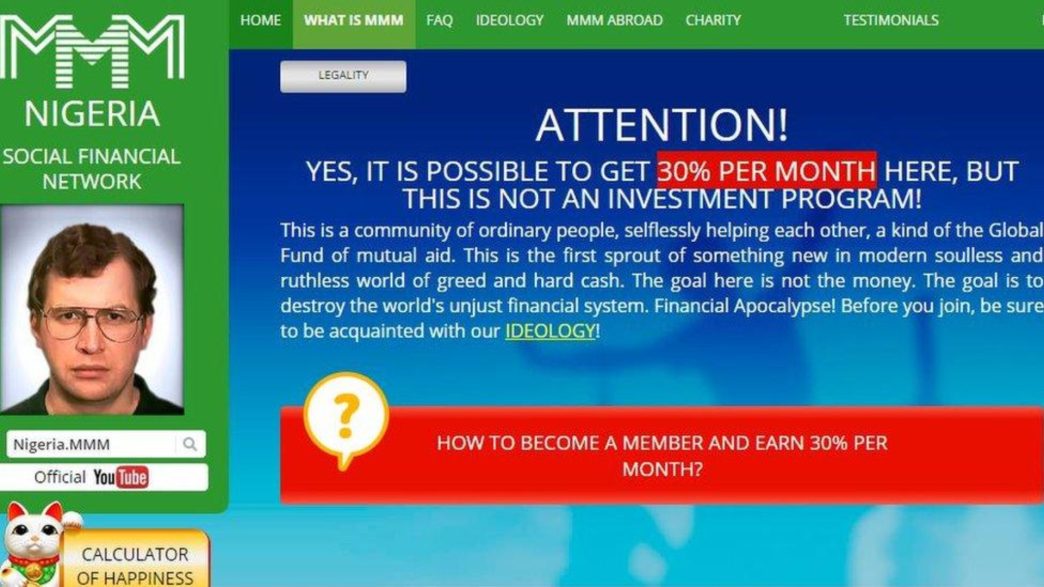
This was how she got invited to an MMM seminar. The hall was packed to the brim with people clearly hungry for money and the promises they were hearing. At first, Ib wasn’t convinced. She couldn’t understand how she would “provide help” and “get help” after 30 days from another user with an accumulated 30% profit. Eventually, she gave in. She wanted more for her young children, and she also bore the responsibility of taking care of her aged mother.
Believing it was a smart way to invest her Oriflame earnings, Ib opened MMM accounts for herself, her children, and her mother. For three months, everything ran smoothly. But by the fourth month, reality set in, leaving her wondering how intelligent, cautious people like herself could have fallen for something that sounded impossible from the start. When her “GH” withdrawal failed that morning, her first instinct was denial. She refreshed the page over and over. While everyone around her blamed a network failure, deep down, she knew the truth: she had been scammed. All the money she had spread across multiple accounts vanished overnight.
Ponzi Schemes After MMM
Ib made a vow never to invest in such a business model again, and she stayed away. She became an advocate for legitimate businesses, advising people to invest wisely rather than chasing money-doubling schemes.
After MMM, newer platforms emerged, evolving from simple peer-to-peer donations into sophisticated scams disguised as forex, agriculture, crypto, and stock trading. Ultimate Cycler, Twinkas, MBA Forex, Chinmark (FinAfrica), CBEX, and the most recent XM Music are Ponzi schemes that shook the country. Some victims lost their rent money; others lost school fees, retirement savings, and trust in the friendships that drew them into the schemes.
Despite Ib’s advocacy in her own little world, she realised that as long as there is WhatsApp status hype, Telegram groups, fake withdrawal screenshots, peer pressure, and influencers flaunting sudden wealth, Ponzi schemes will always thrive—leaving people broken, angry, bitter, and depressed each time.
ALSO READ: ‘It Was Sent to Me by Mistake’ – Non-Refund of Wrong Transfers and Legal Implications in Nigeria
How Ponzi Schemes Have Impacted The Economy
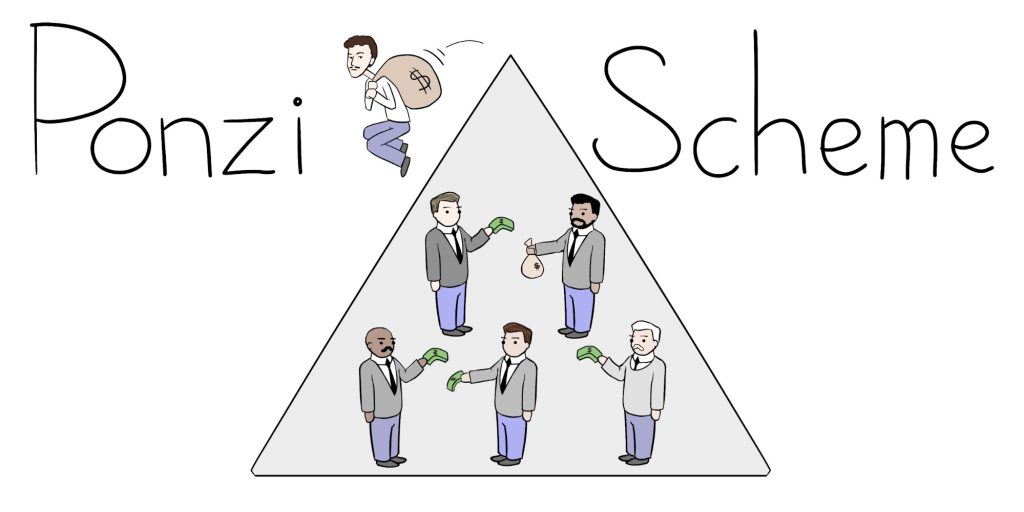
In 2022, the Nigerian Deposit Insurance Corporation (NDIC) disclosed that Nigerians had lost ₦911.45 billion to Ponzi schemes and related fraudulent activities over the preceding 23 years, with MMM alone accounting for ₦18 billion of that figure. Since then, the numbers have skyrocketed.
MBA Forex, a fraudulent foreign exchange platform, collapsed between 2020 and 2021 after pocketing billions of Naira.
Later, in July 2024, CBEX launched with promises of a 100% return on investment within 30 days; BBC News subsequently reported that investors lost over ₦1.3 trillion to the scheme.
Overall, Nigerians have lost over ₦4.8 trillion to these Ponzi schemes. According to ENACT Africa, these massive outflows drain liquidity from the domestic economy as scammers transfer funds through unregulated digital wallets and offshore accounts. Consequently, these scam organisations starve the economy of vital capital needed for growth and job creation while eroding trust in formal finance—a trend that severely slows down financial inclusion efforts, particularly for legitimate blockchain and digital finance solutions.
Ultimately, victims are plunged deeper into poverty, while law enforcement faces a compounding burden, forced to dedicate extensive time, manpower, and resources to tracking offshore operators in an attempt to recover stolen funds.
Ibifiri’s Shocking Return to Ponzi

Ib left network marketing entirely—not because it wasn’t a genuine business model, but because she was tired of the constant pressure to recruit downlines. She dusted off her certificate and secured a job at a bank. Finally, things were looking up. She had a stable career, her children were growing up—with two already in the university and the youngest in senior secondary school—and she was building a solid future. She was also genuinely happy for her friend Nimi, who had recently relocated and was doing incredibly well in the UK.
As a lifelong music lover whose interests cut across different genres, Ib always had something playing. One fateful day, while giving a colleague a lift home, he turned to her and said, ”Aunty Ib, you and music, shaa. Why don’t you turn this passion into something profitable?”
Instantly on high alert, Ib became wary. “Deji, I hope you are not trying to market any of these nonsense schemes flying around to me. I just don’t want to hear it.”
But that was precisely how another round of preaching started. Deji explained that it was a music platform called XM. “You register for a package you can afford, listen to a few songs a day, and get paid,” he urged. “In a month, you get a 100% return on what you invested. You can refer people too, but it’s not compulsory. With or without referrals, you still get paid.”
Ib felt a sickening wave of déjà vu, her mind flashing straight back to her MMM days. “Deji, please don’t ever bring up this topic again!” she snapped.
Deji persisted anyway, adding her to a WhatsApp group. At first, she only observed nonchalantly. But as the daily testimonials and payment screenshots flooded in, curiosity got the better of her, and she found herself typing “XM” into Google. To her surprise, the search showed the company was established in 2005. It seemed simple: listen to music, get paid, maybe refer a few friends. No big deal. Reasoning that she had some idle funds sitting in her account, she thought, “Why not?” She got sucked in again.
Somehow, Ib managed to convince herself that this time, it had to be real.
By the middle of May 2026, Ib was questioning her sanity. Nearly a decade after the MMM crash that almost ruined her life, history had repeated itself. Once again, she joined millions of angry, bitter Nigerians—the victims of yet another hustle disguised as a golden opportunity.
The Securities and Exchange Commission (SEC) Warnings
SEC keeps issuing warnings. Do we ever take heed?
“Once bitten, twice shy” is Ibifiri’s slogan these days.
Why do we have a robust SEC in the country, yet people keep falling victim to these scammers? It is especially painful to realise that the warning signs were never hidden. The SEC has established a strict policy stating that convicted operators will face fines of at least ₦20 million, ten years in prison, or both. Furthermore, the SEC actively investigates suspected illegal schemes and disseminates periodic warnings. The commission also partners with bodies like the National Orientation Agency (NOA) to conduct nationwide financial literacy campaigns, mandating that all genuine investment and fund managers be licensed. Sadly, for each of these Ponzi schemes, there is never any indication that they are duly authorised to carry out financial operations.
A Final Word
For many Nigerians, Ponzi schemes do not sell greed first; they sell relief, hope, and the illusion of survival in a harsh economy. Today, Ib has become incredibly intentional about cautioning herself to remain watchful during shifting economic trends and cycles.
Scammers routinely capitalise on specific economic climates. When legitimate stock or cryptocurrency markets are booming, self-proclaimed trading “experts” flood social media platforms. When real estate and agriculture thrive, fraudulent copycat schemes emerge, causing people to lower their guard. Conversely, during economic recessions, these shady setups appeal directly to struggling minds, offering a seemingly easy way out of financial hardship.
Will these high-profile collapses ever deter scammers from inventing more sophisticated traps? Will victims finally learn the lesson and stay away from Ponzi schemes for eternity? The names will undoubtedly change—moving from MMM to XM Music—but the trap itself remains exactly the same: desperation dressed up as opportunity.
SEE ALSO: From Oil Wells to Smartphones: How Western Money is Found in Africa
About The Author