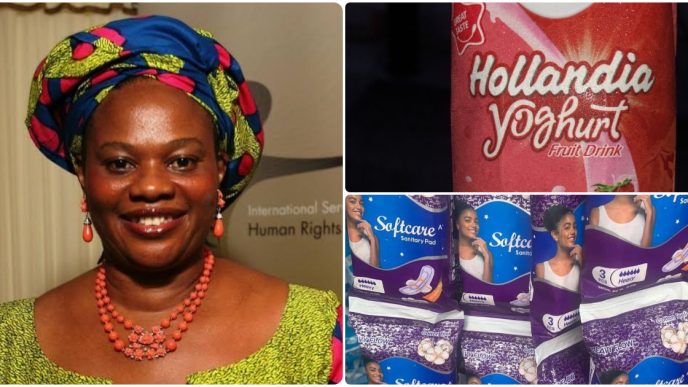




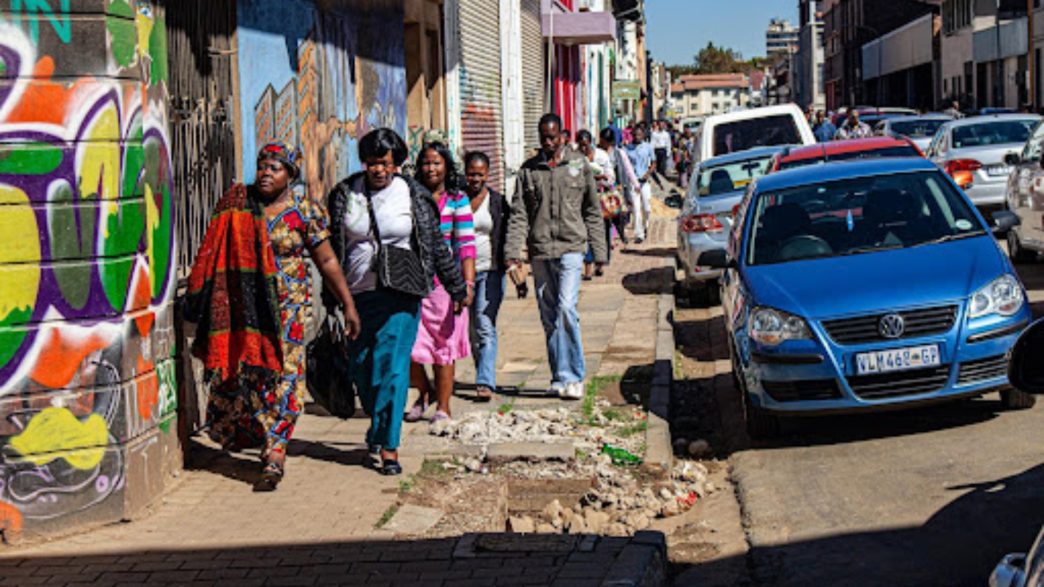
In African cities like Lagos, Johannesburg, Nairobi, and Accra, millions of people interact daily with Western corporations without realising it. From the cars we drive to the phones we hold, from the clothes we buy to the fuel that powers our vehicles and equipment, and to the fast-food chains we have scattered in many places, foreign corporations have quietly woven into the African story over the years.
How It All Started
For many older Africans, foreign corporations are not abstract economic entities. Like my mum, who was a very vivid storyteller, they remember an era when names like John Holt, Leventis, and Chanrai dominated the economic landscape. I grew up listening to her stories of these companies, and each time felt as though I had lived in that era myself. In the 1980s, she would always take us to Bata and Lennards Shoes, which were also Western corporations that had a strong presence at the time. Those shopping trips felt luxurious and quite unforgettable to a young child, and buying Cortina school shoes was always the highlight. 
Another experience I had was in secondary school. I went to school with a classmate who was Lebanese. They had newly moved to Nigeria in the 1990s, and it was easy to notice their affluence. Mariam’s father managed a vegetable oil company and had been sent to Nigeria to help set up its operations. One of the few times I visited her home, I overheard a conversation her father was having, and it has stayed with me over the years. He was telling the person at the other end of the line that it was a very good decision to bring the company to Nigeria, Ghana, and Nairobi. According to him, it was easy to recruit factory workers and marketers because African workers were hardworking and eager to learn.
Today in Africa and Why Foreign Corporations Are Investing in Africa
Foreign investments in Africa during the 1960s and 1970s were largely driven by multinational trading and extractions linked to former colonial powers. Decades later, a new wave of foreign investors from the United States, Western economies, China, and the Gulf states are reshaping Africa, this time through infrastructure, technology, renewable energy, and strategic minerals. Foreign money has been shaping everyday African lives and the continent in the following ways:
- Expanding Markets: Africa’s market is not fully tapped and still has room for expansion, unlike Western markets that are already saturated. Technology is expanding rapidly across Africa. Foreign investors are more than ever interested in tech startups, mobile money platforms, telecommunications, and AI/digital services.
- Abundant Natural and Human Resources: The African landscape is filled with vast natural resources. This has not gone unnoticed by foreign investors. From oil and gas, gold, diamonds, cobalt, and copper to uranium, the rush is on like bees attracted to honeycombs. Africa has one of the youngest populations in the world, and it is still growing. They form an active labour force and also a huge consumer market for smartphones, internet services, fashion, and entertainment. To many global corporations, Africa is no longer viewed as a place of extraction of raw materials but increasingly as a future marketplace.
- The Cities That Never Stop Growing: At sunrise in cities like Lagos, Nairobi, and Kigali, the streets are already alive with movement. New housing estates are emerging where empty lands once stood, shopping malls stretch farther into the suburbs, and construction cranes can be seen in many locations. These show that African cities are expanding rapidly, and it is creating more opportunities for foreign companies. For foreign corporations, expanding cities represent future consumers, new infrastructure demands, and billion-dollar business opportunities.
- The New Middle Class: In many African cities, there is a growing middle class. Spending habits are changing for the people in this category. More people are using ride-hailing apps, shopping in malls and supermarkets, streaming digital content, ordering food online, and moving into newly developed areas. These lifestyle shifts have attracted Western corporations eager to tap into Africa’s expanding consumer markets.
- Infrastructure Pressure: Rapid urbanisation has placed enormous pressure on African cities. Roads, housing, electricity, transportation, and waste management systems are struggling to keep pace with the population growth. To bridge these gaps, African countries are partnering much more with foreign corporations who bring in their expertise in road and rail projects, energy exploration, building construction, and telecommunication expansion.
The Western Giants Powering Africa’s Economy
Africa’s growing importance is not accidental. Cities are expanding at breathtaking speed. Lagos alone welcomes thousands of new residents daily, while Accra, Nairobi, and Johannesburg continue to grow into major commercial hubs. With its vast resources, youthful population, expanding markets, and strategic position, the continent has become central to the economic ambitions of many Western corporations.
Deep beneath the red soil of the Democratic Republic of Congo, miners spend exhausting hours digging for cobalt—a mineral now considered one of the world’s most valuable resources. Thousands of miles away, major companies in Europe and America compete fiercely for access to this mineral because it powers electric vehicles and smartphones. The investment landscape over the years has shown a major shift: African economies are increasingly moving from “aid to trade,” with massive foreign capital moving into green energy, digital infrastructure, and logistics.
Africa’s Foreign Investment Boom (2023–2026)
Between 2023 and 2026, corporations from Europe, the United States of America, and China continued to dominate large-scale investments across Africa. UN Trade and Development (UNCTAD) reports that Africa entered 2025 after recording a historic surge in foreign direct investment (FDI) in 2024, where it reached a record $97 billion, a 75% increase from the previous year.
The key investment trends are:
- Chinese Corporations: They increased manufacturing investments in Kenya, Ethiopia, Nigeria, and Zambia. With a focus on electric vehicle assembly, steel production, textiles, renewable energy, and industrial manufacturing, Reddit reported that Chinese FDI reached approximately $12.3 billion in 2025 across some 64 projects.
- The International Finance Corporation (IFC): As the World Bank’s investment arm, Reuters Daily Briefing reported that the IFC announced it has committed over $15 billion to African projects, especially in banking, trade finance, infrastructure, local currency lending, and private sector development.
- United States Corporations: In the United States, Microsoft has heavily targeted African digital infrastructure and AI development. African Strategic Ventures (ASV) reports that Microsoft announced a $329 million investment in South Africa in April 2026 to expand its cloud infrastructure and AI capabilities. They also initiated a massive $1 billion geothermal-powered data centre project in Kenya (partnering with the UAE’s G42). The United States and China intensified competition for Africa’s critical minerals and metals, such as copper, lithium, rare earths, tungsten, and cobalt, because of global demand for electric vehicles, batteries, and AI infrastructure. The China Africa Research Initiative of Johns Hopkins University reported that the USA quietly exceeded China’s FDI by investing $7.8 billion across Africa in 2023 compared with $4 billion by China.
- Gulf State Corporations: UNCTAD reported that Gulf investments are increasingly shifting away from purely oil-related sectors towards renewable energy, logistics, ports, digital infrastructure, urban development, and critical minerals. The World Economic Forum reported that Gulf corporations and sovereign wealth funds announced 73 investment projects in Africa worth more than $53 billion. The UAE alone has emerged as the dominant Gulf investor in Africa. Reuters and investment reports state that its African investments exceeded $118 billion between 2020 and 2024, while bilateral trade reached $107 billion in 2024, a 28% increase from the previous year.
Despite the huge billion-dollar investments by these foreign corporations, the effects are often felt in contradictory ways—creating what frequently looks like wealth on paper but poverty on the streets. Issues of exploitation, environmental damage, profit extraction, poor labour conditions, and economic dependency keep coming up in national and international deliberations.
While debates along these lines continue, one thing is undeniable: Africa is no longer seen as the dark continent of the past, but as one of the world’s most promising frontiers for business, innovation, and growth. The real question may no longer be whether Western corporations should keep investing in Africa, but whether Africa will at some point gain enough economic power and political leverage to shape these investments on its own terms. For young entrepreneurs and graduates across Africa, they increasingly hope these investments will create not just profits for foreign firms, but meaningful jobs, technology transfer, and industrial growth across the continent.
WRITTEN BY IZU EBO
ALSO READ: What’s Really to Blame for the Loss of ₦26 Billion in Nigeria’s Ginger Exports?

About The Author