



For millions of people living with organ failure, finding a suitable donor can mean waiting months or even years for a second chance at life. But what if the next breakthrough in transplantation comes not from another human being, but from an animal?
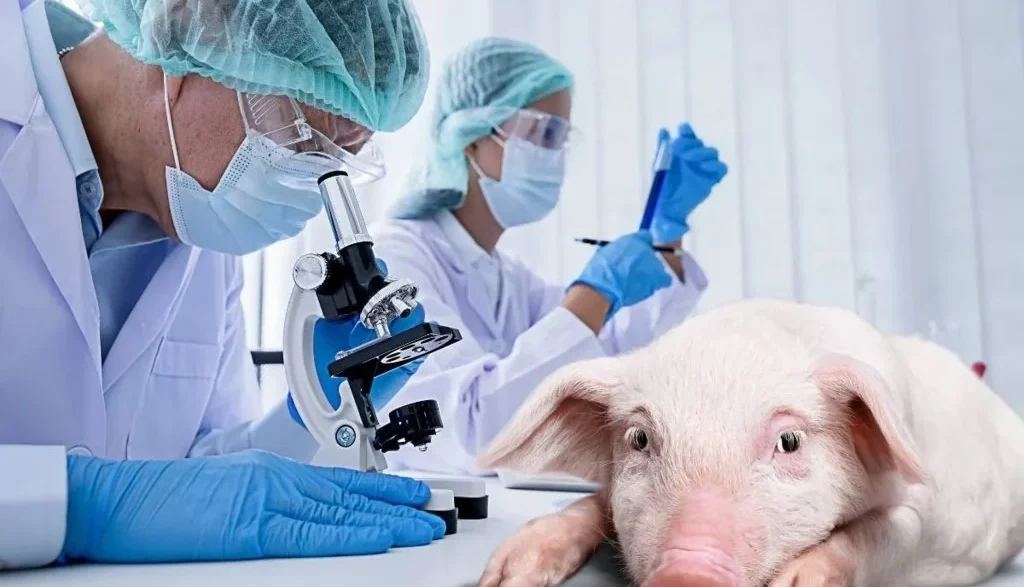
Scientists are increasingly exploring this possibility through xenotransplantation, a medical procedure involving the transplantation of organs, tissues or cells from one species into another. Recent advances in genetic engineering have brought this once-distant possibility closer to reality, raising hopes that animals could one day help address the persistent shortage of human donor organs.
A Medical Breakthrough Offers New Hope
On November 23, 2026, biotechnology company eGenesis and Mass General Brigham announced a remarkable milestone in transplantation research. A 58-year-old woman, Molly Falco, became the first living recipient of a genetically engineered pig kidney to surpass one year without dialysis. 

Falco had lived with kidney disease since childhood and began dialysis in 2024. She received the experimental pig kidney at Massachusetts General Hospital on November 22, 2025. According to the announcement, the transplanted organ was still functioning a year later, allowing her to remain independent of dialysis.
The development represents an important step towards making animal-to-human organ transplantation a viable medical option. However, researchers caution that one successful milestone does not establish long-term safety or guarantee that the procedure will become widely available.
Why Are Scientists Turning to Animals?
The demand for donor organs continues to exceed supply. According to the 2024 Global Observatory on Donation and Transplantation report, 173,727 solid organ transplants were performed worldwide in 2024, the highest number recorded by the organization. However, the achievement still falls far short of global demand.
Kidneys account for the largest proportion of organ transplants, reflecting the enormous need among people living with advanced kidney disease.
Traditionally, transplantation depends on suitable human donors, either living individuals or people who have died and whose organs can be donated. Unfortunately, limited donor availability, medical compatibility requirements and unequal access to transplant facilities leave many patients without this option.
Pigs have attracted scientific interest because their organs are relatively similar in size and function to human organs. They also reproduce relatively quickly, making it possible to develop controlled breeding programmes.
However, simply transferring a pig organ into a human body would trigger a powerful immune response. The human immune system recognises the foreign organ as a threat and attempts to destroy it.
This is where genetic engineering comes in.
How Genetic Engineering Makes Pig Organs More Compatible
Scientists use advanced gene-editing techniques to modify pigs so their organs are more compatible with the human body.
These modifications involve removing certain pig genes responsible for triggering strong immune reactions, introducing human genes that help regulate immune responses and disabling potentially harmful pig viruses.
The objective is to reduce organ rejection and minimise the risk of infections crossing from animals to humans.
In February 2025, researchers reported a landmark case involving a 62-year-old man who received a genetically modified pig kidney containing 69 genomic edits. The organ initially functioned successfully, and the patient no longer required dialysis. However, he died unexpectedly from cardiac causes 52 days after the procedure. An examination found no evidence that the transplanted kidney had been rejected.
These developments demonstrate both the possibilities and complexities of xenotransplantation.
READ ALSO: Redeemer’s Health Village: Why Robotic Surgery Could Be Better than Conventional Procedure
The Challenges Scientists Must Overcome
Despite the progress, several important obstacles remain.
Organ rejection: Even genetically modified pig organs can trigger immune reactions. Recipients require carefully managed immunosuppressive medication to prevent their bodies from attacking the transplanted organ. These drugs can increase vulnerability to infections and other complications.
Infection risks: Scientists must ensure that animal organs do not introduce harmful pathogens into human recipients. Continuous monitoring and strict breeding conditions are therefore essential.
Long-term survival: Researchers still need to establish how long these organs can function safely and whether they can provide reliable results over many years.
Ethical concerns: Using animals for organ production raises questions about animal welfare, genetic modification, religious beliefs and the boundaries of medical science. These concerns require transparent public discussion and appropriate regulation.
There are also questions about affordability and accessibility. Even if xenotransplantation becomes medically successful, its benefits could remain limited if the procedure is too expensive for ordinary patients.
What Could This Mean for Africa?
What Could This Mean for Africa?
For African countries, where access to specialised healthcare remains uneven, xenotransplantation presents both opportunities and challenges.
The scale of the problem is significant. According to a 2026 publication in Nephrology Dialysis Transplantation, only 544 kidney transplants were performed across Africa in 2024, representing approximately 0.5% of global transplant activity. The challenges facing organ transplantation across Africa highlight the urgent need for stronger healthcare infrastructure and improved access to specialized treatment.
Nigeria faces similar difficulties. The International Society of Nephrology’s 2023 Global Kidney Health Atlas identified limited transplant infrastructure, with approximately 0.07 kidney transplant centers per million people.
The financial burden is another major obstacle. A March 2026 report by The Guardian Nigeria revealed that kidney transplants in the country cost between ₦25 million and ₦30 million, while dialysis sessions range from ₦50,000 to ₦80,000. These costs place life-saving treatment beyond the reach of many families.
For patients unable to find suitable human donors, future advances in animal-to-human transplantation could offer another treatment possibility. However, making this technology accessible in Africa would require investment in specialised hospitals, research facilities, trained personnel and effective regulatory systems.
Until then, strengthening existing kidney-care services, improving access to dialysis and encouraging ethical organ donation remain essential. Xenotransplantation should complement these efforts, not replace them.
READ MORE: TG Omori Reveals Failed Surgery and N30m Dialysis Cost
A Future Full of Possibilities
The successful transplantation of genetically engineered pig kidneys represents one of the most intriguing developments in modern medicine. What once appeared to belong to science fiction is gradually becoming a subject of clinical investigation.
Nevertheless, scientists still have important questions to answer about safety, affordability, organ rejection and long-term survival.
For now, xenotransplantation remains an experimental field rather than an established alternative to human organ donation. But its progress offers a glimpse of a future in which the shortage of donor organs may no longer determine who gets a second chance at life.
The possibility that an animal organ could one day save a human life is remarkable. The greater challenge will be ensuring that such breakthroughs become safe, ethical and accessible to the people who need them most.

About The Author