


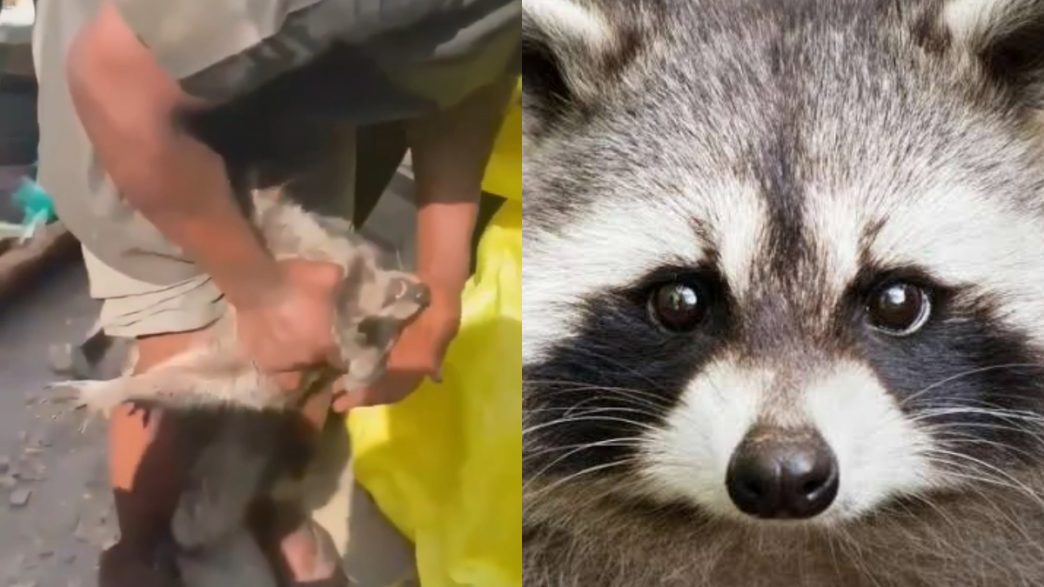
A raccoon apparently decided to take an international holiday, sneaked into a shipping container and survived a long sea voyage to arrive in Nigeria. Unfortunately, its adventure did not have the happy ending one might expect from a travel documentary.
The animal was discovered by workers unloading a 40-foot shipping container that arrived in Nigeria from abroad. It had reportedly been hiding around a Toyota vehicle and survived the journey by eating food items packed inside the container.
Footage of the discovery quickly made the rounds on social media, showing workers pulling the animal out. Its noticeably plump appearance also attracted attention, with eyewitnesses suggesting that it had enjoyed quite a buffet during its unexpected voyage. 
For a creature that probably had no idea it was leaving home, the journey was certainly memorable. The destination, however, might not have been what it had in mind.
How the raccoon in Nigeria became an unexpected passenger
According to accounts accompanying the viral footage, the raccoon somehow entered the container before workers sealed it for shipment. It then remained trapped inside as the cargo travelled across the sea.
The exact country of origin and shipping route have not been independently established, although some reports have identified Canada as the departure point.
When workers eventually opened the container, they found the animal near the imported vehicle. Its discovery produced a mixture of surprise, amusement and concern.
SEE ALSO: Think Twice Before Chewing Gum: 5 Countries Where the Habit Could Get You Into Trouble
Social media users wasted little time turning the incident into comedy. Some joked that the raccoon had made a terrible travel decision by choosing Nigeria over somewhere like Canada, while others imagined its shock at discovering its new surroundings.
Unfortunately, the jokes became considerably less amusing when reports emerged about what happened to the animal afterwards.
The sad ending to the raccoon’s Nigerian adventure
Wildlife researcher Arojinle reportedly described the raccoon’s killing after its discovery as sad, raising questions about how the animal was handled and whether anyone considered rescuing it.
The circumstances surrounding its death have not been independently confirmed by Nigerian wildlife or port authorities. There has also been no publicly verified account explaining whether anyone contacted a wildlife rescue organisation before the animal reportedly died.
The incident has therefore prompted conversations about the need for better procedures when workers discover unexpected animals inside imported cargo.
Why the raccoon in Nigeria raised wildlife concerns
Beyond the unusual journey, the discovery presented legitimate public health and environmental concerns.
Raccoons are native to North America and are not indigenous to Nigeria. Although they may look amusing, they remain wild animals that can bite or scratch when frightened. They can also carry diseases and parasites, including rabies and raccoon roundworm.
In April 2026, authorities in Bermuda dealt with a similar incident after a raccoon escaped from a shipping container. The island’s Department of Environment and Natural Resources trapped the animal but announced plans to humanely euthanise it because of the biosecurity risks it posed.
A different outcome followed a 2024 discovery in India’s Maharashtra state. Wildlife rescuers took custody of a raccoon found inside a shipping container after a 60-day journey from the United States. The animal was severely dehydrated, but rescuers planned to rehabilitate it and explore returning it to its country of origin.
These examples show that an unexpected wildlife passenger does not automatically have to become a casualty.
Nigeria needs better responses to wildlife stowaways
The Nigerian discovery highlights the importance of involving trained wildlife handlers and veterinary authorities whenever unusual animals turn up in imported cargo.
Workers should avoid grabbing or handling unfamiliar wildlife themselves. Instead, they should secure the area, keep people away and contact the appropriate authorities for assessment and safe removal.
After all, the raccoon did not book a flight to Nigeria, apply for a visa or deliberately relocate. It simply ended up somewhere it probably never expected to see.
ALSO READ: Nigeria Has 7 of the Biggest Church Auditoriums In The World In 2026, See the Top 10

About The Author