



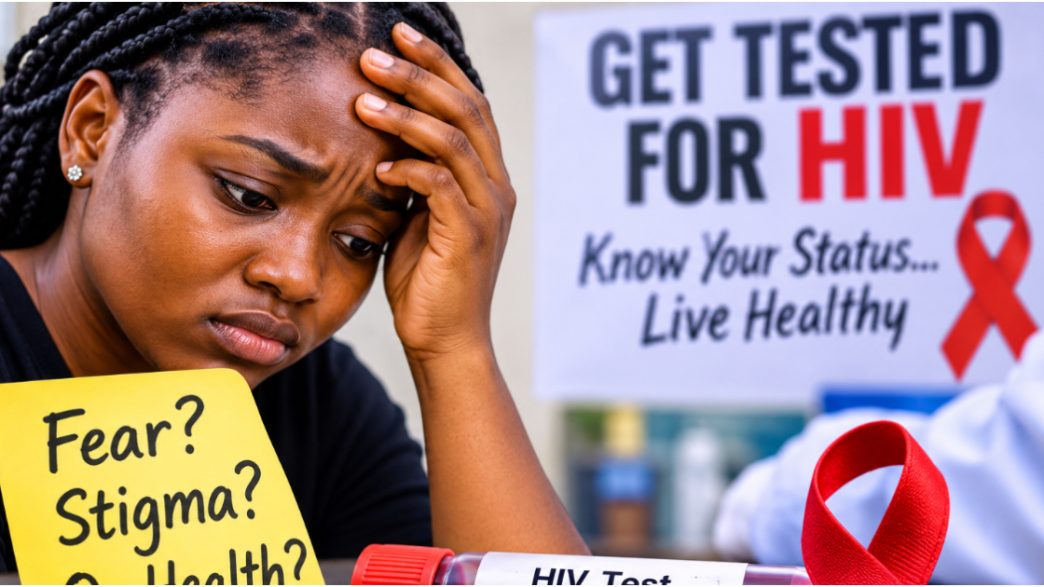
In a society where sexual relationships are part of everyday life, conversations about HIV and other sexually transmitted infections (STIs) remain uncomfortable for many Nigerians. While people may worry about contracting an infection, some would rather avoid testing than find out their status.
For them, ignorance feels safer than certainty. They would rather hold on to the hope that everything is fine than face a result that could change how they see themselves and how others treat them.
This attitude reflects the familiar belief that “what you don’t know won’t kill you”. Some people even believe that going for a medical check-up can trigger an illness or make their condition worse. Consequently, they ignore possible warning signs and avoid hospitals unless their symptoms become severe. 
The fear is particularly strong around HIV. Unlike some sexually transmitted infections that can be cured, HIV has no cure. However, effective treatment can control the virus and allow people living with it to enjoy long, healthy lives.
The discomfort surrounding HIV testing is not new. The introduction of home testing options was partly intended to remove the anxiety associated with visiting a hospital or testing centre. Nigeria also introduced guidelines for HIV self-testing in 2019 to make testing more accessible.
Yet, having the option to test privately has not removed every barrier. Some people still prefer not to know their status. This suggests that the problem goes beyond the fear of being seen at a testing centre. It also involves the emotional burden of a possible diagnosis, social judgement and uncertainty about the future.
Nigeria has made progress in enrolling people living with HIV on antiretroviral therapy (ART). More than 1.65 million people were receiving treatment in figures reported in November 2026. However, treatment initiation figures also showed a decline in October.
Data from the National Data Repository showed that 5,968 people started treatment in October, compared with 7,270 in September. This represented a drop of about 18 per cent.
The decline does not prove that fewer Nigerians are testing for HIV. Nor does it establish why fewer people started treatment that month. However, it raises questions about how effectively the country identifies people who need care and links them to treatment.
For Nigeria’s HIV response to succeed, people must be willing to know their status and seek medical support. So, what exactly makes that decision difficult?
The Fear of a Positive Result
One reason people avoid HIV testing is the fear of receiving a positive result. For some, the thought alone is enough to keep them away from testing centres.
They may not be afraid of the test itself. Instead, they worry about what the result could mean for their relationships, careers, families and future plans.
An HIV diagnosis can carry a heavy emotional burden, particularly for someone who believes the condition automatically means illness, rejection or death. Even when treatment is available, the thought of living with a lifelong infection can be difficult to accept.
A recent interview with Punch illustrates how deeply this fear can affect people. HIV advocate Chika Ekezie disclosed that he spent seven years in self-denial before publicly speaking about his status.
After experiencing recurring illnesses, he eventually visited a hospital and discovered that he was living with HIV. His experience reflects the emotional struggle that can come with confronting a diagnosis after years of avoiding the possibility.
In Nigeria, where HIV is still wrongly associated with promiscuity, shame and death, testing can feel like opening a door to judgement. Some people may prefer to ignore the possibility of infection rather than face the questions and assumptions that could follow a positive result.
However, avoiding a test does not change a person’s HIV status. It only delays the opportunity to receive an accurate diagnosis and, where necessary, begin treatment.
READ ALSO: HIV in Nigeria: Women Make Up 66% of Patients As Treatment Initiations Dip
The Stigma That Comes With an HIV Diagnosis
For many Nigerians, the fear of testing is closely connected to how society treats people living with HIV.
In his interview with Punch, Ekezie described how his diagnosis affected his employment and family relationships. He also said the experience contributed to his decision to stop attending church.
According to his account, his employers requested medical tests after he experienced recurring illnesses. He submitted the results at work at about 10 am. By 4 pm, he was reportedly informed that the company was renovating its premises and that he had to leave. He later discovered that his HIV status had been disclosed to other people without his consent. The information eventually reached members of his family.
The experience extended beyond the workplace. Ekezie recalled that some church members began avoiding his mother. He also said some relatives stopped treating him like family.
His account highlights a problem that extends beyond the medical effects of HIV. People living with the virus may also face discrimination, gossip, rejection and breaches of privacy.
For someone who has not taken an HIV test, such stories can make a positive result appear even more frightening. The concern may not be limited to the infection. It may also involve questions about who will find out, whether a partner will leave or whether family members will withdraw their support.
This fear can discourage people from seeking testing, even when confidential services are available. It also shows why protecting patients’ privacy and treating them with dignity must remain central to HIV care.
What Nigerians Still Get Wrong About HIV
Public attitudes towards HIV continue to influence how people living with the virus are treated.
Despite years of awareness campaigns, misconceptions remain common. Some people avoid hugging or shaking hands with someone who has HIV. Others refuse to share food, plates, spoons or drinking glasses with them. These reactions are based on a misunderstanding of how HIV spreads.
The World Health Organisation (WHO) explains that HIV is transmitted through specific bodily fluids, including blood, breast milk, semen and vaginal fluids. It can also pass from a mother to her child during pregnancy and delivery.
However, ordinary contact does not spread HIV. People cannot contract the virus by hugging, kissing casually, shaking hands or sharing food, water and personal objects.
Another damaging misconception is that everyone living with HIV must have been promiscuous. This assumption ignores the different ways the virus can be transmitted. It also places unfair blame on people who receive a positive diagnosis.
The consequences of these attitudes are reflected in Nigeria’s 2021 People Living with HIV Stigma Index 2.0 report, published by the National Agency for the Control of AIDS (NACA).
The study examined the experiences of 1,240 people living with HIV across 16 states and the Federal Capital Territory.
It found that 53.3 per cent of respondents who made their own decision to get tested had delayed testing because they feared how people would react to their results. Meanwhile, 23.1 per cent said they took more than six months to decide to get tested.
The report also found that 65.9 per cent had hidden their HIV status from others. A further 75.6 per cent said they found it difficult to tell people they were HIV-positive.
Some respondents also reported internalised stigma. About 15.2 per cent said they felt dirty because of their HIV status. Others reported feelings of guilt, shame and worthlessness.
These findings show that stigma can affect people even after diagnosis. It can influence whether they seek testing, disclose their status or access support.
For someone considering an HIV test, the possibility of facing similar treatment can be overwhelming. They may worry about their family’s reaction, their friends’ opinions or the possibility of losing a relationship.
In some cases, the fear of society’s response can become more frightening than the medical diagnosis itself. Consequently, people may choose uncertainty because they believe it will protect them from embarrassment or rejection.
SEE ALSO: Kenya Launches Breakthrough HIV Prevention Shot — See African Countries with Highest HIV Rates
The Actual Truth About HIV
Some people still see HIV as a death sentence. Others believe they can contract it through ordinary contact with someone living with the virus.
However, medical advances have changed what an HIV diagnosis means. Although there is currently no cure, effective treatment can control the virus and help people live long, healthy lives.
Human immunodeficiency virus (HIV) attacks the body’s immune system. It targets white blood cells, weakening the body’s ability to fight infections and certain diseases.
Without treatment, HIV can progress through three stages: acute HIV infection, chronic HIV infection and acquired immunodeficiency syndrome (AIDS).
1. Acute HIV infection
This is the early stage, when the virus multiplies rapidly and the amount of HIV in the blood can become very high.
Some people experience flu-like symptoms, including fever, headache, sore throat and swollen lymph nodes. Others may have no noticeable symptoms.
During this period, HIV can spread through exposure to infected bodily fluids. However, symptoms alone cannot confirm whether someone has HIV.
Starting antiretroviral treatment early helps control the virus and protects the immune system.
2. Chronic HIV infection
The second stage is also known as chronic HIV infection. During this period, the virus remains active but reproduces at a slower rate.
Some people may not experience symptoms for many years. However, the virus can continue damaging the immune system without treatment.
This is why medical professionals encourage people to test when appropriate, rather than relying on how healthy they feel.
A person can appear healthy and remain active while living with HIV. The absence of symptoms does not necessarily mean the virus is absent.
3. AIDS
Acquired immunodeficiency syndrome (AIDS) is the most advanced stage of HIV infection.
At this point, the immune system has suffered severe damage. The body becomes more vulnerable to infections and certain cancers that a healthy immune system would usually fight.
People with advanced HIV may experience significant weight loss, recurring fever, night sweats and serious infections.
However, an HIV diagnosis does not automatically mean a person has AIDS. With effective treatment, many people living with HIV never develop this advanced stage.
When Should You Start Treatment?
An HIV diagnosis should lead to medical care, not hopelessness. The WHO recommends that everyone diagnosed with HIV should receive antiretroviral therapy, regardless of their CD4 count or whether they have symptoms.
ART works by preventing the virus from multiplying. When taken as prescribed, it can reduce the amount of HIV in the blood to very low levels.
People who maintain an undetectable viral load cannot transmit HIV through sex. This principle is commonly known as Undetectable equals Untransmittable, or U=U. However, reaching and maintaining an undetectable viral load requires consistent treatment and regular medical monitoring.
Starting treatment early offers important benefits. It helps protect the immune system, reduces the risk of serious complications and supports long-term health.
People who have lived with HIV for years without knowing their status can still benefit from treatment. A late diagnosis does not mean that medical care is pointless.
The important step is to seek professional support and follow the treatment plan recommended by a qualified healthcare provider.
The Consequences of Not Knowing
The stigma, rejection and discrimination associated with HIV help explain why some people avoid testing. However, refusing to know one’s status can create other risks.
1. Late diagnosis and complications
A person can live with HIV for years without experiencing obvious symptoms. During that time, the virus may continue weakening the immune system.
Someone may maintain an active social life, exercise regularly and carry on with daily activities without suspecting an infection.
However, untreated HIV can progress and cause serious health complications. Although treatment remains beneficial at different stages, delaying diagnosis can allow preventable damage to occur.
Testing helps people identify an infection and access care before complications become severe.
2. Increased risk of HIV transmission
A person who does not know their status may unknowingly transmit HIV to a sexual partner.
Without treatment, the virus can continue multiplying in the body. Early diagnosis and effective ART can reduce the viral load and prevent sexual transmission once it becomes and remains undetectable.
This is why testing and treatment are important beyond an individual’s health. They also form part of wider efforts to prevent new infections.
3. Prolonged fear and uncertainty
Avoiding an HIV test does not necessarily remove the fear of being positive. In many cases, it prolongs it.
Someone who suspects they may have been exposed to HIV may spend months worrying about their status. They may also interpret ordinary illnesses or minor symptoms as signs of infection.
Testing provides clarity. If the result is negative, the person can discuss prevention and any need for repeat testing with a healthcare professional. If it is positive, they can begin treatment and receive support.
Either way, knowing one’s status is more useful than remaining trapped in uncertainty.
4. Increased risk of mother-to-child transmission
Pregnant women who do not know they have HIV may miss important opportunities for treatment and medical support.
Without appropriate care, the virus can pass from mother to child during pregnancy, childbirth or breastfeeding.
However, timely diagnosis and effective treatment can greatly reduce this risk. Routine antenatal care and HIV testing therefore play an important role in protecting both mother and child.
READ MORE: Enugu Police Arrest Man Over Girlfriend’s Death Following HIV Dispute
Making HIV Testing Less Frightening
Encouraging Nigerians to test for HIV requires more than telling them to visit hospitals. It also means addressing the reasons they are afraid to go.
Healthcare providers must protect patients’ confidentiality and treat everyone with respect. Employers, families, religious institutions and communities must also reject discrimination against people living with HIV.
Awareness campaigns should explain how the virus spreads and challenge the myths that fuel stigma. They should also make clear that HIV is manageable with proper treatment.
HIV self-testing can offer another route for people who prefer privacy. However, anyone who receives a reactive result from a self-test needs confirmatory testing through an approved healthcare service. A self-test result alone is not a final diagnosis.
Testing should also be presented as a normal part of looking after one’s health, not as evidence of promiscuity or wrongdoing.
The Fear of Knowing Must Not Cost Lives
At the end of the day, refusing an HIV test does not reduce the possibility of having the virus. It only leaves a person without the information needed to make informed health decisions.
The fear of a positive result is understandable, especially in a society where people living with HIV still face judgement, rejection and discrimination. But an HIV diagnosis does not mean life is over.
With proper treatment and medical support, people living with HIV can work, build relationships, have children and enjoy long, healthy lives.
Perhaps the bigger problem is not simply the fear of testing. It is the way society treats people who disclose their status.
Until Nigerians challenge stigma, protect medical privacy and stop judging people living with HIV, many may continue to avoid testing. They may hope that staying ignorant will somehow keep them safe.
But knowing one’s status offers something fear cannot provide: the opportunity to act early, access treatment and protect one’s health.
Seeking clarity is healthier than living in fear.

About The Author