



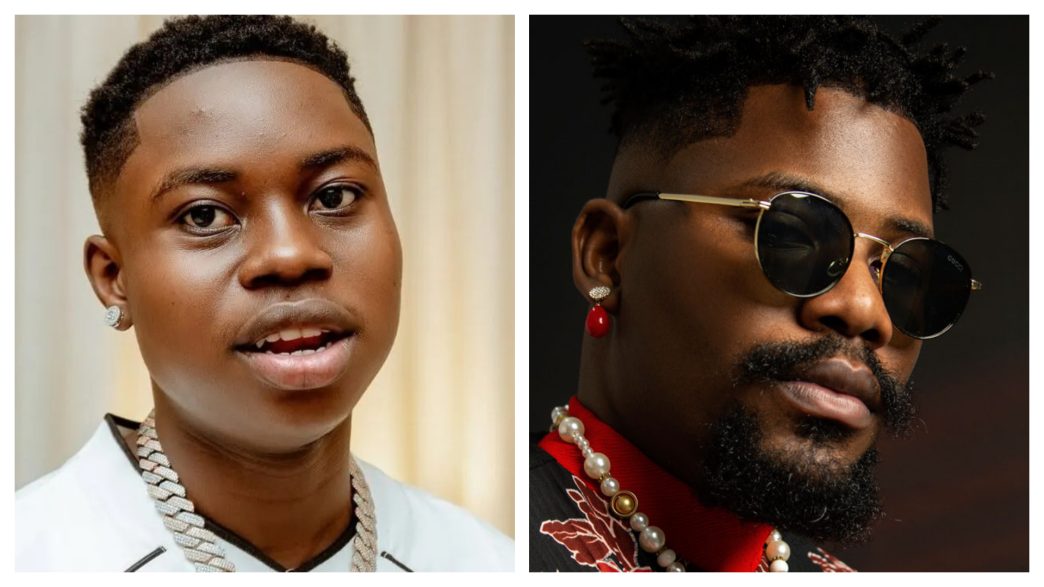
Nigerian rapper Ycee recently discussed “Olodo Uprising” on the Afropolitan Podcast igniting online debate and discuss.
What is Olodo Uprising?
The phrase itself doesn’t have a precise origin, but it’s part of internet lore whereby dumb people and takes are referred to as ‘Olodo core’.
He described what he calls an “Olodo Uprising”—a cultural shift he believes is steering Nigerian youth away from intellectual pursuits and toward content that values ignorance over knowledge. 
“It’s not even Yahoo culture anymore. Now we have a ‘Peller culture.’ This Olodo uprising we even have right now; we’re trying so much to accommodate unintelligent people and ignorant people, so now they’re like the majority.”
What Ycee Actually Said

Ycee’s argument had multiple layers. He spoke about a growing lack of recognition for academic success in Nigeria, the idea that young people are no longer encouraged to prioritise education because the culture does not reward it visibly. He contrasted his own upbringing, where school was structured, mandatory, and disciplined, with what he observes today: a shift toward content that prioritises clicks and engagement over personal development.
He was careful to frame it as a systemic issue rather than a personal attack, pointing to what he described as a broader failure to preserve the intellectual culture of Nigerian youth. However, by naming Peller directly in connection with the term “Peller culture,” he made the conversation personal, whether he intended to or not.
Odumodublvck’s Position
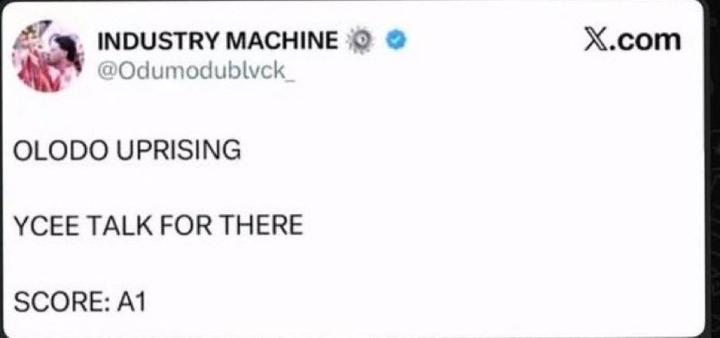
Rapper Odumodublvck was succinct but direct. Under the heading “OLODO UPRISING / YCEE TALK FOR THERE” on X, he rated Ycee’s remarks “SCORE: A1,” publicly supporting the criticism. His endorsement added weight to the original statement in online discussions and brought him into Peller’s response about the hypocrisy of musicians who privately celebrate creators but publicly distance themselves from their influence.
SEE ALSO: Cubana Chief Priest May Never Follow Through on Promised Live DNA Test
Peller Fires Back
Peller responded strongly. His counter-argument was in two parts.
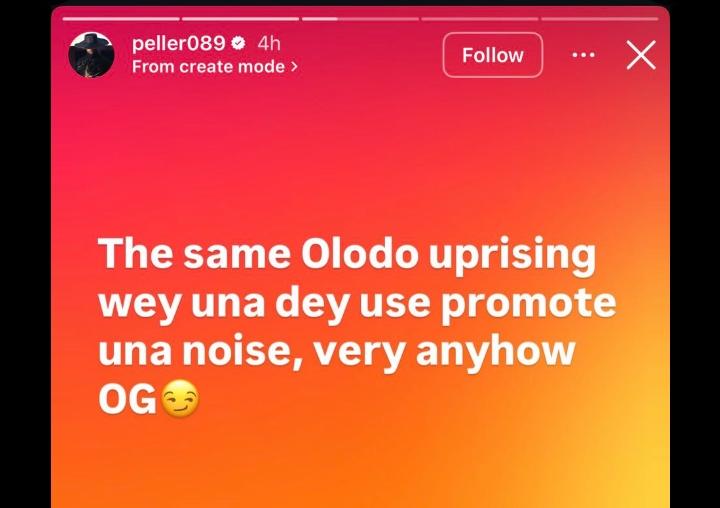
The first focused on hypocrisy. He accused YCee and other musicians of criticising the social media ecosystem where creators like himself operate, while also using that same platform to promote their music. “It’s the same Olodo wey una dey use promote una noise,” he said, a line that resonated strongly with his supporters.

The second addressed the economics of the industry. He revealed that Odumodublvck—who had publicly rated YCee’s remarks as “A1” on X—had contacted him about three months earlier, saying, “I love what you do” and asking for Jarvis’ contact to work with her. Peller’s point was clear: artists recognise the reach of content creators privately, but dismiss them publicly when it’s convenient.
He also pointed out that only 10 to 15 musicians in Nigeria make significant income from their work, while most rely on social media visibility and free promotion from creators like himself. With 15 million followers, he said he often promotes artists at no cost, but he is also running a business, which the industry tends to ignore when criticism arises.
Jarvis Weighs In

Jarvis, Peller’s partner and fellow content creator, offered a perspective that reshaped the entire discussion.
“Me that went to school and graduated, as the government didn’t give us a job, what did you want us to do? You can’t expect those who have high IQs and at the end of the day end up cleaning toilets.”
This shifts the debate from character to circumstance. Jarvis isn’t defending ignorance but highlighting a structural failure that drives educated young Nigerians to seek alternative income sources because traditional paths don’t deliver.
SEE ALSO: Is Jarvis Pregnant with Peller’s Child? Here’s What We Know
What Nigerians Are Saying
The public response has mostly shown sympathy for YCee’s main argument, though with nuance.
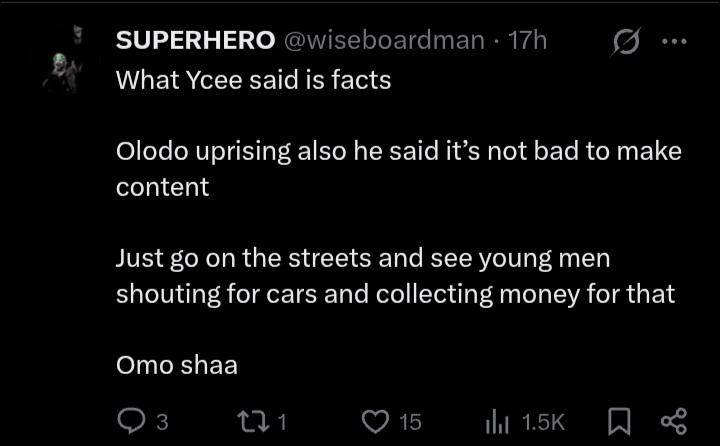
@wiseboardman on X wrote: “What YCee said is facts. Olodo uprising, also he said it’s not bad to make content. Just go on the streets and see young men shouting for cars and collecting money for that. Omo shaa.”
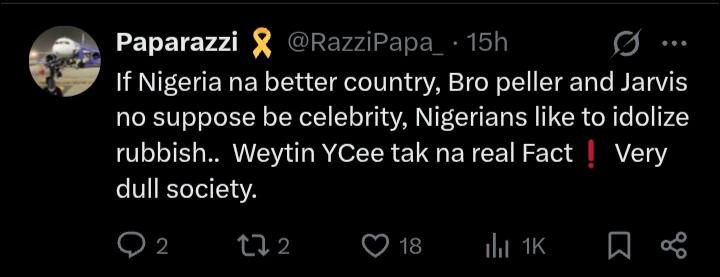
@RazziPapa_ was more direct: “If Nigeria na better country, bro Peller and Jarvis no suppose be celebrity. Nigerians like to idolize rubbish. Wetin YCee talk na real fact. Very dull society.”
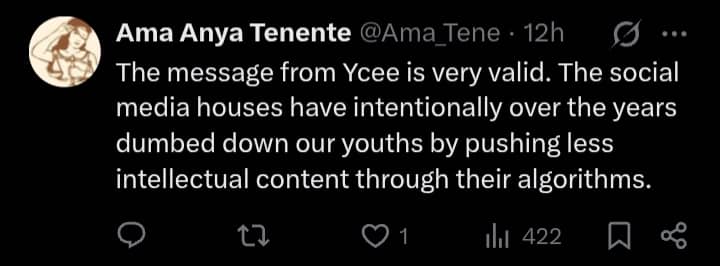
@Ama_Tene gave a structural perspective: “The message from YCee is very valid. The social media houses have intentionally over the years dumbed down our youths by pushing less intellectual content through their algorithms.”
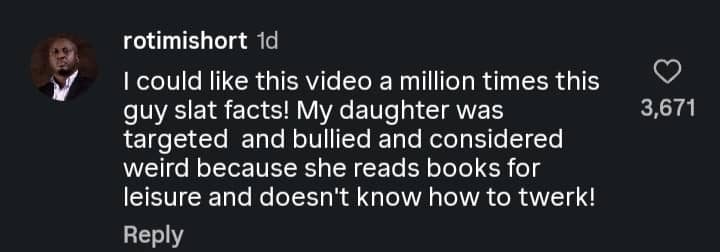
On Instagram, @rotimishort added a personal note that struck a chord: “I could like this video a million times. This guy slats facts. My daughter was targeted and bullied and considered weird because she reads books for leisure and doesn’t know how to twerk.”
SEE ALSO: Peller’s Car Crash and 8 Other Times African Celebrities Crossed The Line for Clout
The True Issue Behind This
What makes this debate bigger than YCee versus Peller is what it truly concerns. It’s about what Nigeria publicly rewards, what it ignores, and what happens to young people caught in both.
YCee isn’t entirely wrong. A culture that doesn’t visibly celebrate academic achievement does lose something. Peller isn’t entirely wrong either. Content creation has become an important livelihood in a country where formal employment has failed many graduates.
Jarvis stated it plainly: “What do you do when the degree does not open any doors?”
Both can be true at the same time. The real problem is that a country in genuine crisis cannot afford to treat these issues as mutually exclusive.

About The Author