


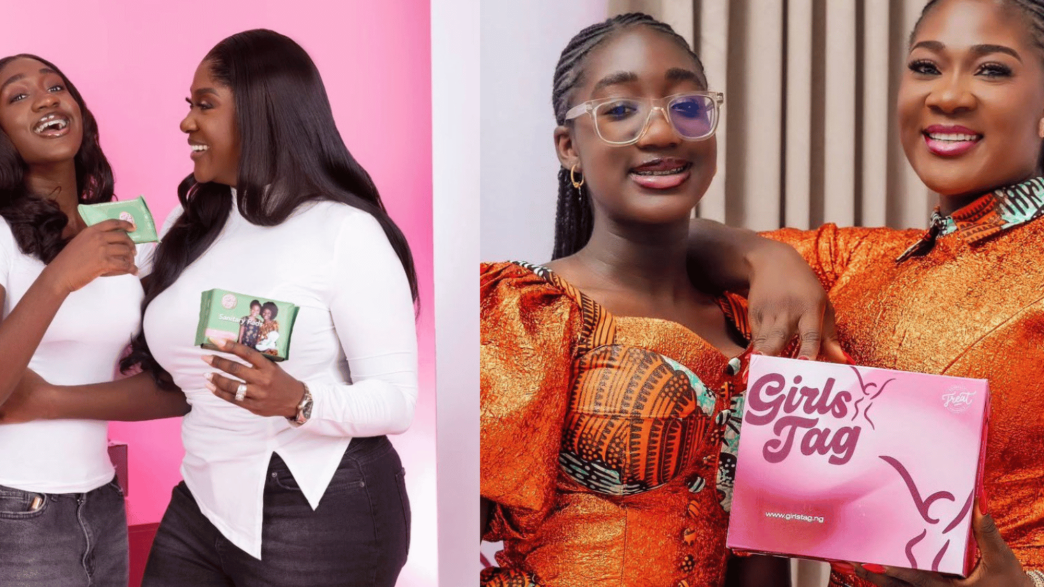
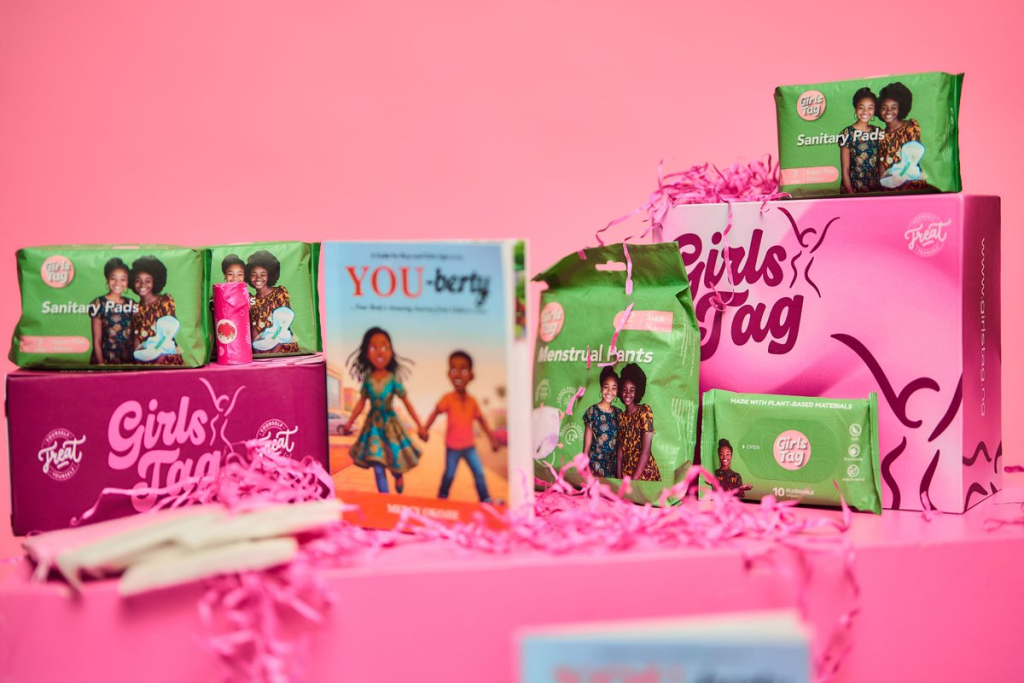
Recently, iBlend Services, with Mercy Johnson-Okojie and her daughter Purity Okojie as ambassadors, launched a premium all-in-one menstrual kit for women and girls.
The ₦25,000 menstrual kit contains:
1. A total of 3 premium packs of sanitary pads in multiple absorbency variants (regular, super, super plus) 
2. A 2-piece pack of overnight period pants
3. A 16-piece pack of panty liners
4. A 10-piece pack of flushable wipes
5. A pack of disposable bags
6. A discreet carrying pouch
7. An educational booklet (“Youberty” on puberty, authored by Mercy)
In contrast, in Nigeria, a standard pack of 8 to 10 pads typically costs ₦1,000–2,500, depending on the brand. There are also cheaper generic options that cost around ₦800–1,500. With this amount per pack of menstrual pads, annual costs for one person can run ₦9,600–30,000+, depending on flow and brand.
SEE ALSO: PCOS Has a New Name, PMOS – Here’s Why
Is Girl Tag Tone Deaf, or Is This a Product of Class?
Nigeria faces a significant level of period poverty. An estimated 37 million girls and women struggle to access affordable menstrual products every month. This struggle, especially for the girls, leads to school absenteeism (one in four or more girls miss school), use of unhygienic alternatives (rags, tissue, newspapers), health risks, and stigma. Many families live on very low incomes, and the price of basic menstrual pads is already a burden.
In a country with widespread poverty and period poverty, launching a ₦25,000 kit as a high-profile celebrity product can feel tone-deaf or elitist to many.
The menstrual kit doesn’t directly solve access for the millions who can’t afford even basic pads reliably. It is quite contrary to her short Instagram campaign #PadForEveryGirl, after the Girls Tag launch, where Mercy Johnson-Okojie spoke about making pads more accessible and donating/advocating. The approach is positive, but the flagship product itself is luxury-tier.
Mercy Johnson’s ₦25k menstrual pads kit is positioned as a thoughtful, higher-end product for mothers and daughters. It emphasises comfort, discretion, education, and quality. However, the gap between ₦25k and ₦1–2k shows how menstruation remains a luxury for too many Nigerian girls.

About The Author