


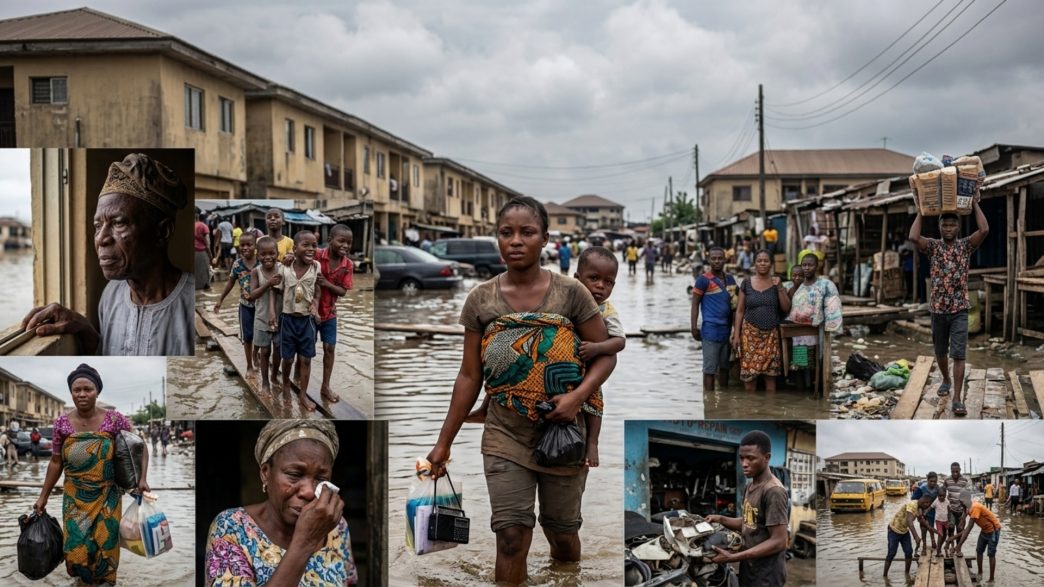
On Sunday, 28 June 2026, a persistent downpour began in Lagos, starting from the early hours of the morning till late at night. For a city whose name literally means lagoon or lake, that wasn’t a good sign because what happened in those twenty-four hours across Surulere, Gbagada, and Lekki was not merely bad weather but destruction.
The rain didn’t just wash away dirt but capital, personal belongings and the income of many people living in the city. One thing was clear, the mega city is sinking under the weight of clogged canals, dirty gutters, lack of drainage and infrastructural and human activities. 
We spoke to the victims of these floods from Surulere to Gbagada and Lekki, here are their stories.
ALSO READ: How Much Does Lagos Lose to Floods?
Surulere: The Mainland’s Swamp
In Surulere, the crisis was unprecedented, destructive and the impact was felt by all.
A mechanic said, “The rain started little by little; I did not know it was going to become something serious,” recalls a local mechanic whose workshop is in the area.
“The truth is we have never experienced this kind of flooding before. The flood reached people’s waist level. In my shop, clients’ properties were severely damaged. Now, I am fixing them out of my own pocket because they were brought to me in good condition.”
The mechanic doesn’t believe it was a natural disaster but systemic maintenance failures. “We cannot blame anyone but the system. Our canals are filled up because of blockages. Before, these channels were regularly desilted. Recently? They have been completely abandoned.”
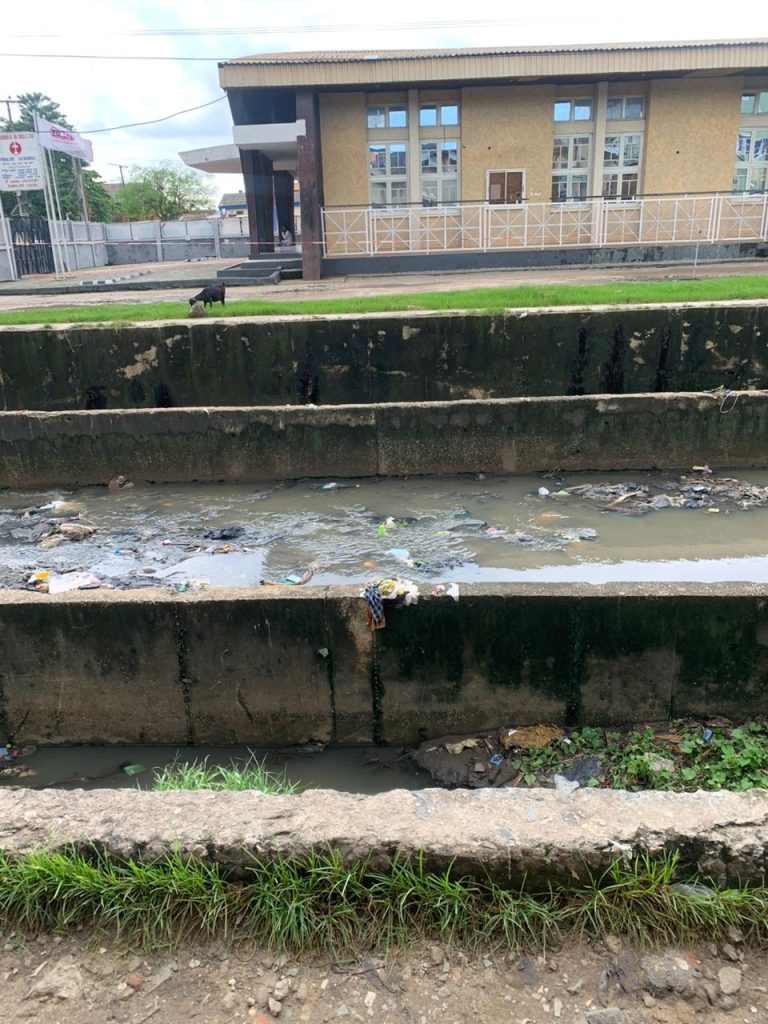
A few blocks away, a petty trader replied to our questions with a look of distress on her face. “The water spoiled cars, mattresses, and rugs spread outside,” she said. “Our businesses completely paused that day and days after because it stopped all movement.”
For those who attempted to weather the storm, they were faced with more troubles that they anticipated. “I thought I could enter the flood with my scooter, but the water swallowed half my bike, choking the silencer. It died on the way. I had to fight the current to drag it back so the flood wouldn’t sweep it into the open canal.”
II. Gbagada: Broken Drainage and Unfinished Projects
Further in Soluyi, Gbagada, the crisis took over homes. On Ogunjirin Street, the flooding was said to be due to a state-backed infrastructure project left uncompleted.
“The water filled many rooms, eventually reaching the bedroom at almost 12 inches,” a resident told us. The anger she felt was because of construction happening outside her gate. “A drainage project was proposed here but never completed, and that delay is what destroyed us. The situation wasn’t this bad last year. The flooding began after a segment of the old drainage channel was destroyed for the new construction. Now, the water has nowhere to go.“
A woman sitting in front of her home told us, “Drainage work had been proposed, but it was never completed, and that delay worsened the flooding. The situation was not as bad last year. The flooding began after someone destroyed the drainage gutter in the area. Without a functioning channel, water no longer flows away and instead enters people’s buildings.”
Road construction is currently ongoing in the area as well. “My house is still flooded, and many of us are now relying on pumping machines to remove water from their homes.”
“We spent hours packing water out of the house until 3 a.m.,” another Gbagada resident shared, describing a night spent awake with her husband and children. “Whenever there is heavy rain, floodwater comes out from the nearby canal. The water flooded everywhere down to the bridge in Ifako.”
III. Lekki: The Rich Also Cry
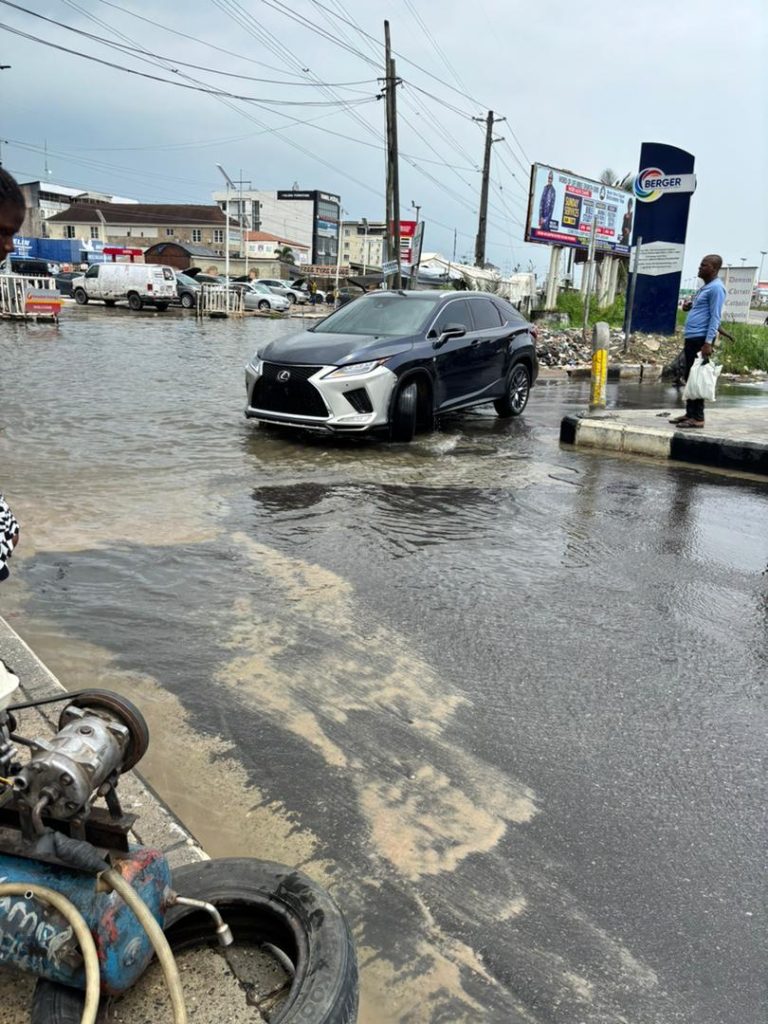
On the Island, where real estate runs into hundreds of millions of naira, the flood showed how fragile the coastal area was, truly living up the word, ‘Island’. In Lekki, the ongoing construction of the Lagos-Calabar Coastal Road has changed the topography. Near the coastal corridor, a luxury salon owner stood in the ruins of her life’s savings.
“You walk into the business into which you poured your heart, your entire savings, only to see it completely submerged in water,” she said, staring at the spoiled expensive fixtures of her investment.
In one gated estate, a resident showed us something troubling online: the threat isn’t just falling from the sky; it is rising from beneath the ground. “The entire car park is gone. Up the stairs, the water level is rising toward the prepaid electrical meter. The scary thing is that the water is coming up from underground.”
For the working class who service these affluent areas, the flood is harming their physical bodies and properties. A Glovo delivery rider around Ologolo and Agungi told us his daily reality:
“Waking up to ride to Ologolo gives me a headache. Most times, the water is up to my waist. It destroys my bicycle, it spoils my phone. Yes, I earn a bit more when it rains, but Ologolo and rain do not go well together at all.”
For those who live there, the daily commute has become a chore. “The flood didn’t get to my house but every time I want to leave my house, I have to think of the ocean in front of my street,” a young female resident rushing to work shared.
A car owner recounted in frustration: “My fender just snapped off, my car is damaged, and the local area boys are already demanding money to help push it. What hurts most about living on the Island is the amount you must spend every rainy season just to repair your vehicle after a single rainfall.”
The voices from the June 2026 floods reveal a dangerous pattern. From the canals and drainages of Gbagada and the poorly planned Lekki, Lagosians are paying the price for a city in rapid development, piling refuse, blocking drainages, building on top of water and blocking canals. With a declining coastline, someone said we will soon know what atlantic means in Eko Atlantic.
ALSO READ: The Only Way Lagos Can Stop Smelling Badly

About The Author