


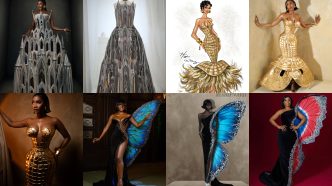
The 12th Africa Magic Viewers’ Choice Awards (AMVCA) did not only celebrate film and performance. It also turned its red carpet into one of the most discussed fashion spaces in African entertainment.
Held in Lagos on May 9, 2026, AMVCA 2026 delivered the usual mix of high glamour and bold styling. But beyond the aesthetics, some looks in particular raised questions about inspiration and originality. 
Cathedral Dress Sparks Debate Over Inspiration and Credit
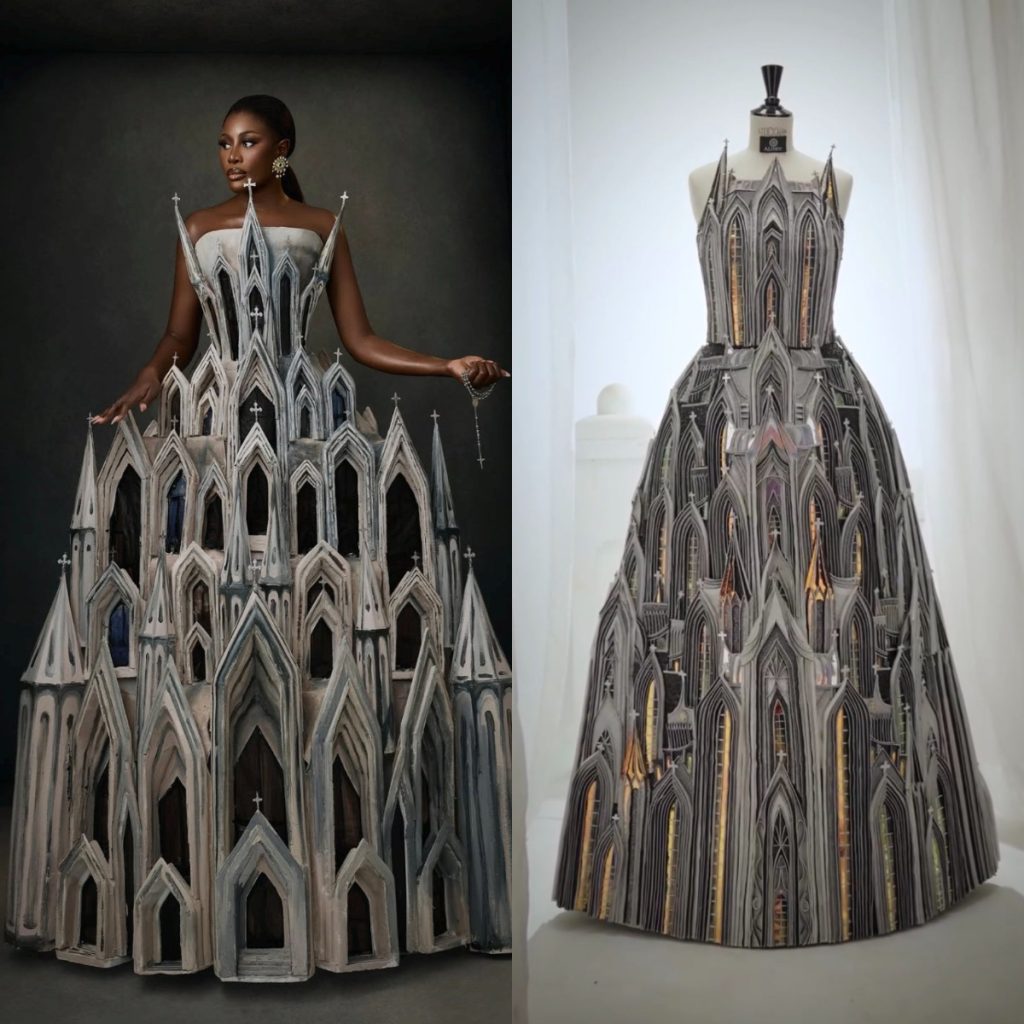
Nana Akua Addo’s cathedral-inspired AMVCA gown became the centre of an online dispute shortly after the event, after Paris-based designer and founder of Almee Couture questioned its originality. The designer suggested the look closely resembled an earlier concept of hers, describing it as a case of “blatant theft” while arguing that proper inspiration credit should have been given.
The gown, created in collaboration with Mohammed Abbas Ossu, had already drawn attention on the AMVCA red carpet for its bold architectural structure and cathedral-like silhouette.
In response, Nana Akua Addo stated that the concept originated from her own creative direction. She shared screenshots of earlier exchanges showing an AI-generated version of the outfit idea she had presented to the first designer she approached. According to her, the designer had indicated that the concept would require modifications to be executed, a direction she declined.
The exchange has since increased discussions around originality, inspiration, and ownership in fashion, especially as AI-generated concepts and digital sketches become more common in the design process.
What began as a red carpet highlight has now become a broader conversation about how ideas are developed, credited, and interpreted in fashion spaces.
ALSO READ: 400 Sponges, Cathedrals, Fish Pods: Nigerian Designers Redefine Fashion at AMVCA 12
Nana Akua Addo’s Second Look Also Draws Attention as being a Replica
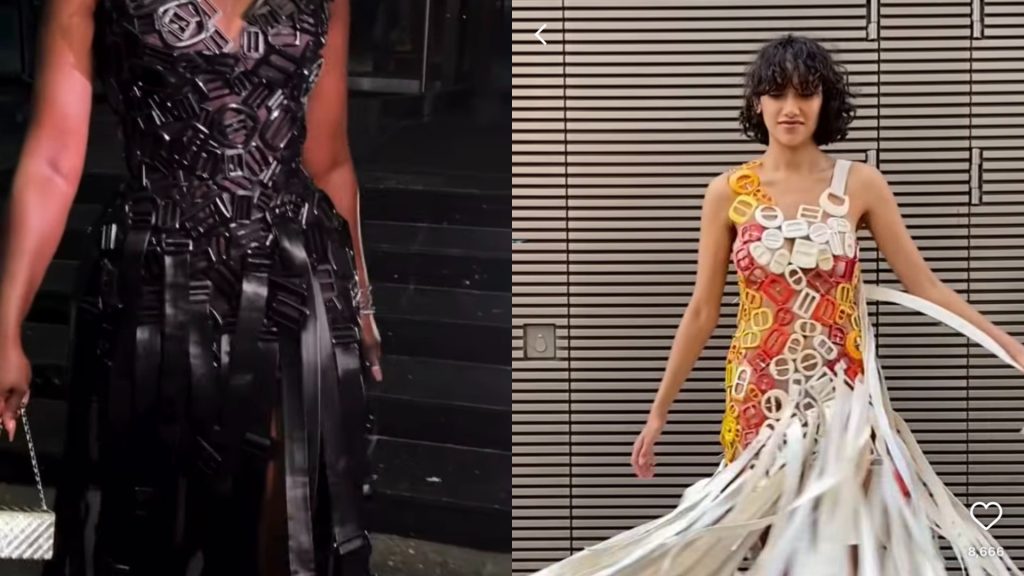
The conversation around Nana Akua Addo’s AMVCA looks continued after online users noticed similarities between her after-party buckle dress and a design previously shared by designer Tijn Roozen as part of his 2025 graduation collection.
This outfit gained more attention after Roozen posted both looks side by side on Instagram with a side-eye emoji, a move many interpreted as a subtle reaction to the similarities.
Unlike the earlier cathedral gown controversy, designer Mohammed Abbas Ossu, also known as Abbaswoman, later tagged Roozen on the post and invited him as a collaborator, a detail that quickly became part of the online conversation surrounding the dress.
Butterfly Silhouettes and the Question of Reference
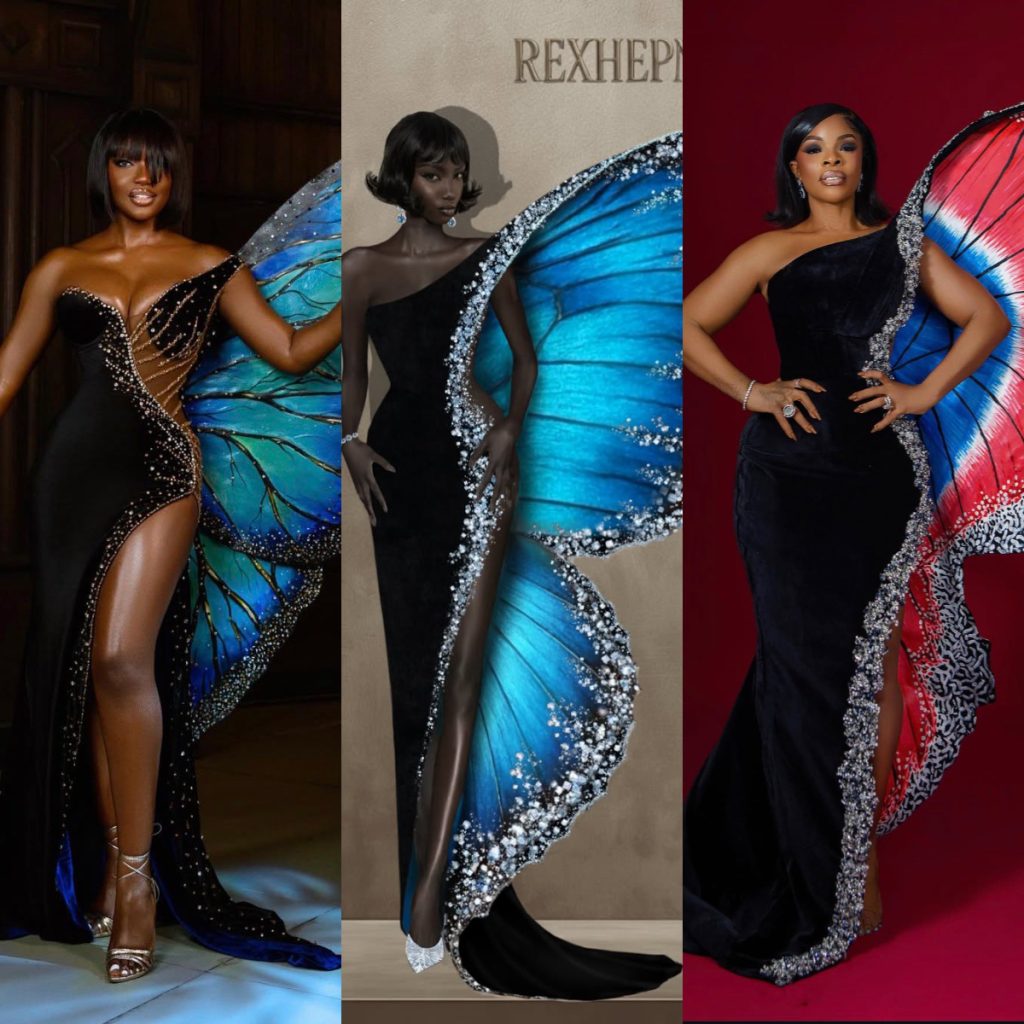
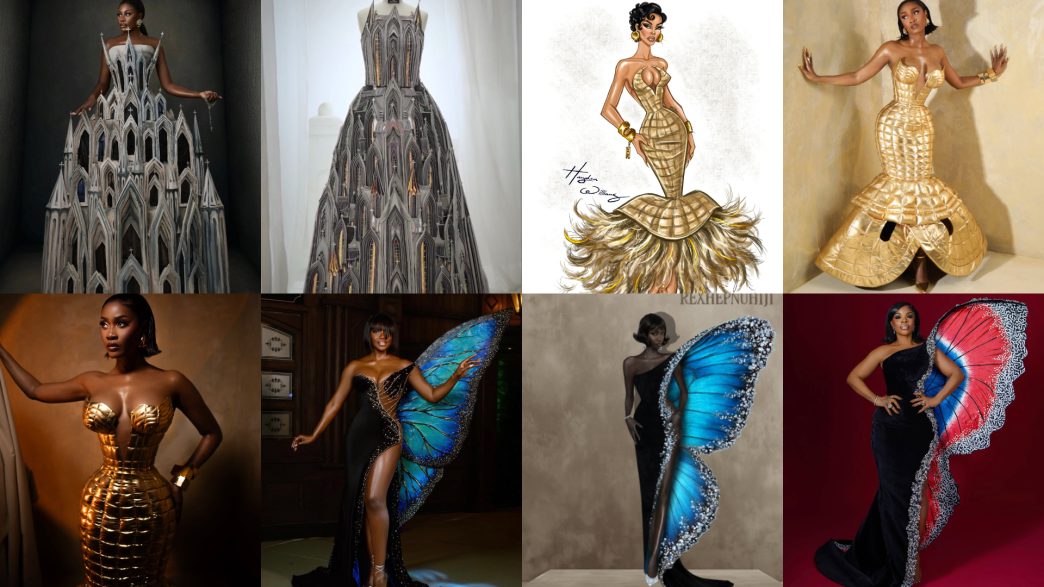
Online viewers have drawn comparisons between the two butterfly-inspired gowns worn by Laura Ikeji and Lesliana Pereira at the AMVCA and the January 2026 concept illustration by a designer and fashion illustrator, Rexhep Nuhiji, which featured Anok Yai in a black gown with a dramatic blue butterfly wing structure extending across the body.
The similarities sparked discussion across fashion communities, particularly around silhouette placement, colour composition, and overall design direction.
While some viewers saw it as clear inspiration, others viewed it as part of a wider fashion trend where natural motifs often overlap across different designers and creative platforms.
Credit, Timing and Attribution
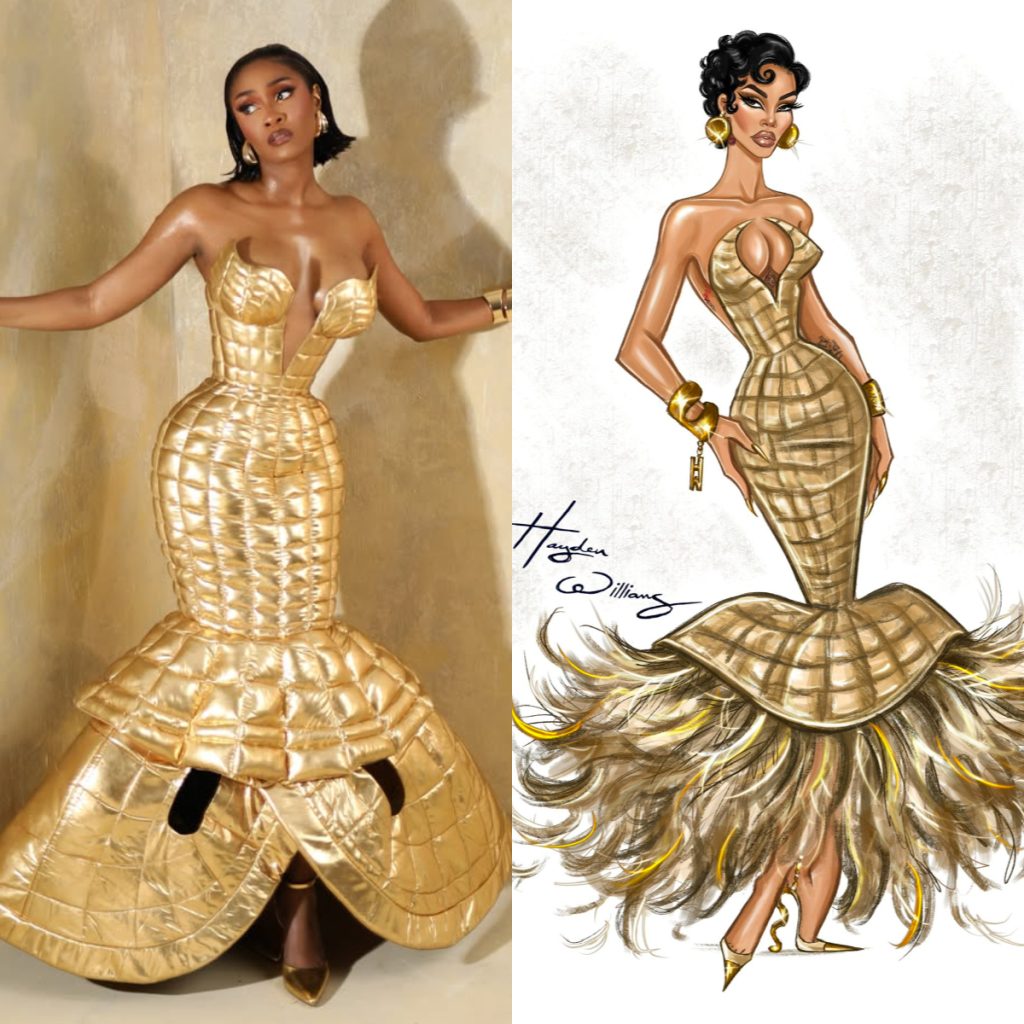
Another AMVCA 2026 look that entered the wider conversation was the gold outfit worn by Nigerian actress Toni Tones.
The look was styled by Styledejavuu and constructed by Emagine by Bukola and was widely circulated for its craftsmanship and presentation.
However, British fashion illustrator Hayden Williams later noted a resemblance between the outfit and a concept sketch he had created earlier in 2026 for Teyena Taylor’s styling idea.
Following this, credit was added in Toni Tones’ caption, and the stylist also acknowledged Williams. The series of events led to online discussion around attribution in fashion, particularly the difference between initial credit and credit given after public prompting.
In an era where images travel instantly and comparisons are immediate, questions around originality, inspiration, and credit have become central to how fashion is discussed online.
While inspiration remains an accepted part of creative work, visibility now demands clearer acknowledgement, especially when similar ideas circulate across multiple platforms at the same time.
By Lawanson Rebecca

About The Author