


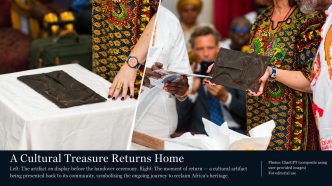
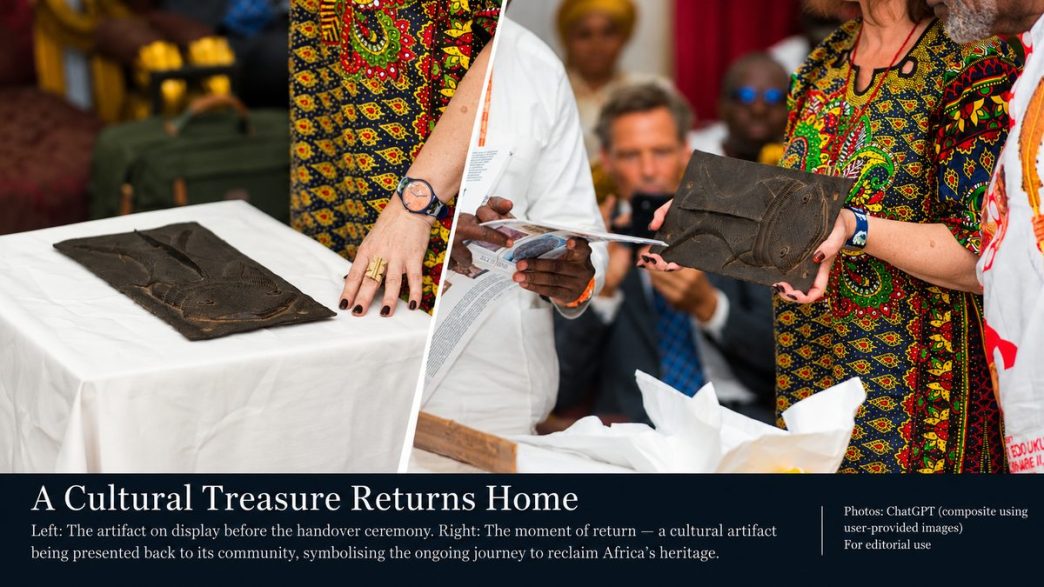
A piece of the Benin Kingdom’s history returned home on October 20, 2026, when the Netherlands handed an 18th-century artifact to the Oba of Benin, Oba Ewuare II, in Benin City.
The presentation took place during celebrations marking the monarch’s tenth coronation anniversary, 129 years after British forces invaded Benin City and looted thousands of cultural objects. The artifact, which had been held by Museum de Fundatie in the Netherlands since 1937, carries spiritual significance associated with reincarnation and the Olokun deity.
For the people of Benin, its return represents more than the recovery of an old object. It reconnects a community with its history and raises a question that reaches far beyond Nigeria: how much of Africa’s cultural heritage remains outside the continent, and what will it take to bring it home? 
Across Africa, the movement to reclaim lost treasures is gaining momentum. From the famous Benin Bronzes to ancient Ethiopian manuscripts and a sacred talking drum from Côte d’Ivoire, African artifacts returned in recent years have reopened conversations about history, identity and cultural ownership.
The Benin Bronzes: A Kingdom’s Lost Treasures
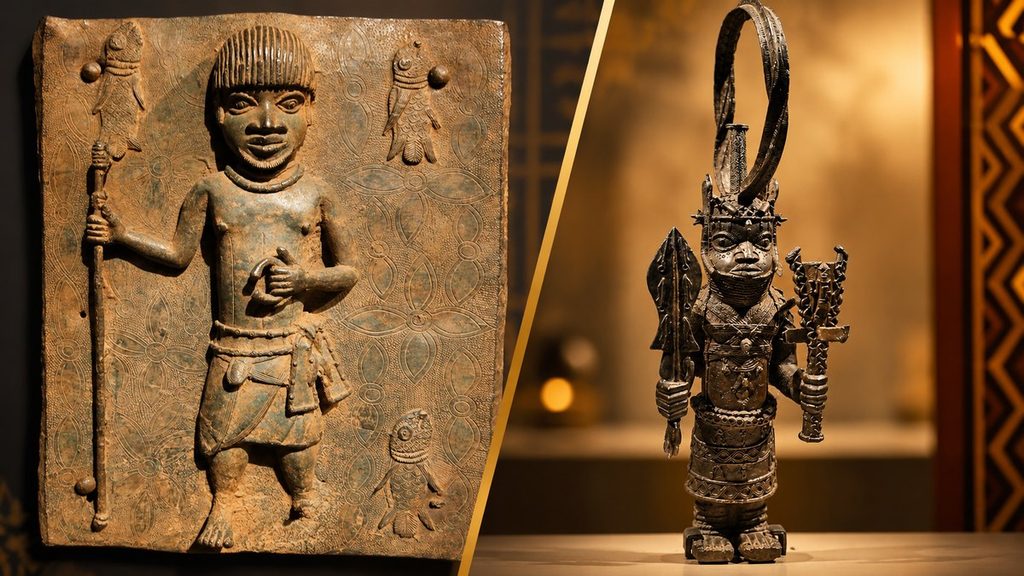
Before the British invasion of 1897, the Kingdom of Benin, in present-day Edo State, had developed a sophisticated artistic tradition. Its skilled craftsmen produced bronze and brass plaques, sculptures, ivory carvings and other objects that documented royal life, honoured ancestors and expressed political and spiritual authority.
However, the British military expedition against Benin City resulted in the looting and dispersal of thousands of these objects. Many eventually entered museums and private collections across Europe and North America.
For decades, calls for their return faced resistance and difficult questions about ownership, conservation and the circumstances under which the objects had been acquired.
Nevertheless, progress has become increasingly visible.
In June 2026, three Swiss museums returned 18 artifacts from the historic Kingdom of Benin. The National Commission for Museums and Monuments received them at a ceremony in Lagos. Switzerland also returned five other Nigerian artifacts, including a bronze bracelet and four archaeological monoliths from the Niger Delta.
According to the Swiss government’s announcement, most of the Benin objects are expected to return to Benin City. Authorities plan to store them securely while developing a dedicated gallery to display the recovered treasures.
The development offers hope, but it also raises an important question: how can Nigerians access, study and understand these objects once they return?
READ ALSO: The 4,000-Year-Old Defence System Rewriting What We Know About Ancient Africa
African Artifacts Returned: Ethiopia’s Manuscripts and Côte d’Ivoire’s Sacred Drum
Africa’s restitution story extends well beyond bronze sculptures.
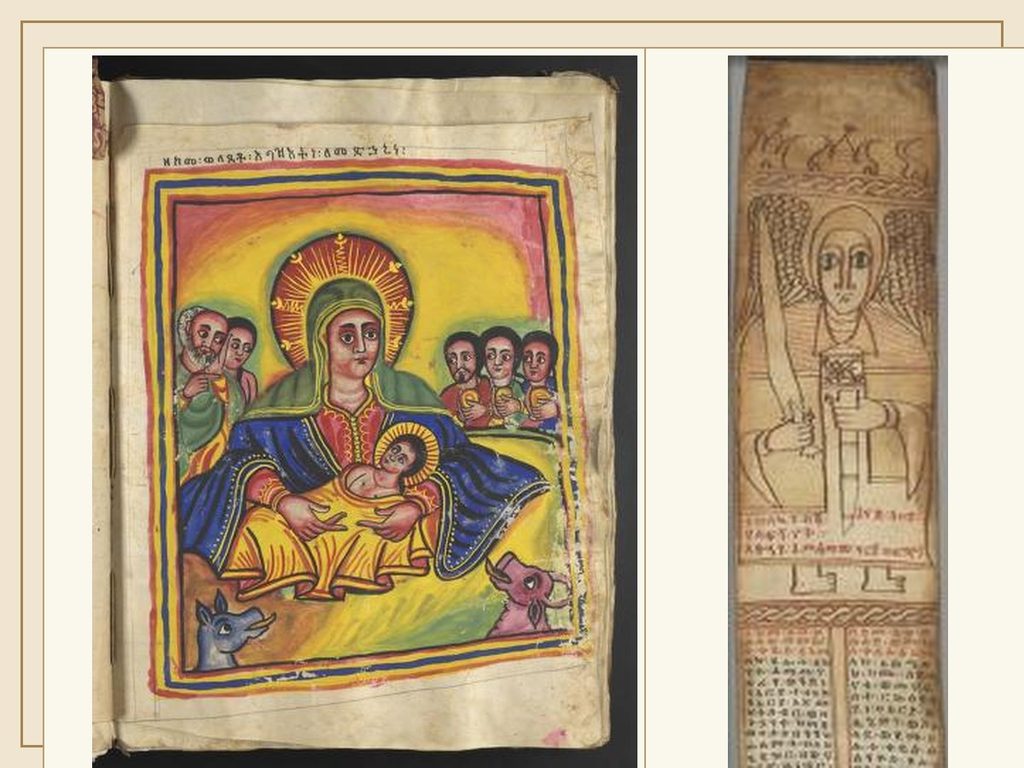
In September 2026, Ethiopia welcomed 17 ancient parchment manuscripts that had spent decades in the United States after leaving the country under different circumstances. The Ethiopian Heritage Authority subsequently presented them to seven institutions for preservation, research and public engagement.
The return adds to Ethiopia’s wider recovery efforts. The Ethiopian Broadcasting Corporation reported that more than 67 artifacts had been repatriated during the preceding seven years, excluding the latest handover.
These manuscripts carry historical, cultural and spiritual significance. Their return gives Ethiopian institutions greater opportunities to preserve their contents, study their origins and share their knowledge with future generations.
Meanwhile, Côte d’Ivoire welcomed back the Djidji Ayôkwé, a monumental wooden talking drum, on February 20, 2026. France had seized the instrument in 1916 during the colonial period.
Measuring 3.3 metres long and weighing approximately 430 kilograms, the drum served the Atchan people as a communication instrument. It could summon communities and convey important messages.
Its return, documented by UNESCO, demonstrates why restitution matters beyond the art world. Cultural objects can preserve languages, traditions, spiritual beliefs and collective memories that connect generations.
When Ownership Changes, What Happens Next?
Restitution is rarely straightforward. Legal ownership of African artifacts returned, physical possession and public access do not always change hands simultaneously.
In February 2026, the University of Cambridge transferred legal ownership of 116 Benin artifacts to Nigeria’s National Commission for Museums and Monuments. However, it announced that most objects would be physically transferred later. Seventeen pieces would remain on loan and on display at its Museum of Archaeology and Anthropology for an initial three years.
The university said the decision followed Nigeria’s formal request for the return of objects taken during the 1897 invasion.
The distinction matters. An artifact may be legally returned without immediately reaching its country of origin. Governments and museums must also establish provenance—the documented history of an object’s ownership and movement—to determine how it left its original community and whether its acquisition involved looting or other unlawful circumstances.
Although these processes can take years, they provide a foundation for restitution agreements that recognise historical evidence and communities’ rights to their cultural heritage.Despite these achievements, restitution is rarely straightforward. Legal ownership, physical possession and public access do not always happen at the same time.
Bringing Heritage Back to Life
The work does not end when returned artifacts arrive. They require conservation, secure storage, specialist research and opportunities for public appreciation. Cultural institutions must preserve them while making them accessible to the communities whose histories they represent.
There is also a responsibility to protect the traditional skills associated with these objects. In Benin City, bronze casting remains an important part of the region’s artistic identity, but artisans face rising production costs, difficulties obtaining materials and concerns about attracting younger practitioners.
Recovering historical bronzes alone cannot preserve the craft. Artisans need opportunities to work, apprentices need training, and young people need reasons to engage with their heritage.
Museums, schools, universities and traditional institutions can help bridge this gap through exhibitions, education and community-led programmes that explain the cultural significance of artifacts beyond dates and textbook descriptions.
Ultimately, recovered treasures should become part of a living cultural experience, not merely symbols of successful diplomatic agreements.
A Heritage for Future Generations
The campaign to recover Africa’s cultural treasures is far from over. Many objects remain in foreign collections, and every successful return represents one step in a much longer journey.
Nevertheless, the growing number of African artifacts returned to their countries of origin shows that restitution is gaining momentum. Governments, museums and cultural institutions are increasingly confronting the histories behind their collections.
For older Africans, these developments may rekindle memories of history lessons, traditional institutions and cultural practices passed down through generations. For younger people, they offer opportunities to discover the artistic and intellectual achievements of societies that flourished long before colonial rule.
Bringing these objects home is about more than reclaiming possessions. It is about restoring access to history, reconnecting communities with their heritage and ensuring that future generations understand the inheritance entrusted to them.
The treasures are coming home. The next challenge is to keep their stories alive.
READ MORE: From Palace to Road: The Olu of Warri and the New Face of Traditional Leadership

About The Author