


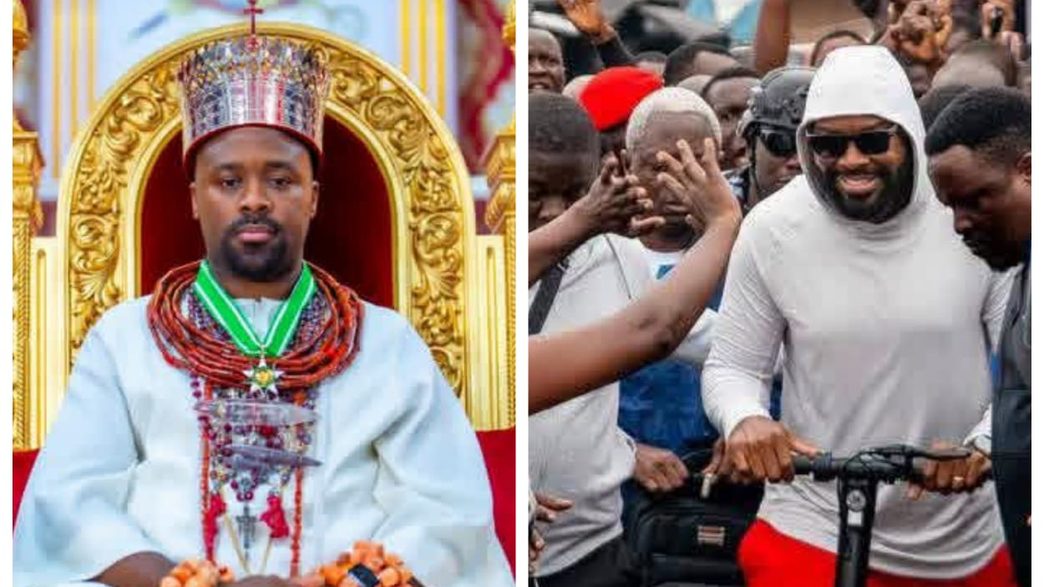
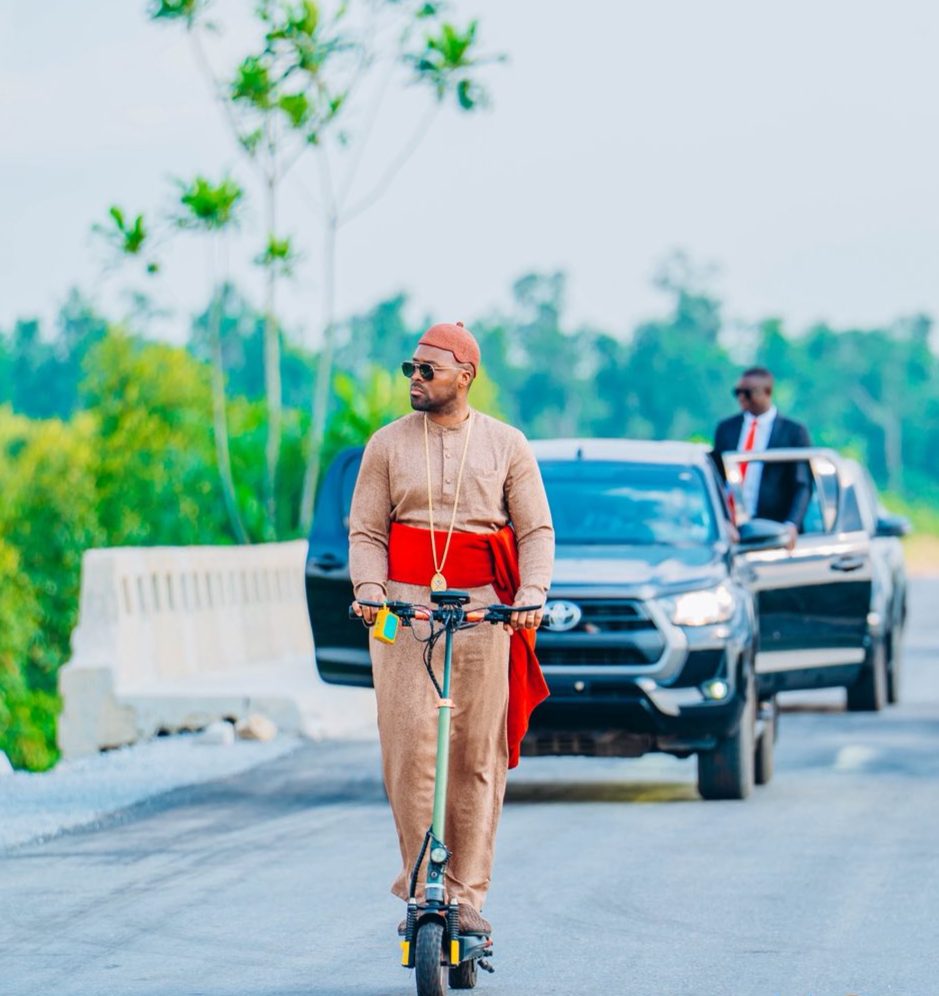
On a wet road in Warri, people gathered around as the Olu of Warri, Ogiame Atuwatse III, CFR, moved alongside them on a scooter.
Something almost ordinary about the sight.
There was no palace throne, no elaborate procession and no distance between the monarch and the people. Instead, they saw scooters, bicycles, rain-soaked roads and a crowd watching their king take part in a community ride. 
For many Nigerians who have become familiar with the monarch’s stylish public appearances, the sight may not have been entirely surprising. But it was still striking.
A king on a scooter is an unusual image. A king riding alongside his people during a celebration of culture and heritage is an even more interesting one.
The moment formed part of the Itsekiri Global Homecoming 2026, a week-long celebration taking place in the Warri Kingdom from August 16 to 22. It is to mark five years of the Olu of Warri, Ogiame Atuwatse III’s reign.
And perhaps the most interesting thing about the ride is not the scooter itself. It is what the image says about a changing relationship between traditional leadership, culture and the people.
A royal ride with an ordinary feel
The official programme for the Itsekiri Global Homecoming includes community rides described as non-competitive scooter and bike rides.
That distinction matters.
This was not about crowning the fastest rider or turning the monarch into a sports competitor. It was about participation, connection and bringing people together. All these during a celebration designed to reconnect Itsekiri people at home and in the diaspora with their ancestral homeland.
The homecoming organisers describe the initiative as a platform for cultural preservation, professional collaboration, youth education and strategic partnerships for the sustainable development of the Warri Kingdom.
A community ride therefore sits alongside activities that include a royal regatta, cultural tours, traditional performances, food experiences, community outreach, a football match, a development forum and a women’s conference.
The scooter may have provided the most immediately shareable image, but it is only one part of a much bigger programme.
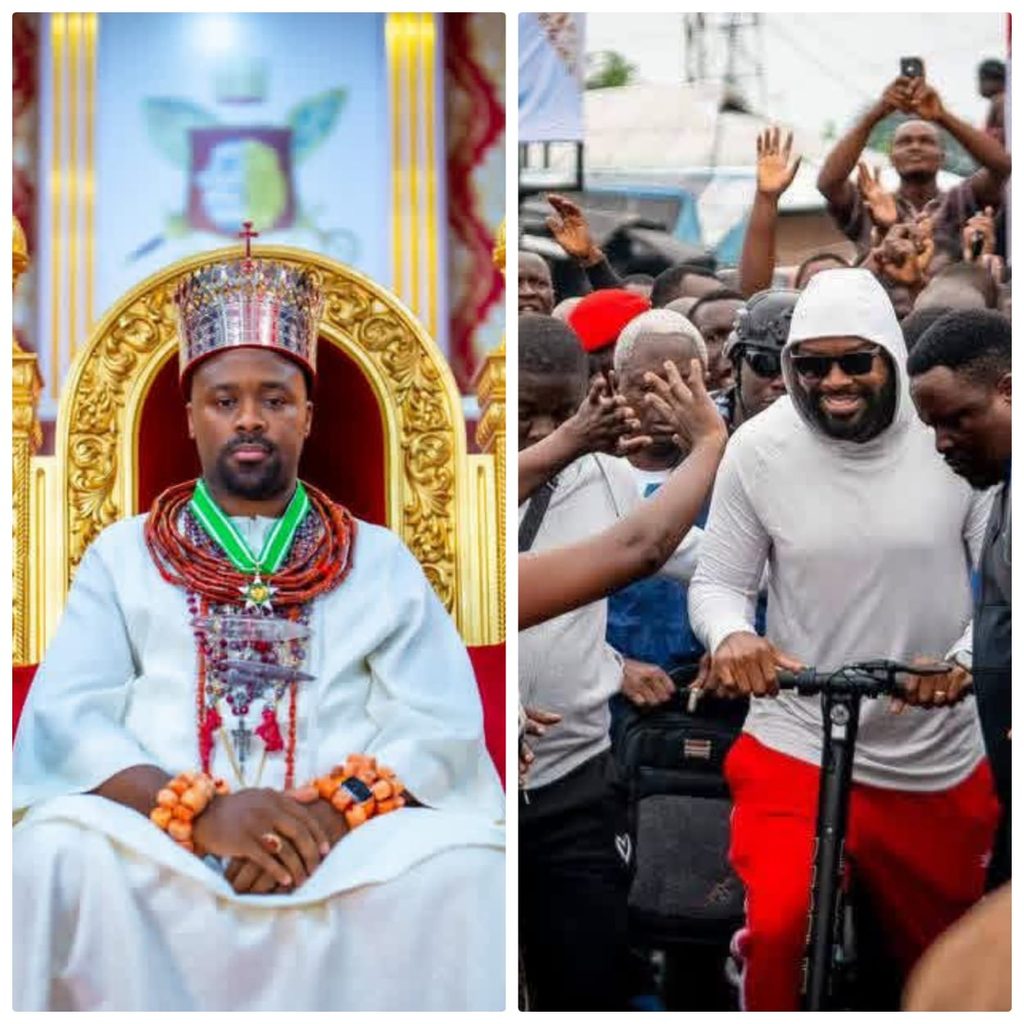
Photos: Olu of Warri/Facebook
Olu of Warri has been here before, on two wheels
For the Olu of Warri, however, the scooter is hardly a new element of his public image.
In March 2025, a video of the monarch riding a scooter through his ancestral home, Ode-Itsekiri, attracted widespread attention online.
In 2025, the Olu of Warri was again seen riding an electric scooter while inspecting the newly completed Trans-Warri–Ode-Itsekiri Road. That particular ride carried a different significance.
The 20.95-kilometre road, which includes 15 bridges, was significant because Ode-Itsekiri, the ancestral capital of the Warri Kingdom, had historically been accessible only by water. The road was therefore expected to improve connectivity between Ode-Itsekiri and surrounding communities.
Rather than inspecting the project from the comfort of a convoy, the monarch got on a scooter and experienced the road himself.
The image was unusual enough to go viral.
But the latest community ride suggests that the scooter has become more than a curious feature of the monarch’s public image. It fits into a broader pattern of a ruler who appears comfortable moving between the formality of the throne and the informality of everyday life.
A monarch navigating tradition and modernity
Ogiame Atuwatse III became the 21st Olu of Warri on August 21, 2021.
According to his official biography, he was the youngest monarch in the more than 500-year history of the Warri Kingdom at the time he ascended the throne.
His background is also markedly modern.
He studied International Studies and Political Science at Case Western Reserve University in the United States. He then obtained a master’s degree in Management from the Weatherhead School of Management.
That combination of traditional authority, modern education and an outward-looking worldview has shaped much of the public conversation around his reign.
His recent engagements have extended beyond ceremonial matters. In June 2026, he convened the first Warri Blue Economy Summit. He called for the Niger Delta to take greater ownership of the opportunities presented by the blue economy while protecting the environment.
He has also maintained international engagements, including participation in the African Development Conference at Harvard Law School earlier this year.
The scooter, then, may seem like a small thing. But it fits into a larger picture.
When a king meets his people on the road
Traditional rulers occupy a peculiar space in modern Nigeria.
They are custodians of history, culture and identity, but they also operate in a society where younger generations increasingly communicate through social media, consume global culture and expect public figures to be accessible.
The old image of royalty often depends on distance. The king sits apart. The people approach. Protocol determines movement, speech and interaction.
Modern public engagement works differently. People want to see the personality behind the title. They want to understand their leaders beyond ceremonial photographs. They respond to moments that feel spontaneous, relatable and human.
That may explain why images of Ogiame Atuwatse III riding a scooter generate so much attention. The scooter does not erase the crown. It simply changes the distance between the crown and the crowd.
And in an era when traditional institutions must remain relevant to younger audiences, that distance matters.
From ceremonial leadership to visible participation
It would be easy to dismiss the scooter ride as another viral moment.
But Nigeria’s traditional institutions are living through a period in which relevance increasingly depends on the ability to connect heritage with contemporary life.
Culture cannot survive only in museums or ceremonial speeches. It has to remain meaningful to the people who inherit it.
That means traditional rulers must speak to young people, understand their interests and create spaces where culture feels lived rather than merely remembered.
A bicycle ride or scooter ride will not achieve that by itself. But moments like this can create curiosity.
A young person who sees the Olu of Warri riding through Warri may become curious about the man behind the crown, the history of the Warri Kingdom, the Itsekiri people and the significance of the Homecoming.
That curiosity is valuable. Because sometimes, culture begins with something as simple as making people look.
Olu of Warri: The road ahead
Five years into his reign, Ogiame Atuwatse III appears to be building an image of traditional leadership that is comfortable occupying more than one world.
There is the palace, with its rituals and centuries of history. There are international conferences and conversations about development. There are discussions about the blue economy and environmental stewardship. There are cultural celebrations designed to bring the diaspora home.
And then there is the road – wet, ordinary and filled with people – where a king can pick up a scooter and ride.
Perhaps that is the most revealing part of the image. The Olu of Warri is not abandoning the palace. He is simply showing that leadership does not have to remain inside it.
Sometimes, it can meet people on the road.

About The Author