For years, Harry Kane was football’s favourite punchline.
Score 30 goals? Lovely. Break another goalscoring record? Brilliant stuff. Carry Tottenham through another season? Give the man a medal. Or a trophy, preferably, because apparently scoring goals for fun was all well and good, but what exactly was he putting in his cabinet?
The jokes practically wrote themselves. Harry Kane could score against everybody, terrorise defenders across Europe and still somehow end the season looking like a man who had attended somebody else’s wedding and forgotten to bring a gift. 
Then came the inevitable comparisons. How could a striker so good have so little silverware to show for it? Was he really world-class if he could not win anything meaningful? Perhaps he needed to leave Tottenham. Perhaps he needed better teammates. Or perhaps, just perhaps, football fans had confused individual brilliance with the ability to drag an entire club across the finishing line.
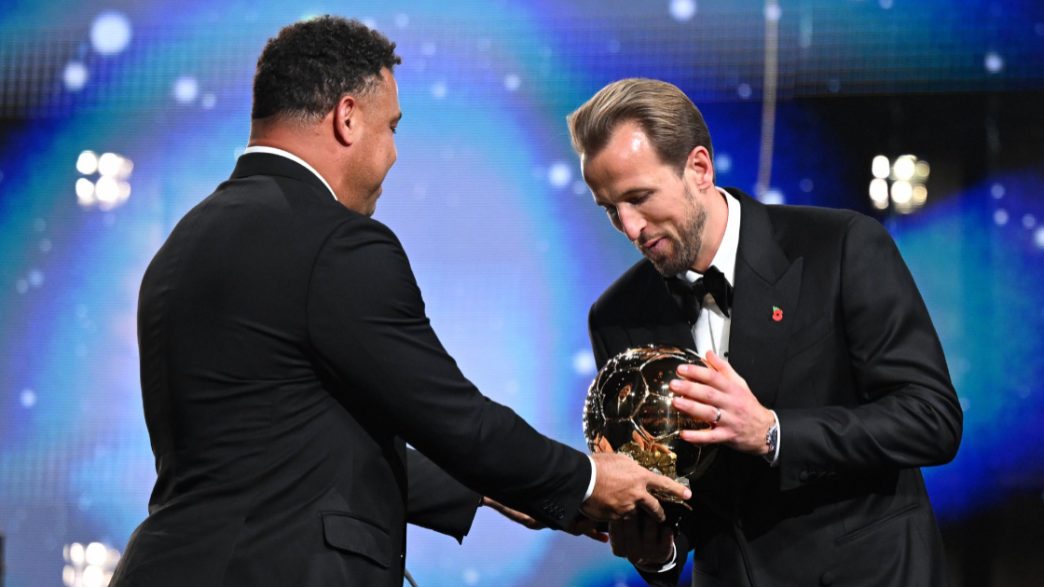
On Monday, October 26, 2026, Harry Kane finally gave the banter merchants something else to discuss. The Bayern Munich striker won the Ballon d’Or, becoming the first Englishman to claim football’s most prestigious individual award since Michael Owen in 2001, finishing ahead of the likes of Kylian Mbappé and Lamine Yamal. He also collected the Gerd Müller Trophy for the leading goalscorer.
Not bad for a man whose supposed inability to win trophies had become almost as famous as his ability to put a football in the back of a net.
The jokes have not necessarily disappeared. Football Twitter never retires a joke; it simply keeps it in cold storage until the next opportunity. But Harry Kane has just delivered a rather inconvenient reminder that a footballer’s story is rarely finished while people are still busy writing the punchline.
Harry Kane and the problem with being brilliant at Tottenham
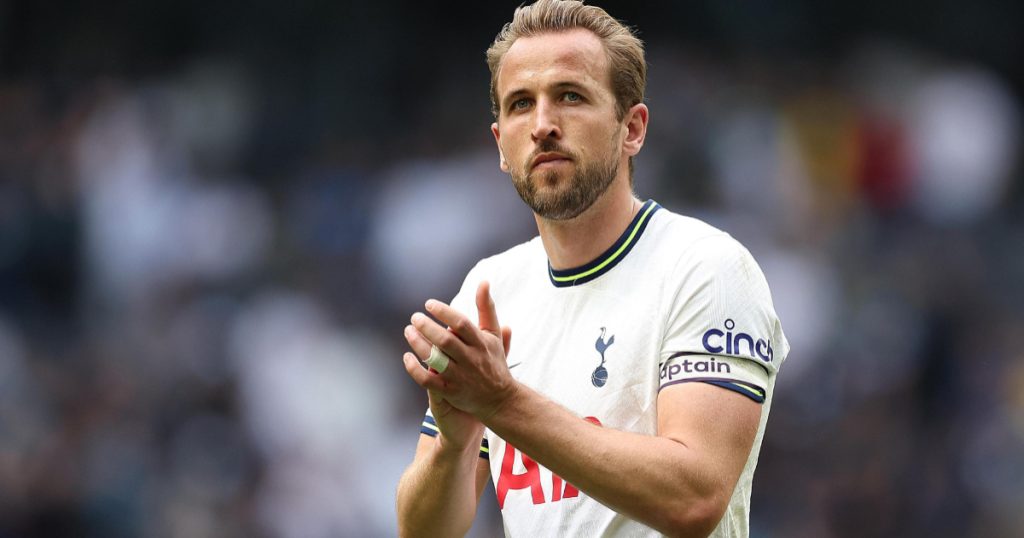
Before Bayern Munich, there was Tottenham Hotspur. And before the Ballon d’Or, there was a long stretch in which Kane’s extraordinary individual achievements came with an unwanted companion: the constant reminder that Tottenham had not won a major trophy during his time at the club.
Kane joined Tottenham’s academy at the age of 11. He worked his way through the youth system, endured loan spells and eventually established himself as one of the Premier League’s most dangerous forwards.
ALSO SEE: Ballon d’Or 2026: Full Winners List as Harry Kane Claims Historic Award
Between 2014 and 2023, he scored 213 Premier League goals for Spurs, becoming the club’s record goalscorer in the competition. He won the Premier League Golden Boot three times and the league’s Playmaker award for the 2020/21 season. In fact, he was already closing in on Alan Shearer’s record of 260, and there’s no doubt he would have broken it, given time.
Those numbers should have made the argument fairly straightforward. Kane was an elite striker. End of discussion. Football, unfortunately, does not operate like a sensible mathematics class.
Tottenham reached the 2019 Champions League final but lost 2-0 to Liverpool. They also finished runners-up in the 2016/17 Premier League title race and lost the 2021 League Cup final to Manchester City.
For Kane, those near misses became part of a frustrating pattern. He could produce the goals, deliver the performances and give defenders sleepless nights, yet the biggest collective prizes continued to slip away. Soon, his lack of trophies became a convenient shortcut for judging his entire career.
Never mind the goals. Never mind the records. Also never mind the fact that football is a team sport involving 11 players, substitutes, coaches and the occasional defender who appears to have misplaced his brain.
If Kane had not won a major trophy, the argument went, how great could he really be?
It was a particularly cruel standard because individual players do not get to choose every teammate, tactical decision or defensive error that shapes a season. Kane could score twice, but he could not simultaneously play centre-back, organise the midfield and stand in goal.
Well, not all at once, anyway.
The move to Bayern Munich that changed Harry Kane’s story
By the summer of 2023, Kane faced a career-defining decision.
He was approaching his 30th birthday, had established himself as one of England’s finest strikers and was closing in on Tottenham’s all-time scoring record. Yet the major trophies remained elusive.
Bayern Munich came calling, offering Kane a chance to compete regularly for domestic honours and pursue the Champions League with one of Europe’s biggest clubs. Something he could not do with Tottenham, because… come on! Lads, it’s Tottenham.
Leaving Tottenham was never going to be an entirely straightforward decision. Kane had spent most of his footballing life there, developed into a superstar in north London and become a central figure for the club and its supporters. But loyalty and ambition can eventually find themselves sitting at opposite ends of the same table.
Kane chose Bayern Munich in August 2023, ending his Tottenham career without winning a major trophy for the club. The transfer also meant leaving the Premier League, where he had built his reputation, for a different footballing environment.
For Tottenham supporters, the departure brought mixed emotions. Here was their greatest Premier League goalscorer leaving in search of the very thing the club had failed to provide him. For Kane, the move offered something he had spent years chasing: a realistic opportunity to compete for major honours without having to turn every league campaign into a personal rescue mission.
Bayern were not a small club hoping for a miracle. They were serial Bundesliga champions with the resources, infrastructure and expectations of European football’s elite.
The pressure would remain enormous, but the circumstances were different.
The trophy drought followed him to Germany
Of course, football loves irony, and Kane’s first season at Bayern provided plenty of it.
He scored 36 goals in the Bundesliga during the 2023/24 campaign, winning the league’s top scorer award. Yet Bayern finished third, ending an extraordinary run of 11 consecutive Bundesliga titles.
For the first time since 2012, Bayern failed to win the German championship. Naturally, the jokes returned.
Kane had left Tottenham for a club practically synonymous with winning the Bundesliga, only for Bayern to surrender the title in his debut season. Bayer Leverkusen, under Xabi Alonso, had, for reasons unknown, decided it was that season they wanted to choose violence and produce an outstanding campaign and finished unbeaten in the league.
Suddenly, the old narrative had found fresh material. Was Kane cursed? Had he somehow transported Tottenham’s trophyless energy across Europe? Did Bayern need to check the small print before signing him?
It was ridiculous, of course. Bayern’s failure to win the league was a collective outcome, not a supernatural phenomenon caused by one English striker. Still, the narrative stuck because football banter rarely waits for context to finish speaking.
Kane had delivered an exceptional individual season, but Bayern had ended it without the Bundesliga title. The distinction between individual performance and collective success remained stubbornly intact.
What mattered next was how he responded.
A player can spend years being labelled a nearly man, but eventually the only useful response is to keep producing performances that make the label harder to defend.
Kane did precisely that.
Harry Kane finally gets his moment
The 2025/26 season gave Kane the combination he had been searching for: extraordinary individual numbers and meaningful team success.
He scored 73 goals in 65 appearances for Bayern Munich and England across all competitions. Of those, 61 came for Bayern and 12 for England.
At club level, Kane helped Bayern win the Bundesliga and DFB-Pokal, while continuing to demonstrate why he remains one of the most devastating forwards in world football. He finished as the Bundesliga’s leading scorer for the third consecutive season and scored 14 goals in the Champions League as Bayern reached the semi-finals.
Internationally, he captained England to third place at the 2026 World Cup, their best finish at the tournament since winning it in 1966.
It was the sort of season that made a compelling Ballon d’Or case without requiring voters to squint particularly hard.
Kane had the goals, the consistency, the domestic trophies and a major international tournament in which he helped England reach the latter stages.
On October 26, the football world delivered its verdict.
Harry Kane won the 2026 Ballon d’Or, finishing ahead of Mbappé and Yamal. He also collected the Gerd Müller Trophy, recognising his goalscoring achievements.
The first Englishman to win the Ballon d’Or since Owen in 2001 had finally emerged. And there was something satisfying about the fact that Kane’s triumph arrived after years of arguments about what he had not won.
The award did not erase every disappointment in his career. It did, however, provide the strongest possible counterargument to the suggestion that his lack of earlier silverware somehow diminished his quality.
Kane had not suddenly become a brilliant footballer in October 2026. He had been brilliant for years.
The difference was that this time, the brilliance came with a trophy everybody could see.
Did Tottenham hold Harry Kane back?
Now comes the question that will keep football debates alive long after the celebrations end: would Harry Kane have won the Ballon d’Or if he had stayed at Tottenham?
It is impossible to answer definitively, but the circumstances surrounding his move make the question worth asking.
At Tottenham, Kane was frequently expected to supply the goals that would compensate for the team’s shortcomings elsewhere. His output was remarkable, but the club struggled to turn individual excellence into sustained success.
At Bayern, he joined a team built to challenge for trophies every season. He had access to elite teammates, a squad accustomed to winning and a club whose domestic ambitions rarely stopped at simply qualifying for the Champions League.
That does not mean Bayern did all the work for him.
Kane still had to score the goals, adapt to a new league and deliver under pressure. His first season showed that moving to a dominant club does not automatically guarantee success. But the environment matters. Even the finest striker cannot win a league title alone, and a club’s ability to build a competitive team can determine how much individual talent ultimately achieves.
Tottenham gave Kane the platform to become a superstar. Bayern gave him a different platform on which to pursue the trophies that had eluded him.
There is no need to pretend that his entire career at Spurs was a mistake. Kane developed there, became the club’s record Premier League goalscorer and experienced some of the finest moments of his career in a Tottenham shirt.
Indeed, he thanked Tottenham at the Ballon d’Or ceremony, acknowledging the coaches and guidance that helped him develop from an academy player into a world-class striker.
His journey is therefore not a simple story of escaping a terrible club. It is a more complicated tale about a player outgrowing one chapter of his career and needing a different challenge to reach the next level. Tottenham helped create Harry Kane. Bayern helped him complete a season that delivered the biggest individual prize in football.
Both things can be true.
ALSO READ: DO NOT Share These 7 Things With ChatGPT, Gemini and Other AI Tools!!!
Harry Kane’s Ballon d’Or does not end the debate about greatness
There will always be arguments about what makes a footballer truly great.
Some fans prioritise trophies. Others focus on individual statistics, technical ability, consistency or the ability to influence matches. The Ballon d’Or itself is awarded through voting, meaning that even its winners emerge from a process involving judgement and debate.
Kane’s triumph does not make trophies irrelevant, nor does it mean that every criticism of his career was unfair.
What it does show is that judging a footballer primarily by the number of major trophies he has won can produce a distorted picture.
Kane was a world-class striker before Bayern won the Bundesliga with him. His goalscoring records at Tottenham did not become less impressive because the club failed to win the Premier League or Champions League.
The same principle applies to other players whose individual quality exceeds the success of their teams. Football is a collective sport, and even the greatest individuals depend on the people around them.
Kane’s Ballon d’Or victory also gives him a place in English football history. He has joined the small group of Englishmen to win the award, following Stanley Matthews, Bobby Charlton, Kevin Keegan and Michael Owen.
That is an extraordinary achievement for a player whose career was once routinely reduced to a running joke about trophies.
There is still room to debate whether he ranks among the greatest forwards of his generation, how his legacy compares with those of Messi and Ronaldo, and whether he can add further major honours to his collection.
Those are legitimate discussions.
But the argument that Kane was never truly elite because he had not won enough silverware has become considerably harder to sustain.
From nearly man to Ballon d’Or king
Harry Kane’s story has never really been about a lack of talent. It has been about the gap between what an individual can achieve and what a team can accomplish.
At Tottenham, he became a prolific goalscorer without winning a major trophy. At Bayern, he endured an initial season in which his goals were not enough to prevent a disappointing collective outcome. Then he returned, won major honours and produced a campaign that earned him football’s biggest individual award.
His Ballon d’Or victory is a reminder that careers rarely follow the neat timelines fans expect. Some players peak early. Others need time, the right environment and a little patience before everything falls into place.
Kane’s journey also offers a useful lesson about football banter. A joke can be funny, but repetition does not make it a fair assessment of someone’s ability.
For years, the punchline was that Harry Kane could not win trophies. Now, the man has a Ballon d’Or, a Bundesliga title, a German Cup and a goalscoring record that would make most strikers weep into their shin pads.
The jokes will continue, because football fans are a stubborn species and the internet has never met a joke it was willing to bury peacefully. But the next time someone brings up Kane’s trophy drought, they may want to update their material.
Harry Kane has gone from football’s favourite nearly man to its Ballon d’Or winner.
And somewhere in north London, a few Spurs supporters are probably wondering what might have been. But, at least they can take comfort in knowing that their former striker has finally found what he was looking for.
Unfortunately, he had to go to Germany to get it.
READ ALSO: Cristiano Ronaldo’s 2008 Season Leads Ballon d’Or Fan Poll, Messi Fans in Distress

About The Author