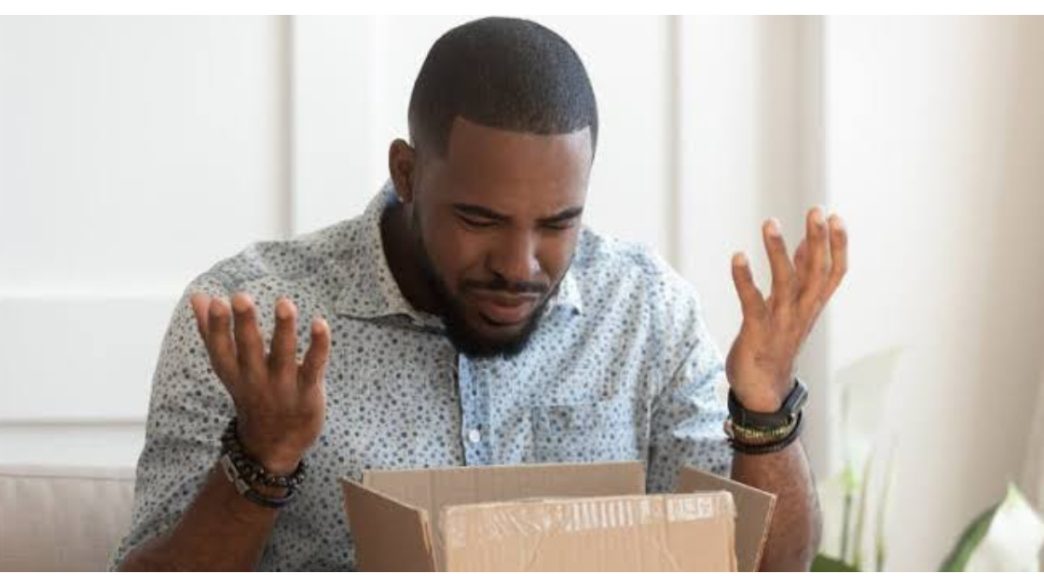
You ordered a green two-piece set. What arrived is brown, a size smaller and made of a fabric that feels like nylon. The online vendor who replied within seconds before you paid now takes a whole day to answer. Then the reply lands: “No refund after payment, dear.”
If that sounds familiar, the Lagos State Government wants to hear from you. The Lagos State Consumer Protection Agency (LASCOPA) has told residents to report any online vendor who delivers the wrong item or a product below the advertised quality. Its message was plain: “do not keep silent!”
Below is what the law actually gives you, followed by the exact steps to get your money back. 
What the Law Says When an Online Vendor Sends the Wrong Item
Your main protection is the Federal Competition and Consumer Protection Act 2018 (FCCPA), which applies across Nigeria, including Lagos.
Section 122 lets you return goods and receive a full refund of what you paid in two situations:
- You couldn’t examine the item before delivery (which is how almost all online shopping works), and what came does not match the description or sample, or is not the type and quality you agreed on. You must reject it within a reasonable time.
- You told the seller what you needed it for, and it turns out unsuitable for that purpose within a reasonable time after delivery.
What about the “No refund” line in the vendor’s Instagram bio? The same Act, in section 129, prohibits terms that take away a consumer’s rights under the law, including the right to return goods. Section 127 also stops sellers from forcing unfair or unjust terms on buyers.
Two catches. First, the law does not define “reasonable time”, so move fast. Second, the Federal Competition and Consumer Protection Commission (FCCPC) says a returned product should still be in good condition. Don’t wear the dress to an owambe and then ask for a refund.
YOU MIGHT ALSO LIKE: How to Authenticate Nigerian Certificates Online: Step-by-Step Guide
Step 1: Gather Your Evidence the Day It Arrives
You usually win or lose a refund fight in the first hour. So, before you say a word to the vendor:
- Don’t use the item. Keep the tags, packaging and receipt.
- Take clear photos and a short video showing what arrived. If you can, film the unboxing next time.
- Screenshot the original post or listing, including the price, photos and description. Vendors delete posts.
- Save your proof of payment and the full chat history.
Step 2: Message the Online Vendor in Writing
Send the online vendor a calm, written message. Voice notes are harder to use as evidence later. Keep it short, something like this:
“Good afternoon. On [date] I paid ₦[amount] for [item, colour, size] from your post of [date]. Instead, I received [describe the difference]. Photos attached. The FCCPA entitles me to return it for a full refund. Please confirm within 48 hours how you will pick up the item and refund me.”
Many disputes end here once the vendor sees you know your rights. Bought through a marketplace app instead? Use its own return process as well, and check its return window the same day, because those windows are usually short.
Step 3: Report the Online Vendor to LASCOPA
If the online vendor ignores you, blocks you, or keeps saying “no refund”, take it to LASCOPA. The agency resolves complaints through mediation, which means it contacts the business on your behalf.
You can reach LASCOPA through:
- Toll-free line: 080 0005 2726
- Hotlines: 081 2499 3895 and 091 5389 4878
- Email: lasgcopa@gmail.com
- Social media: lasgcopa on Instagram and @LASCOPA on Facebook
- Annex offices in Ikorodu, Badagry, Bariga, Ikoyi-Obalende, Ojo, Epe, Agege and Isolo
Also attach everything from Step 1, plus the vendor’s name, handle, phone number and bank account details. And does reporting actually work? According to LASCOPA, by September 2025 it had received 11,101 complaints since March 2018, resolved 10,474 of them, and recovered over ₦530 million for consumers.
Step 4: Use the FCCPC If the Vendor Is Outside Lagos
However, many Instagram shops operate from Abuja, Aba or Onitsha. In that case, the federal regulator is your best bet. You can file a complaint with the FCCPC online at complaints.fccpc.gov.ng, email contact@fccpc.gov.ng, or call 0805 600 2020 or 0805 600 3030.
Paid by card or bank transfer and suspect outright fraud? Tell your bank immediately and keep the complaint reference number. If the bank fails to handle your complaint properly, the Central Bank of Nigeria’s Consumer Protection Department takes escalations at cpd@cbn.gov.ng.
The Last Resort: Small Claims Court
For bigger amounts, Lagos has a Small Claims Court for simple money claims of up to ₦5 million, excluding interest and costs. It aims to be faster and cheaper than a regular court. Even so, most shoppers will get a result much sooner through LASCOPA.
How to Avoid a Wrong Delivery Next Time
After all, prevention is cheaper than a complaint. Before you pay any online vendor:
- Ask for a live video of the actual item, not just studio photos.
- Search the vendor’s handle along with words like “scam” or “fake” to see what other buyers have said.
- Choose pay-on-delivery whenever the vendor offers it, and check the item before you pay the rider.
- Save the post and chat before you send money, not after.
So the next time a vendor tells you “no refund, dear”, you’ll know the law disagrees, and you’ll know who to call.
READ ALSO: Wangiri Scams: What Nigerian Phone Users Should Know Before They Call Back

About The Author