




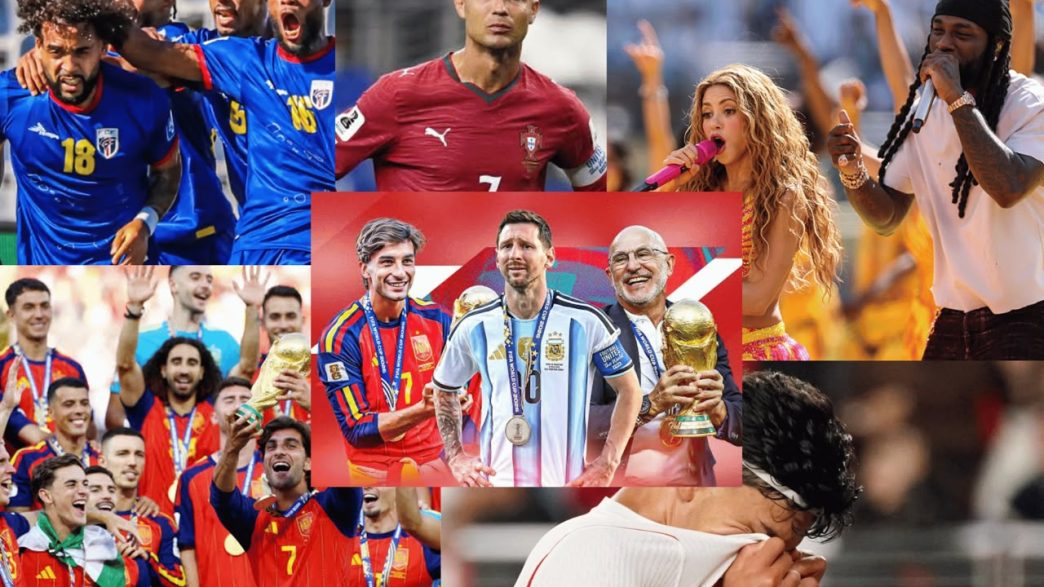
For one month, football reminded the world why the FIFA World Cup remains the biggest sporting event on earth. The 2026 tournament, hosted by the United States, Canada and Mexico, had everything fans could ask for. There were stunning goals, surprise results, emotional farewells, penalty shootout heartbreak and plenty of drama both on and off the pitch.
But, as has become common with modern World Cups, football shared the spotlight with politics, commercial interests, refereeing controversies and debates about the direction FIFA is taking the game.
When it was all over, Spain were crowned world champions after edging Argentina 1-0 in the final, bringing an unforgettable tournament to a close. 
The Football Lived Up to the Hype
Before the tournament began, many people worried that expanding the World Cup from 32 to 48 teams would lower the standard. Those fears turned out to be unfounded. Instead, the bigger tournament produced more exciting matches and gave smaller countries the chance to shine.
Cape Verde was one of the biggest surprise packages. The tiny island nation reached the Round of 32 and pushed Argentina all the way before losing 3-2 in one of the most entertaining matches of the tournament. Norway also exceeded expectations. Few tipped them to go far, but they eliminated Brazil in the Round of 16 before eventually losing narrowly to England in the quarter-finals.
Morocco showed that its historic run to the semi-finals in Qatar four years earlier was no fluke. The North Africans again impressed, beating the Netherlands on penalties and reaching the quarter-finals before losing to France.
Even Paraguay punched above their weight. They knocked out Germany in a dramatic penalty shootout before eventually falling to France in the Round of 16.
Spain’s triumph was built on excellent teamwork, disciplined defending and calm finishing. They defeated defending champions Argentina in the final to become worthy world champions.
Argentina’s journey was equally memorable. They survived several difficult knockout matches before falling just one game short of retaining the trophy.
England once again reached the closing stages, while France remained one of the tournament’s strongest sides.
Heartbreaks
Every World Cup creates heroes, villains and broken hearts. Penalty shootouts once again left players and fans in tears. Some of football’s biggest nations were eliminated earlier than expected, while others saw their dreams disappear because of one mistake, one brilliant save or one missed chance.
Argentina came within one victory of retaining the title they won in Qatar, only to lose in the final. England again went home empty-handed despite another strong campaign, finishing third after beating France in a thrilling third-place match.
For the smaller countries, the disappointment was different. Teams like Cape Verde, Norway and Paraguay proved they could compete with the world’s best, but discovered just how little separates success from heartbreak at the highest level.
Records
The tournament also made history as the first World Cup hosted by three countries and the first to feature 48 teams and 104 matches.
Stadiums were packed throughout the competition, while millions more followed the action on television, streaming platforms and social media.
Financially, it was another huge success for FIFA, confirming once again that no football competition attracts a bigger global audience.
Politics
While the football thrilled fans, politics remained impossible to ignore. The close relationship between FIFA President Gianni Infantino and United States President Donald Trump became one of the talking points of the tournament.
Many fans questioned whether politics was becoming too closely linked with football, while others criticised some of FIFA’s decisions on governance and discipline, with the Folarin Balogun saga a major issue.
The debate reached its peak after the final, when both Trump and Infantino were booed by sections of the crowd during the trophy presentation. Trump’s decision to remain on the podium while Spain celebrated also sparked widespread criticism on social media.
Americanisation of the World Cup
Another issue that divided opinion was FIFA’s decision to introduce more American-style entertainment. The first-ever World Cup half-time show attracted huge attention. Some fans enjoyed it, while many traditional football supporters argued that the World Cup should not copy the Super Bowl.
Longer halftime breaks and a stronger focus on entertainment also divided opinion. Supporters called it a welcome modernisation. Critics said FIFA was turning football into a television show. The debate is unlikely to end anytime soon.
Officiating
VAR remained one of the tournament’s most controversial topics. Some decisions corrected obvious mistakes, but others left players, coaches and supporters frustrated. Arguments over handballs, offside decisions and yellow and red cards ensured that referees remained almost as talked about as the players.
Did the 48-team format work?
Many people expected too many one-sided games when FIFA expanded the tournament. Instead, the extra teams brought fresh stories, new fans and more competitive football than many had predicted.
Countries that rarely get the chance to play on football’s biggest stage showed they belonged. The success of teams like Cape Verde, Norway and Paraguay proved that expanding the tournament also expanded the opportunities for new football stories to be written.
Still, some fear FIFA could continue expanding the competition for commercial reasons rather than sporting ones.

About The Author