





Nollywood actress Angela Okorie faces criticism after sharing an Instagram video of herself burning the clothes she wore to late actor Alexx Ekubo’s funeral. The caption was simple: “My Godmother said it’s not good to keep the cloth you wore for a burial, instead you burn them.”
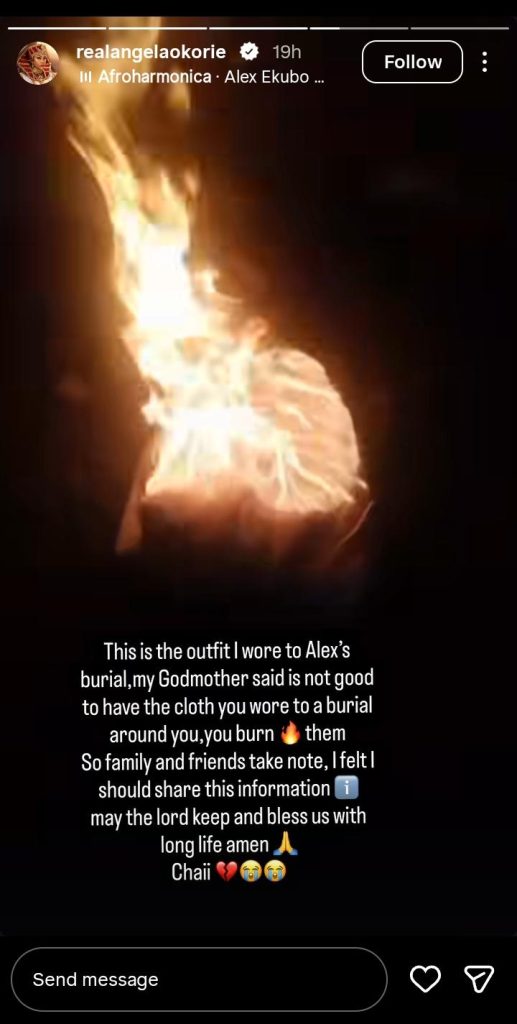
The response was quick and divided: some saw it as disrespectful to do publicly, while others understood her actions and their significance.
So, is this just random behavior, or is there a deeper meaning? 
It Is Rooted in Nigerian Tradition
Burning burial clothes is not Angela Okorie’s innovation. It is a practice found across various Nigerian and other African cultures, based on beliefs about death, spiritual energy, and protecting the living.
The main idea is simple: death is a powerful and potentially dangerous spiritual event. Items involved in that experience, especially clothing worn at a burial, are believed to carry the energy of that moment. Keeping those items at home is seen as inviting that energy to linger.
In these cultures, fire is regarded as the ultimate purifier. It doesn’t just destroy the clothing; it is believed to burn away any spiritual weight the clothing absorbed. By burning the garments, the person symbolically cuts their connection to death, preventing grief and its spiritual presence from following them home.
The Specific Beliefs Behind the Practice
Different communities assign various meanings to this act, but three main themes run through the tradition.
First, it is about breaking the bond with death. Wearing clothes to a burial links you, even briefly, to the experience of dying. Burning those clothes deliberately ends that connection, keeping death’s influence at bay.
Second, it aims to prevent spiritual contamination. Many Nigerian traditions hold that items in a cemetery or in contact with the deceased carry heavy, stagnant energy. Burning them removes the risk of that energy affecting the household or being exploited by unseen forces.
Third, it provides special protection to widows. In some traditions, when a man dies, his wife must burn her mourning clothes and shave her hair, acts meant to mark a clear spiritual separation from the deceased and shield her from being spiritually “held” by death.
Angela’s case was different; she was a friend attending a burial, not a widow. Still, the core belief her godmother referenced stems from the same cultural roots.
SEE ALSO: Alexx Ekubo’s Family: Parents, Siblings, and Relationship History
What Nigerians Are Saying
Online reactions were divided. Some criticized the public display, asserting that posting the video soon after Alexx Ekubo’s funeral appeared more like seeking attention than respecting cultural practices.

Others pointed out that although the act might be culturally valid, sharing it during an active mourning period for Ekubo’s family was questionable in terms of timing and sensitivity.

On Facebook, the debate continued in the comments. Stereo Type commented, “If your hand is clean, you won’t be worried about the cloth you wore to a colleague’s burial.”

Onyebuchi Arodiogbu questioned the consistency, asking, “But you didn’t burn the wig and phone you used to attend the burial??”
SEE ALSO: Alex Ekubo’s 10 Most Iconic Movie Roles That Proved His Star Power
The Bottom Line
Burning burial clothes, shaving hair during widowhood, and using specific mourning colors and periods are rooted in longstanding cultural rituals, not mere superstition. These practices have been developed over generations within communities that view grief as both an emotional and spiritual process that requires careful closure.

About The Author