



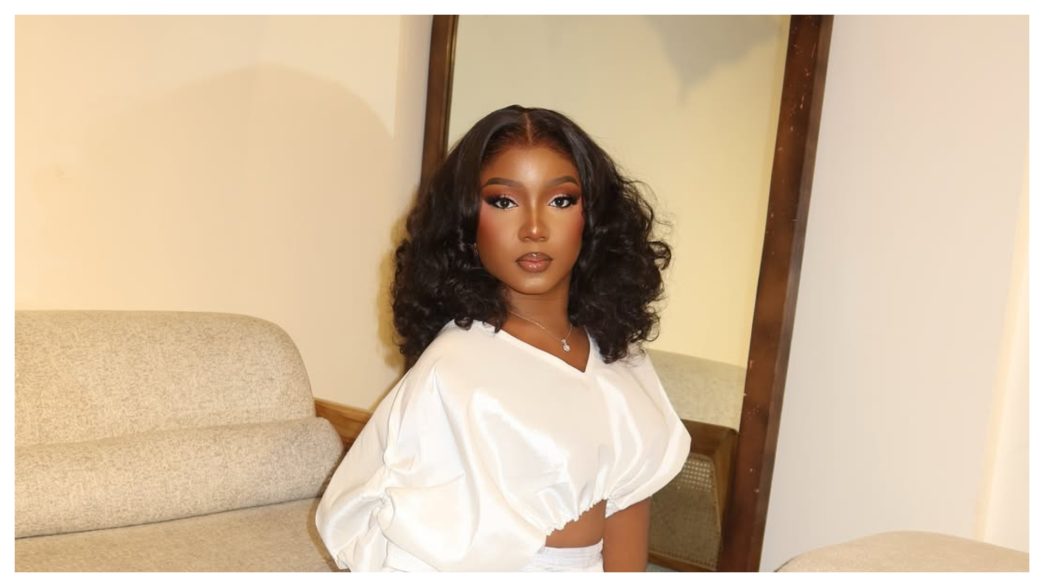
A 16-year-old girl recently asked Simi “Sanya” Dapson a question that many people probably expected her to answer.
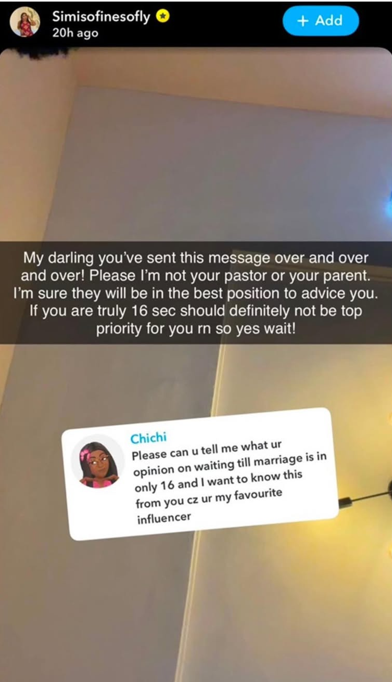
Specifically, the teenager wanted to know Simi’s view on waiting until marriage before having sex.
She added something important: “You are my favourite influencer.” 
However, Simi’s response was short.
“My darling you’ve sent this message over and over and over! Please I’m not your pastor or your parent. I’m sure they will be in the best position to advise you. If you are truly 16 sex should definitely not be top priority for you rn so yes wait!”
Some people laughed. Others dismissed the response. A few felt Simi missed an opportunity to guide a young fan.
But the exchange raises a bigger question that goes beyond Simi.
When exactly did influencers become responsible for raising other people’s children?
The word “influencer” has gradually expanded beyond its original meaning. Years ago, it simply meant someone whose popularity could influence purchasing decisions. Brands paid them to promote products because people trusted them.
Today, however, many followers expect something much bigger. They want influencers to tell them how to dress, what to buy, who to vote for, how to date, how to parent, how to think about religion, and how to live.
At some point, influence stopped being about content and started becoming a substitute for guidance. As a result, this creates a strange situation.
A musician wakes up to make music. An actress signs up to entertain. A comedian wants people to laugh. Then one day, they open their phone and discover they are being asked questions that would normally go to a parent, teacher, counsellor, pastor, imam, or mentor.
The expectation itself raises important questions. Why would a teenager ask an influencer whether she should wait until marriage?
In reality, the answer is not difficult to find. Many young people spend more time online staying updated on their favourites than they do with authority figures in real life.
They know their favourite celebrity’s relationship history, fashion choices, opinions, routines, and daily activities. As a result, many followers feel a personal connection even though the relationship is largely one-sided.
As a result, followers often begin treating influencers as trusted advisers. While this trust can be powerful, it can also be dangerous.
Having opinions is not the problem. The real issue is assuming they are qualified to answer every question simply because they have a large audience.
A large following does not automatically make someone a moral authority. Nor does it make them a religious leader, therapist, or life coach.
Simi’s response may have sounded blunt, but it contained an uncomfortable truth. She is not the teenager’s pastor.
Still, that does not mean influencers have no responsibility.
Someone with millions of followers should understand that their words carry weight.
Reckless advice can have consequences. Misinformation can spread quickly. Bad ideas can travel far. Influence comes with responsibility.
But responsibility is not the same thing as obligation.
There is a difference between using your platform wisely and becoming everyone’s moral compass.
Perhaps the real issue is not that influencers refuse to answer certain questions.
Instead, the issue may be that society increasingly expects them to fill roles they were never meant to occupy.
Parents are expected to parent. Religious leaders are expected to provide spiritual guidance. Teachers are expected to educate. Influencers influence.
Once people blur those lines, disappointment becomes inevitable.
Simi’s response may not have been the answer the teenager wanted.
Nevertheless, it may not even have been the answer many people expected. But it forces us to confront a question that is becoming harder to ignore:
Are influencers overstepping their influence, or are we asking them to carry responsibilities that never belonged to them in the first place?

About The Author