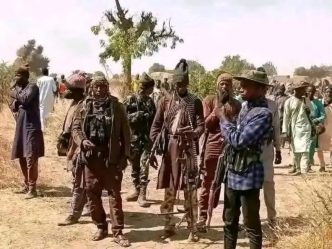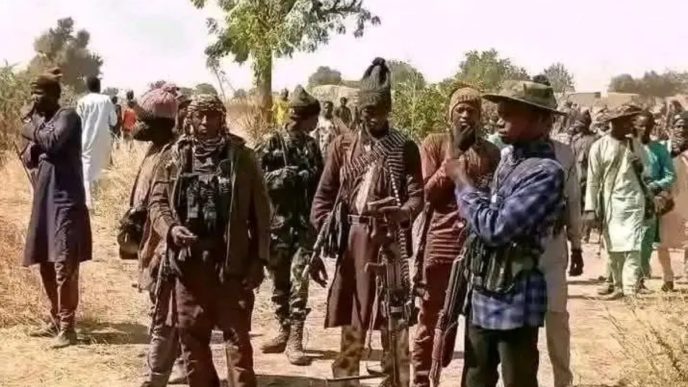



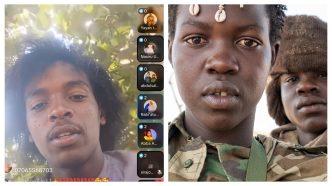
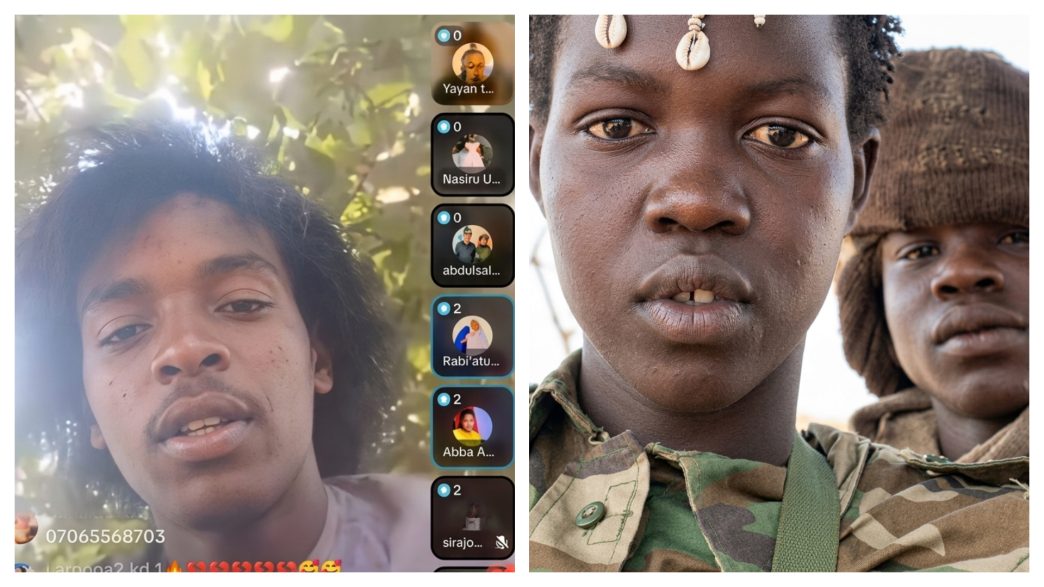
At midnight, somewhere in Nigeria, a man believed to be a bandit opened TikTok Live and started throwing money at strangers.
Not metaphorically. A live stream. Between 12am and 1am. Account numbers, mostly OPay and Moniepoint flying across the screen in real time. Thousands of Nigerians tuned in and watched. Many of them dropped their details and waited. By the time the stream ended, the host had allegedly distributed over ₦50 million.
X user @CatiaKyen, who witnessed the live, posted what many were already feeling: “The desperation from Nigerians, especially the girls, was honestly shocking. The way people were shamelessly begging their so-called oppressors for money left me speechless. How did we, as a country, sink to this level?” 
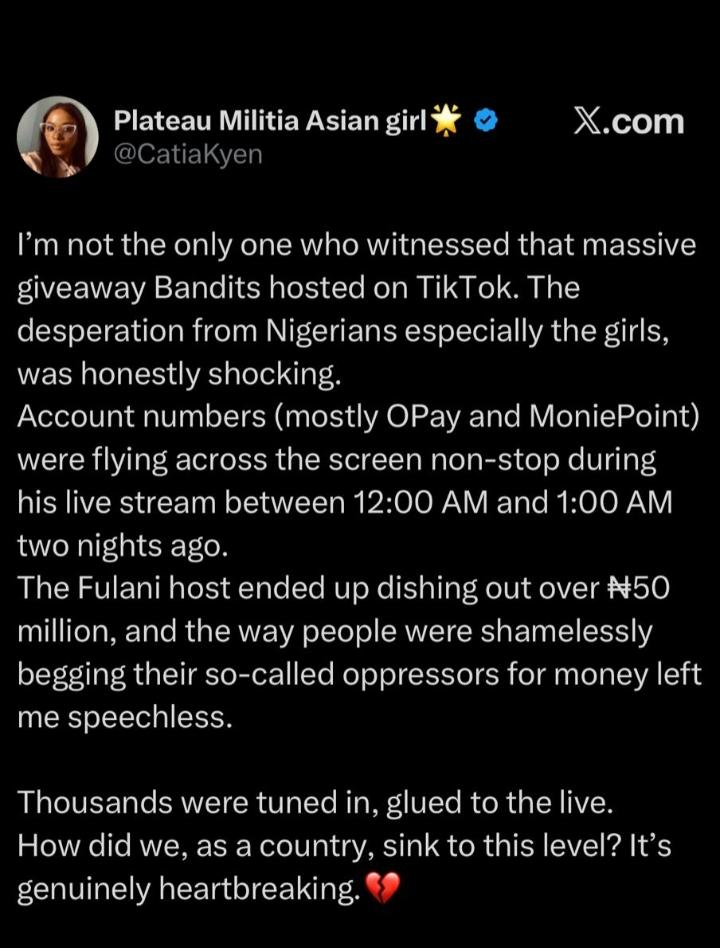
It is a fair question. One that does not have a comfortable answer.
The Context Nobody Should Ignore
This is not happening in isolation. Families in Oyo and Kwara states are still waiting for loved ones taken by bandits. Children. Adults. People whose names have been read on the news and then quietly forgotten by a country that has normalised its own grief.
The same communities that are mourning kidnapping victims also produced some of the people who dropped their account numbers on that live stream. That is not a contradiction, But simply what economic desperation actually looks like. People are not dropping their account numbers because they have no conscience. They are doing it because the country has squeezed them into corners where dignity feels like a luxury they cannot afford.
The Government Question Nobody Is Asking Loudly Enough
Here is where we should be focused on.
These men are on TikTok Live. Verified location. Trackable IP. A live stream running for a full hour between midnight and 1am with thousands of viewers. And nothing happened to them.
Compare that to what happened when an AI-generated voice clip mimicking President Tinubu circulated online. The person behind it was tracked and arrested within days. The efficiency was remarkable. The speed was impressive. The government, when it wants to find someone, clearly knows exactly how.
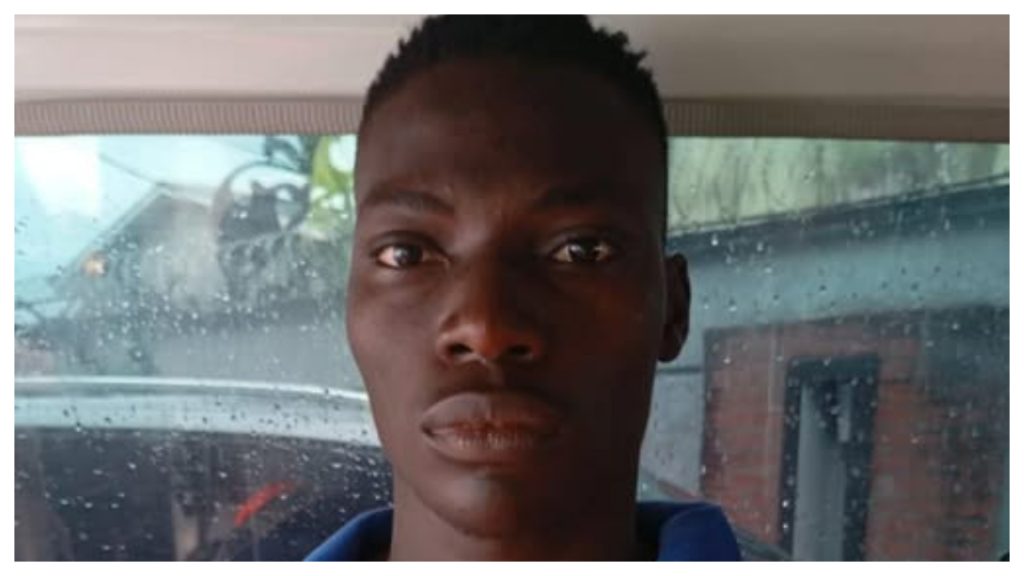
So the question is not whether the technology exists to track a man streaming live on TikTok while distributing ₦50 million in the middle of the night. The question is why that same urgency has never once been applied to the people doing it.
Nigerians are asking a question that no official has answered: unless the government is behind these bandits, why can they not find people who are broadcasting their location to millions of people in real time?
The Divided Country
Social media has split cleanly on this. On one side, people who are furious at the begging, angry at the spectacle, angry that Nigerians publicly petitioned a bandit for money while his victims sit unrescued somewhere in a forest.
A user wrote “Have some dignity, This is blood money. People were killed for that money. How can you ask for it?” Another said: “The country is hard, yes. But that does not mean you should go begging from the people who are making the country harder.”
On the other side, a quieter, more honest group. People who admitted that if they had stumbled onto that live stream, they would have dropped their account number too. Not because they are shameless, But because hunger does not recognize morality when the stomach is empty. Because when you have not eaten in two days, blood money and clean money spend the same way at the market.
Both reactions are valid. Both reactions are also devastating.
SEE ALSO: Inside a Nigerian Kidnappers’ Den
The Money Has Blood On It
The ₦50 million being distributed on that live stream did not come from a salary or a business. It came from terrified families paying ransoms. From communities emptied by fear. From children taken from classrooms. From adults who left their homes one morning and have not come back.
That money has names attached to it. The names of the people who were taken so it could be raised.
Dropping your account number on that stream is not just an act of desperation. It is an act of participation in the cycle, a quiet signal that the business model works, that the money will find takers, and that the market for it exists.
SEE ALSO: My Worst Experience as a Hausa Man Travelling From Sango To Mokola Roundabout Ibadan
What This Really Means
The TikTok giveaway is not the story. The reaction to it is the story.
Nigeria has reached a point where a significant number of citizens no longer see bandits as enemies. They see them as potential benefactors. That is not a moral failure of individuals. That is a systemic failure of a country that has left its people so desperate that they will take cash from the same hands that slit a teacher’s throat.
If the government cannot protect the people, the people will find someone who can. If the government cannot provide for the people, the people will find someone who will.
The most chilling part of the entire story is not the begging. It is the confidence. These men streamed live for an hour in the middle of the night, distributed ₦50 million to strangers, and went to sleep. No consequences. No arrests. No follow-up.
Nigeria is not a country that cannot find these people. Nigeria is a country that has decided, through its actions and its silence, that finding them is not the priority.
That decision is being made by someone. The question is who.

About The Author