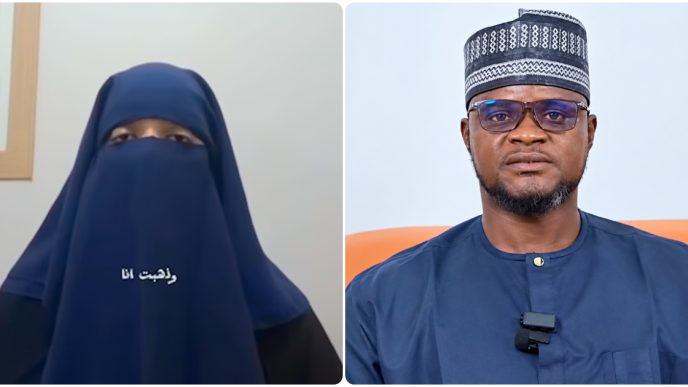





To my relief, Chibuzor Gift Chinyere of Omega Power Ministries did not declare that his adopted daughter, presently being paraded before the nation in a kind of matrimonial raffle, urgently requires being married to a man of heroic stamina on account of an overactive libido. One is grateful for small mercies. That, ladies and gents, is where the relief ends.
We have seen this film before. Two or three weeks ago. Only the cast has been swapped out, but the plot remains stubbornly idiotic. Previously, there was Aboy, said to be autistic, and presented to the public not as a person with dignity and complexity but as a sort of ambulatory emergency requiring immediate and sustained sexual intervention. The justification was offered with a straight face: the fellow possessed appetites of near-mythic proportion, something in the general vicinity of a Satyr, and therefore needed a wife as one might prescribe cold water for a fever. Diagnosis, meet solution.

Naturally, inducements followed. Money, accommodation and a life assembled like flat-pack furniture. Within days, a woman, reportedly a widow, stepped forward. They were married off with admirable efficiency. Whether the promised therapeutic marathon sex has since commenced is what we do not know, but it was never really the point. 
Now we are back at the same stall, the same wares, only a different name on the label. The incentives are intact. The logic, if one may abuse the word, remains untouched. One half expects a laminated brochure. It is tempting, of course, to call this kindness. Many already have. It sounds generous if you do not linger too long over the details. But give it 30 seconds of actual thought and the whole thing begins to smell like Olusosun.
Because what is being proposed, dressed up in benevolence, is the reduction of human beings into tools. Women, in this case, as instruments of management. The old and tiresome belief that when a man is hopeless, hapless or simply a first-class layabout, the answer is to find him a wife and hope she will perform a moral repair. It is the sort of thinking that should have been buried with other bad ideas but keeps clawing its way back up.
Then, there is the breezy invocation of autism, deployed here as though it were a convenient umbrella for any neuro-developmental challenge. It is not. It is specific, complex and not remotely a catch-all for “person requiring marriage as treatment.” Which brings us, inevitably, to consent.
Was Aboy fully capable of understanding the contract he entered into? Can the young woman now being advertised give consent in any meaningful, legally recognisable sense? If those questions do not have clear, satisfactory answers, then the entire enterprise crumbles. One does not assign spouses the way one distributes welfare packages. Or at least, one ought not to.
The incentives only make matters worse. Once you begin attaching financial rewards, accommodation, and assorted benefits to a relationship, you have crossed a line. It ceases to be about companionship or choice and becomes, unmistakably, a transaction. And transactions of this sort tend to attract a certain breed of enthusiast. The opportunist. The chancer. The person who sees vulnerability not as something to protect but as something to exploit.
“We are told that there will be “supervision,” which is as comforting as being told that the fix will occasionally check in on the henhouse. Oversight, when it exists only as a promise, is not protection. It does not reach into private spaces nor does it prevent the quiet, ordinary forms of coercion that occur far from public view.
And so one begins to see the outline of a system. A replicable one. Today, it is framed as charity. Tomorrow, it risks becoming a template. In a country already fond of prescribing marriage as a cure for nearly everything, this is a particularly dangerous escalation. Sad? Marry. Poor? Marry. Socially awkward? Marry. Now, apparently, developmentally vulnerable? Marry. At this rate, wedding rings will soon come with dosage instructions.
If the aim were genuinely care, the approach would look rather different. It would involve structured support. Safe housing, trained caregivers, therapy, education and skills for independence will provide the frame for the dull, unglamorous work of actually protecting dignity. It is not this curious outsourcing of responsibility to whichever stranger is willing to sign up for the benefits package.
When you arrange marriages for people who may not be in a position to give informed consent and then sweeten the deal to make it attractive, you are not solving a problem. You are creating a new one, and a potentially uglier one at that.
At some point, the authorities may wish to take an interest. Who is assessing capacity? What safeguards exist? Who is accountable when, not if, things go wrong? Good intentions, loudly advertised, do not excuse bad ideas and vulnerable people should never be the collateral for themTo my relief, Chibuzor Gift Chinyere of Omega Power Ministries did not declare that his adopted daughter, presently being paraded before the nation in a kind of matrimonial raffle, urgently requires being married to a man of heroic stamina on account of an overactive libido. One is grateful for small mercies. That, ladies and gents, is where the relief ends.
We have seen this film before Two or three weeks ago. Only the cast has been swapped out, but the plot remains stubbornly idiotic. Previously, there was Aboy, said to be autistic, and presented to the public not as a person with dignity and complexity but as a sort of ambulatory emergency requiring immediate and sustained sexual intervention. The justification was offered with a straight face: the fellow possessed appetites of near-mythic proportion, something in the general vicinity of a Satyr, and therefore needed a wife as one might prescribe cold water for a fever. Diagnosis, meet solution.
Naturally, inducements followed. Money, accommodation and a life assembled like flat-pack furniture. Within days, a woman, reportedly a widow, stepped forward. They were married off with admirable efficiency. Whether the promised therapeutic marathon sex has since commenced is what we do not know, but it was never really the point.
Now we are back at the same stall, the same wares, only a different name on the label. The incentives are intact. The logic, if one may abuse the word, remains untouched. One half expects a laminated brochure. It is tempting, of course, to call this kindness. Many already have. It sounds generous if you do not linger too long over the details. But give it 30 seconds of actual thought and the whole thing begins to smell like Olusosun.
Because what is being proposed, dressed up in benevolence, is the reduction of human beings into tools. Women, in this case, as instruments of management. The old and tiresome belief that when a man is hopeless, hapless or simply a first-class layabout, the answer is to find him a wife and hope she will perform a moral repair. It is the sort of thinking that should have been buried with other bad ideas but keeps clawing its way back up.
Then, there is the breezy invocation of autism, deployed here as though it were a convenient umbrella for any neuro-developmental challenge. It is not. It is specific, complex and not remotely a catch-all for “person requiring marriage as treatment.” Which brings us, inevitably, to consent.
Was Aboy fully capable of understanding the contract he entered into? Can the young woman now being advertised give consent in any meaningful, legally recognisable sense? If those questions do not have clear, satisfactory answers, then the entire enterprise crumbles. One does not assign spouses the way one distributes welfare packages. Or at least, one ought not to.
The incentives only make matters worse. Once you begin attaching financial rewards, accommodation, and assorted benefits to a relationship, you have crossed a line. It ceases to be about companionship or choice and becomes, unmistakably, a transaction. And transactions of this sort tend to attract a certain breed of enthusiast. The opportunist. The chancer. The person who sees vulnerability not as something to protect but as something to exploit.
We are told, reassuringly, that there will be “supervision.” Which is about as comforting as being told the fox will occasionally check in on the henhouse. Oversight, when it exists only as a promise, is not protection. It does not reach into private spaces nor does it prevent the quiet, ordinary forms of coercion that occur far from public view.
And so one begins to see the outline of a system. A replicable one. Today, it is framed as charity. Tomorrow, it risks becoming a template. In a country already fond of prescribing marriage as a cure for nearly everything, this is a particularly dangerous escalation. Sad? Marry. Poor? Marry. Socially awkward? Marry. Now, apparently, developmentally vulnerable? Marry. At this rate, wedding rings will soon come with dosage instructions.
If the aim were genuinely care, the approach would look rather different. It would involve structured support. Safe housing, trained caregivers, therapy, education and skills for independence will provide the frame for the dull, unglamorous work of actually protecting dignity. It is not this curious outsourcing of responsibility to whichever stranger is willing to sign up for the benefits package.
When you arrange marriages for people who may not be in a position to give informed consent and then sweeten the deal to make it attractive, you are not solving a problem. You are creating a new one, and a potentially uglier one at that.
At some point, the authorities may wish to take an interest. Who is assessing capacity? What safeguards exist? Who is accountable when, not if, things go wrong? Good intentions, loudly advertised, do not excuse bad ideas and vulnerable people should never be the collateral for them.
SEE ALSO: Blessing CEO and the Theft of Suffering
This story is the personal opinion of the author and does not represent that of NBG Africa.

About The Author