



The Bilateral Education Agreement (BEA) is a scholarship scheme initiated in 1993 and revitalised in 1999 to enable Nigerian students to pursue undergraduate and postgraduate studies in several countries, including Russia, China, Morocco, Algeria, Hungary, Serbia, Egypt, Romania, and Cuba.
Segi in Russia
Segi (not her real name) got a scholarship to study medicine in Russia in 2019. Like every scholarship process, the application process is vigorous; there are grade requirements and even written tests. She passed the tests for the South West, Nigeria. When she arrived in Russia, there was no war, and the current Nigerian government wasn’t in administration. With her tuition paid, the Nigerian government promised to send $500 to each student. This covers rent, food, utilities, and healthcare; from 2019 until 2023, all was going well. 
Until the administration changed, and in 2023, the money was delayed. 2024 was the last time she received stipends from the government.
In 2024, the federal government cut their 2024 stipends by 56 per cent, paying only $220 instead of the approved $500. Segi hasn’t received any stipend since 2024. At this time, the war in Ukraine was at its peak—a war that began in 2022—and the cost of everything had skyrocketed.
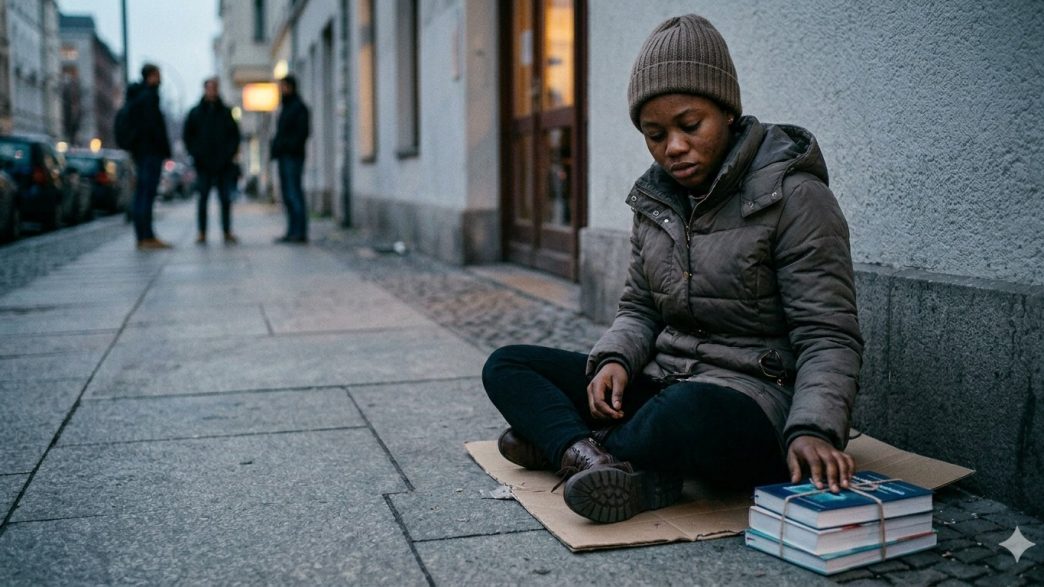
For Segi, the reduced stipend meant she was falling behind on rent, barely having enough to eat, and if she fell sick, she would have no money to treat herself. In January 2026, Bashir Malami, a Nigerian student under the federal government scholarship scheme, died in Morocco due to alleged neglect.
Segi’s father told us that these students come from poor or middle-class backgrounds; without the government’s assistance, they would have never been able to facilitate their study abroad. “How much is my salary? When converted to currency, it is virtually nothing,” he said. “Many of these children have resorted to begging from other Africans who are on the same scholarship programme or prostitution.”
A Waste of Resources?
What began as a blessing became a source of financial and emotional stress for the parents and their children. Segi’s father, the students, and many other parents staged protests and even reached out personally to the minister of education, Maruf Tunji Alausa, which seemed only to anger the minister.
According to Segi’s father, Alausa had said that the money being provided for the students abroad was too much, and they were using it to live lavish lives abroad.
In a statement made during a courtesy visit by newly elected officials of the National Association of Nigerian Students, Alausa said the government would redirect the funds toward domestic scholarship programmes that would benefit more students across the country. “In 2024, when I assumed office, I was asked to approve ₦650 million for 60 students going to Morocco under the BEA programme. I refused. It’s not fair to Nigerian students.”
He further stated that the BEA was cancelled. “In 2025 alone, the government planned to spend ₦9 billion on just 1,200 students. It’s unjust to spend such a huge amount sending students abroad to study courses available locally while millions of Nigerian students receive no support,” he stated. He added, “We have evaluated every course these 1,200 students are studying abroad – every single one is available in Nigerian universities. We are cancelling the BEA. It is not the best use of public funds.”
Meanwhile, Nigeria’s 2026 appropriation budget has earmarked a lump sum for this bilateral scholarship: “₦5.6 bn was provided for the servicing of 1,532 ongoing bilateral education agreement scholars studying in donor countries.”
Segi’s father believes that it is not cancelled, and many students are still being onboarded to the programme. He also believes that Alausa’s statement was wrong on so many levels. For instance, his daughter, who is studying medicine, will have access to equipment and training not available in Nigeria, and in any case, she will be using the results of this training when she returns to Nigeria.
Alausa’s grouse is also with the students staging protests online and offline which he calls ‘blackmail’; however, there has been a fundamental breach of agreement, and it follows logically that the students raise awareness of their plight.
It’s also interesting to note though it has been cancelled, Nigeria has budgeted billions of naira for these scholars. Who would receive the money if not the students? And what about those who are already there? How would they survive without money in a foreign country?
ALSO READ: Canada Increases Permanent Residence and Citizenship Fees for Nigerians from April 2026

About The Author