


Something interesting and honestly quite concerning is unfolding around Chowdeck, one of Nigeria’s popular food delivery companies.
What started as a simple observation has now turned into a broader conversation about pricing, transparency, and trust between the company and consumers.
Barely a month after facing a lawsuit, Chowdeck is back in the spotlight, as new complaints are pushing Nigerians to call for another one. 
What Was The Lawsuit About?
The suit, filed by Dolapo Adedeji, accused Chowdeck of inflating menu prices on its platform. According to the claim, customers were led to believe that delivery and service fees were the only extra charges, when in reality, the base price of food items had already been increased.
Dolapo alleged that meals listed on Chowdeck were sometimes 25 to 50 per cent higher than their in-store prices, even before additional fees were added. He also claimed that, contrary to what many users assume, Chowdeck may have significant control over pricing on its platform, not just the restaurants themselves.
The case questioned whether these practices amount to misleading pricing, lack of transparency, and unfair charges to consumers.
The claimant is seeking a lot of declaratory and compliance-related reliefs. The matter is still in court and the outcome will definitely set a precedent.
Why Are Nigerians Dragging Chowdeck Again?
It all started when an X (formerly known as Twitter) user noticed something unusual. A chicken salad selling for ₦2,500 at Chicken Republic was listed for as high as ₦3,200–₦3,400 on Chowdeck.
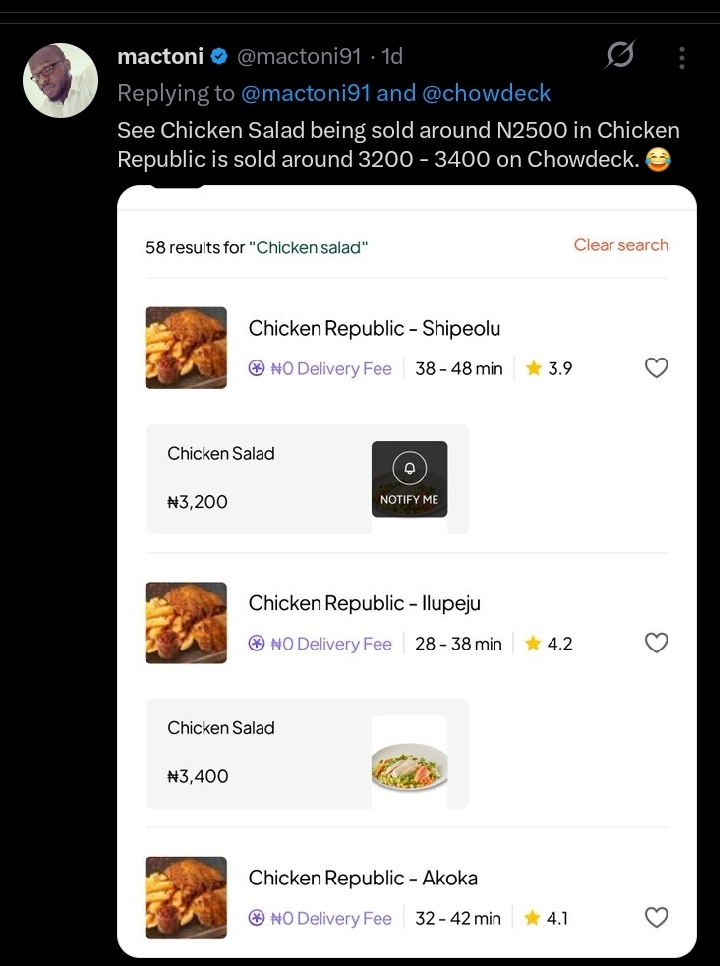
At first glance, this might seem like a normal markup for convenience or delivery. But as you observe better, it’s really not.
The “discount” controversy
One of the biggest triggers for the outrage is what many users describe as misleading discounts.
Someone shared a screenshot of an order on the app:
- Original total of food ordered: ₦16,000
- After a “30% discount”: ₦14,000
And mathematically, this doesn’t add up.
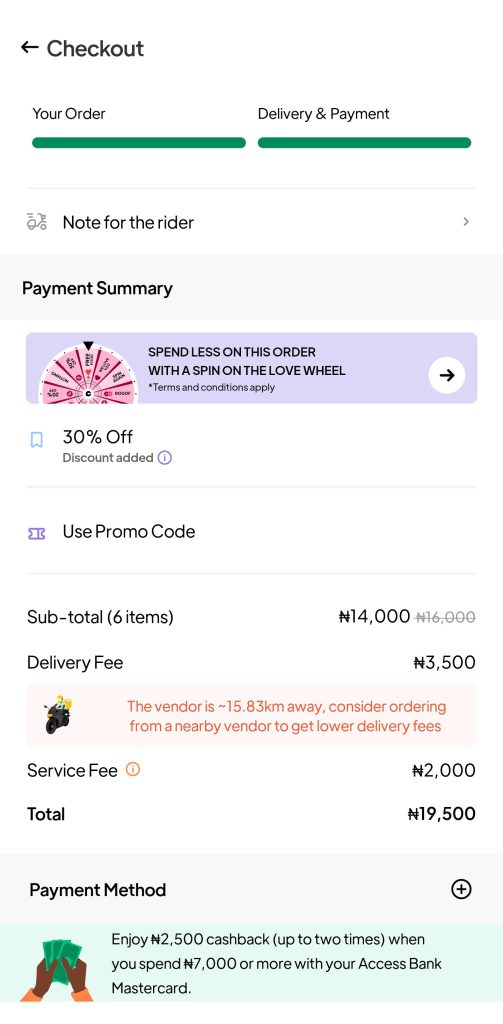
A true 30% discount on ₦16,000 should bring the total down to ₦11,200, not ₦14,000. This gap in price has led many to questions one of which is what exactly is being discounted then?
Many users also say that beyond the discounts, the pricing structure itself feels excessive.
Some of the common complaints include:
- Inflated menu prices compared to restaurant walk-in prices
- Additional service fees added at checkout
- High delivery charges, even for relatively short distances
In an image shared by someone,
- Delivery fee: ₦3,500
- Service fee: ₦2,000
- Final total: nearly ₦20,000
And this is after a supposed discount has already been applied.
ALSO READ: Yoghurt Isn’t Magic, but It Could Help You Reach 100: Here’s How to Make Your Own
To a lot of people, this creates the impression of stacked or layered charges that significantly increase the final cost.
This has stirred doubt in the minds of many consumers who are claiming all over again that the company increases the price of each food item, adds a service and delivery fee afterwards, and goes ahead to present a discount that doesn’t fully reflect the real total of prices.
While food delivery platforms globally often include commissions and logistics fees, the concern here is not just the presence of charges but the lack of clarity around why they are so high.
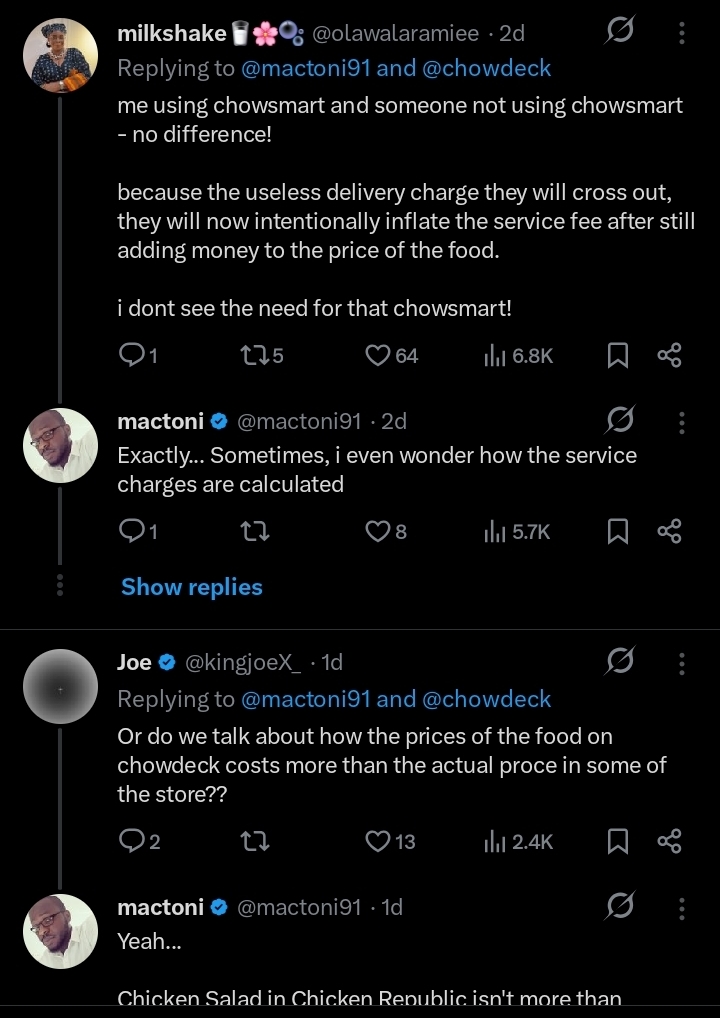
Chowmart subscription confusion
Another major issue being raised involves Chowmart, an online food ingredient market owned by Chowdeck. Some of the many complaints laid out by users concerning the store include:
- Stores listed under the plan are sometimes unavailable in their location
- “Free delivery” benefits are inconsistent.
- Nearby vendors still come with unexpectedly high delivery fees.
However, pricing isn’t the only issue. Some users also report difficulties when trying to resolve complaints.
Why people are calling for legal action
The growing frustration has led some Nigerians to suggest that Chowdeck should be sued, despite a lawsuit already filed by Dolapo Adedeji for the exact same reasons Nigerians are once again complaining about.
Their concerns centre around:
- Potentially misleading discounts
- Lack of transparency in pricing
- Charges that don’t clearly add up
- Inconsistency in subscriptions benefits
While there is currently no confirmed case of fraud, the situation has caused serious conversations among many people.
Conclusion
Food delivery services are meant to be built on convenience. But that convenience comes at a cost, and users are generally willing to pay it if the pricing is clear and fair.
The problem arises when numbers don’t align, the discounts appear misleading, and food companies are not transparent with their charges, thereby misleading and robbing people.
With the way a lot of Nigerians are reacting to the issue, it’s no longer about cost but rather a case of losing trust in a brand that was once perceived so highly.
For now, the backlash serves as a reminder for users to always double-check prices before ordering, possibly comparing with restaurant prices where possible.
As the conversation continues and grows, Nigerians are not just complaining but rather demanding transparency.
About The Author