



We urinate everyday but rarely openly discuss what the different colours and shades of our urine say about our health.
In our hot climate, commuting under the sun, market runs, work, traffic, or just hustling, many of us forget to hydrate. Then one day you glance down and the colour looks… different. You might want to shrug it off. Don’t. Your urine is one of the simplest free health checks your body gives you every single day.
Doctors at places like the Mayo Clinic and Cleveland Clinic say the colour of your pee can tell you about hydration, infections, liver issues, and more. 
Here are the main colours your urine can have and what they say about your health.
Pale Yellow (The Ideal Colour)
When your pee is pale yellow in colour (like lemonade) it means your body has enough water and your kidneys are filtering body waste properly. The yellow colour comes from a natural pigment called urochrome. The more water you drink, the lighter it gets.
During harmattan or the rainy season, you should always aim for this colour. If it stays here most days, you’re doing well with hydration.
SEE ALSO:Kenyan Man Stores Urine In Bottles, Refuses to Use Toilet for 2 Years
Clear or Almost Colourless
This colour indicates that you’re drinking a lot of water, maybe even too much. Occasional clear pee is fine,but balance is key. If it always looks clear like water and you’re peeing every few minutes, you might be taking too much water and flushing out important salts and electrolytes.
Dark Yellow or Amber
This colour is like groundnut oil and it is your body waving a small yellow flag: “I’m thirsty!” It means you’re a bit dehydrated. Cleveland Clinic says this is common after sweating heavily, long walks in the sun, or not drinking enough during a busy day. When you drink more water, coconut water, or light zobo without too much sugar), it should lighten up within a few hours.
Orange
This could still signify dehydration, a result of or vitamins (especially B vitamins or vitamin A) and certain medicines. More seriously, it could mean a problem with the liver or bile ducts. If it stays orange even after you drink plenty of water, and especially if your stools look pale or your eyes look yellow, see a doctor or go to the clinic.
Pink or Red
This one can scare people, but sometimes it’s just foods like beetroot, blackberries, or rhubarb that have turned the urine pink or red. Some medicines like certain TB drugs or pain medicines for urine infections also change the colour of urine.
Red urine can also mean blood in the urine. Blood can come from a urinary tract infection (UTI), kidney stones, prostate problems in men, or, less commonly, more serious issues. If you didn’t eat anything red and the colour doesn’t go away, don’t ignore it. Get checked, especially if there’s pain or burning sensation when you pee.
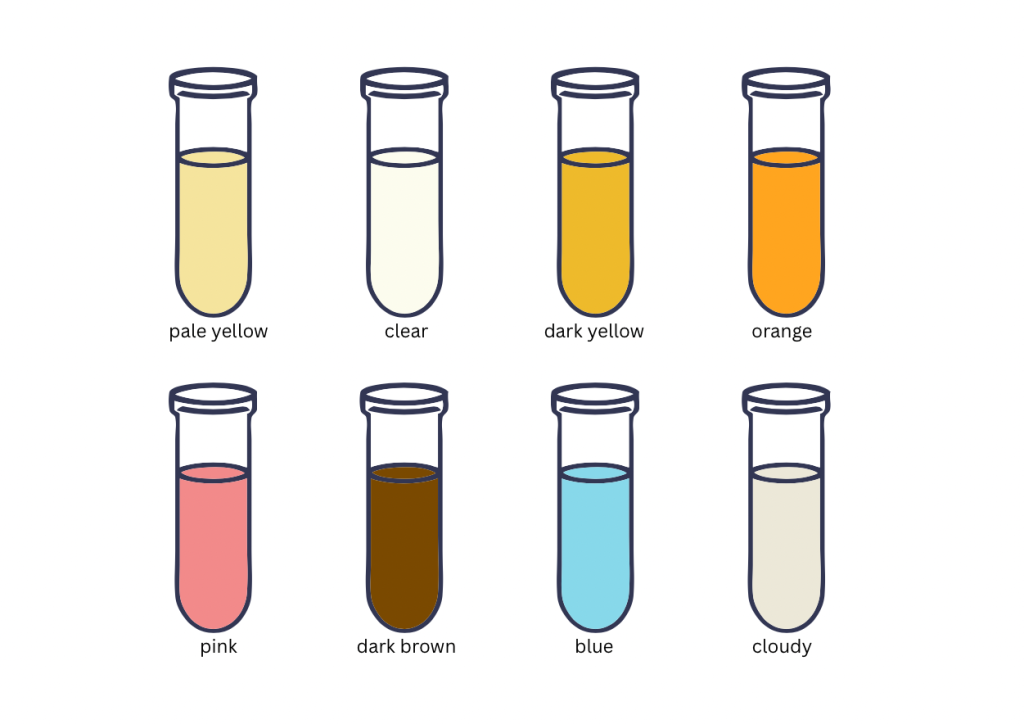
Dark Brown or Cola-Coloured
This needs attention. Severe dehydration can cause it. Intake of certain foods, some malaria medicines and antibiotics can cause your urine to turn dark brown. Mayo Clinic says it can also indicate liver/kidney problems. Extreme exercise that damages muscles can also turn urine this colour. If drinking water doesn’t fix it, see a health worker.
SEE ALSO: The Beautiful Sound of Blowfly Music
Blue or Green
This is rare, but it happens. The colour is usually from food dyes, certain medicines, or (rarely) a specific type of bacteria causing a UTI. According to the Mayo Clinic, a very rare genetic condition involving hypercalcemia can also cause it. Most times it’s temporary from something you ate or took. However, if it continues, check with a doctor.
Cloudy or Milky
Cloudy or milky urine is often a sign of a urinary tract infection or kidney stones. UTIs are common, especially for women, and can come with a burning sensation, frequent urge to pee, or a strong smell. Drink more water and see a clinic if it doesn’t clear because untreated UTIs can travel up to the kidneys.
Foamy or Bubbly
A heavy or intense stream can create temporary foam. But if it’s always very foamy and doesn’t settle, it might mean extra protein in the urine, which can point to kidney issues. Persistent foam deserves a check.

About The Author