Animals with exceptional lifespans offer fascinating clues about survival, ageing and the limits of life. When an animal lives longer than several generations of humans, it is natural to wonder what it can teach us about longevity and healthy living.
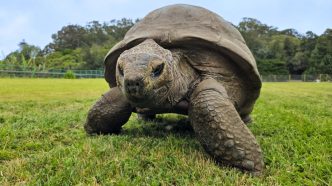
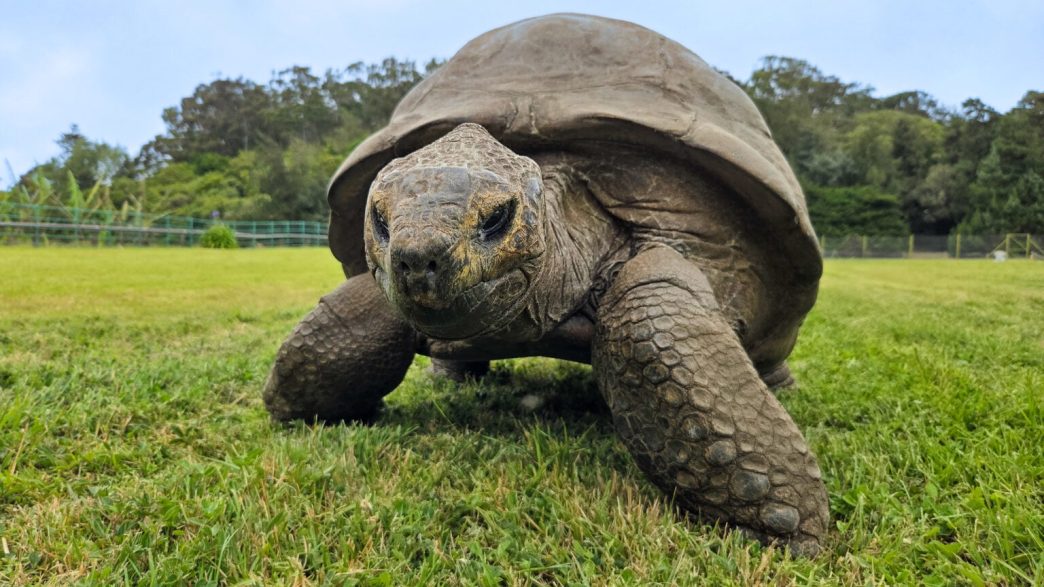
Few animals illustrate this mystery better than Jonathan, an Aldabra giant tortoise believed to be around 194 years old. His extraordinary longevity has drawn attention to a question scientists continue to investigate: why do some species age so much more slowly than others?
Jonathan the tortoise and the mystery of animal longevity
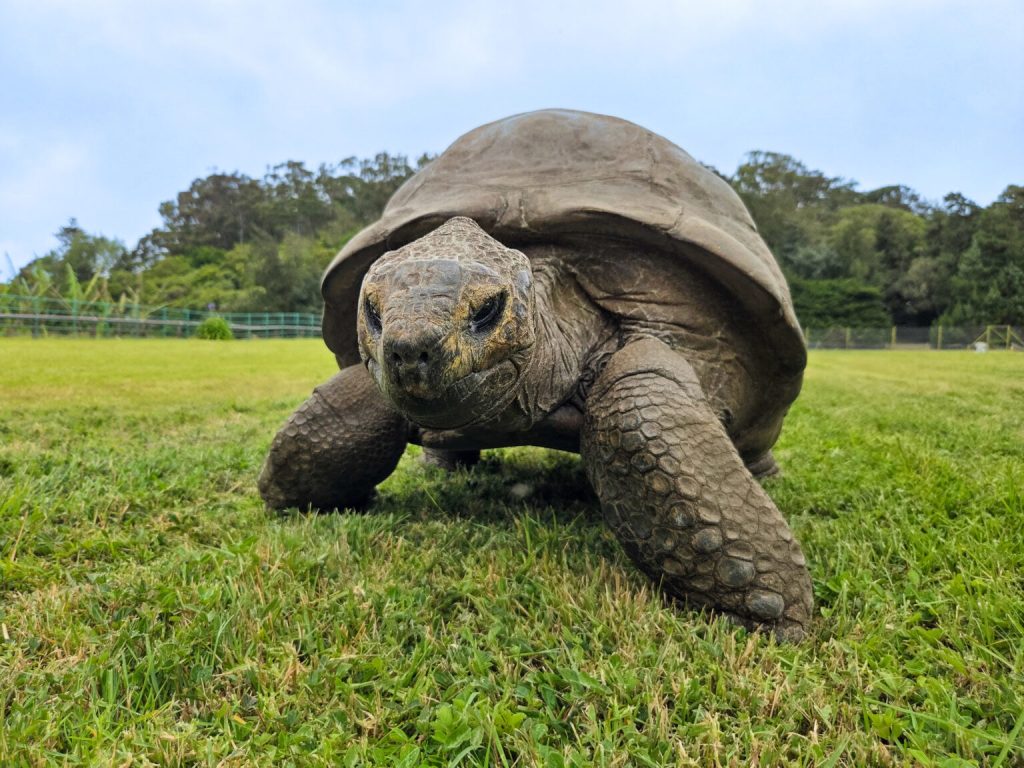
One particularly intriguing example is Jonathan, an Aldabra giant tortoise believed to be around 194 years old. He lives on the South Atlantic island of Saint Helena, where many people recognize him as the world’s oldest known living land animal. 
In research published in Science Advances in October 2026, an international team of scientists examined Jonathan’s genome and epigenome to investigate the biological features associated with his exceptional longevity.
The genome contains an organism’s genetic information, while the epigenome consists of chemical markers that help regulate how genes function.
The researchers discovered that certain regions regulating genes involved in mitochondrial energy production and RNA processing displayed unusually low levels of methylation entropy. In simpler terms, some of the molecular switches involved in essential cellular processes appeared remarkably well organised despite Jonathan’s advanced age.
These findings suggest that stable cellular energy production and gene regulation may support healthy ageing. However, scientists need more research to confirm what these observations mean.
After all, one exceptionally old tortoise cannot, by itself, reveal the complete secret of longevity.
READ ALSO: “We Barely Fight” – 120-Year-Old Nigerian Man Reveals How He Has Managed 4 Wives for Over 90 Years
Biggy’s story: the other side of animal longevity
Biggy, an Aldabra giant tortoise at Jersey Zoo in the Channel Islands, had an extraordinary longevity, but his story ended with difficult welfare decisions.
Before becoming part of Jersey Zoo’s tortoise family, Biggy arrived alongside 3 other Aldabra giant tortoises, marking the beginning of his life at the zoo.
However, in October 2026, the zoo decided to euthanize Biggy after recurring health complications raised serious concerns about his welfare.
His story offers a bittersweet reminder: a long life does not always mean good health. It also raises an important question: can studying these remarkable animals help scientists understand human ageing?
Animal longevity: The giant tortoise’s genetic advantage
Jonathan is not the first giant tortoise to attract scientific attention.
A study published in Nature Ecology & Evolution in 2019 examined the genomes of the Galápagos giant tortoise Lonesome George and an Aldabra giant tortoise. Researchers identified genetic variations involving DNA repair, inflammation and genes associated with cancer development.
These findings offered possible explanations for how giant tortoises evolved characteristics that support exceptional longevity.
DNA repair is particularly important because cells accumulate damage over time. If cells fail to repair that damage properly, it can contribute to cellular dysfunction and disease.
However, ageing is not controlled by one gene or one biological mechanism. Instead, it involves several interconnected processes, including genetic regulation, cellular maintenance and the body’s responses to damage.
Understanding how these animals manage these processes could eventually help researchers identify new approaches to age-related diseases in humans.
Nigeria’s palace tortoises: where oral history meets science
Nigeria has its own remarkable stories of tortoise longevity. In Oyo State, Baba, a tortoise kept at the Alaafin’s Palace, was believed to have lived for approximately 420 years before his death in September 2026.
According to the palace, Baba’s history stretched across generations of traditional rulers, making him more than an animal in the royal household. He was regarded as a living link to the history and cultural heritage of the Yoruba people.
His story recalls that of Alagba, the celebrated tortoise at the Soun of Ogbomoso’s Palace, who died in 2019. Alagba was widely reported to have been 344 years old, although that age was an estimate rather than a scientifically verified lifespan.
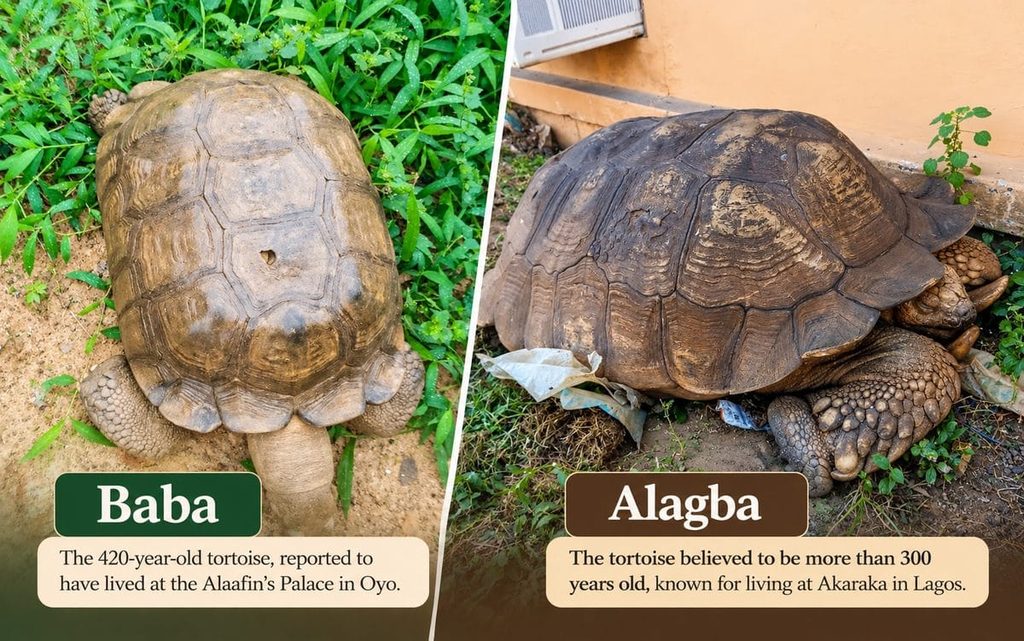
These stories reveal how animals can acquire cultural significance far beyond their biological lives. However, they also highlight the importance of distinguishing oral tradition from scientific evidence.
Neither Baba’s reported age nor Alagba’s has been independently verified. Nevertheless, they offer a compelling local connection to the scientific questions researchers are investigating through documented studies of long-lived animals.
SEE ALSO: The 4,000-Year-Old Defence System Rewriting What We Know About Ancient Africa
Meet the African rodent that challenges conventional ageing
In addition to Baba and Alagba’s longevity, one of Africa’s most unusual mammals is also challenging scientists’ understanding of ageing.
The naked mole-rat, native to East Africa, is a small, largely hairless rodent that can live for more than 30 years in captivity. This is remarkable for an animal of its size.
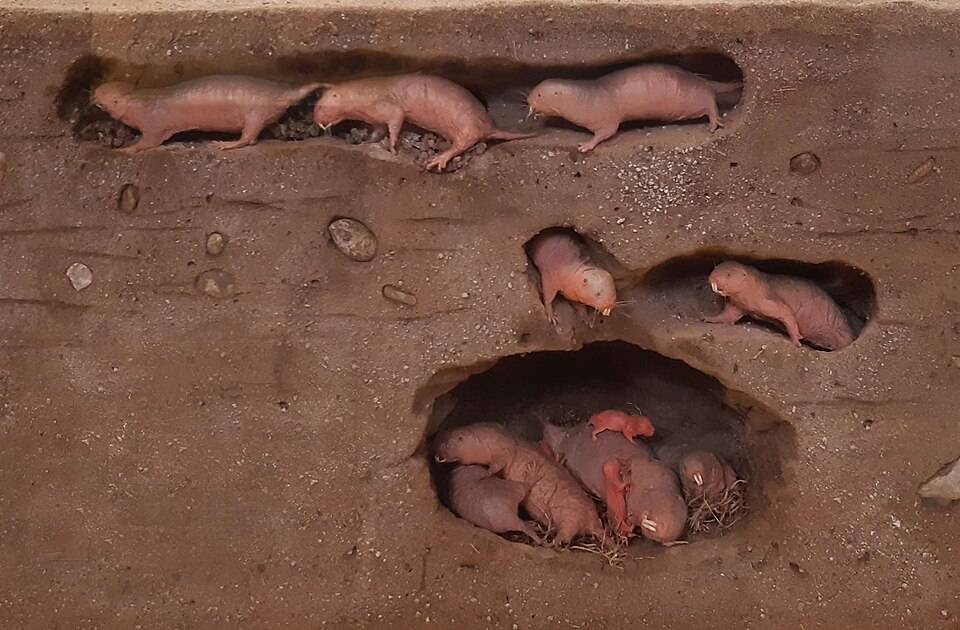
In 2018, researchers published a study in eLife. They analyzed more than 3,000 records of naked mole-rat survival.
However, naked mole-rats are neither immortal nor immune to ageing. Their unusual survival patterns make them valuable subjects for studying why ageing differs between species.
Scientists have also studied their resistance to cancer and other age-related changes.
In 2023, research published in Nature reported that introducing a mechanism associated with naked mole-rat production of high-molecular-weight hyaluronan into mice improved several health measures, reduced cancer incidence and extended lifespan under the experimental conditions.
Although the results are promising, they do not establish a treatment that can safely extend human life. They demonstrate how studying an unusual animal can generate hypotheses that scientists can test in other organisms.
Animal longevity: can these discoveries help humans live longer?
Can discoveries about animals that have longevity lead to meaningful benefits for humans? Scientists are investigating this possibility, but the process is neither simple nor guaranteed.
Humans and other animals share many fundamental biological processes. By studying how certain species maintain healthy cells, repair DNA damage and resist particular diseases, researchers can investigate the mechanisms that influence human ageing.
However, an adaptation that benefits a tortoise or naked mole-rat may not work in the same way in the human body.
Scientists must first establish whether a discovery applies to humans. They must understand how it works and test potential treatments for safety and effectiveness. Findings from cells and laboratory animals provide valuable early evidence, but they do not prove that a treatment will extend human life.
Longevity research also distinguishes between lifespan and healthspan. Lifespan refers to the total number of years a person lives. Healthspan describes the period spent in relatively good health.
For many people, the goal is not simply to reach 100. It is to remain mobile, independent and mentally engaged for as many years as possible.
What animal longevity can teach us
Biggy’s story reminds us that a life that has longevity can still involve illness and suffering. Jonathan’s remarkable age, meanwhile, gives researchers a chance to investigate how some biological processes remain functional over extraordinary periods.
The naked mole-rat offers another lesson. Nature has evolved different ways of managing the challenges of survival and ageing.
Together, these animals offer more than fascinating stories about the natural world. They give scientists opportunities to investigate biological questions that could improve our understanding of human health.
Studying these animals may not lead to treatments that allow people to live for centuries. However, each carefully conducted study can help scientists understand why species age differently. It may also reveal biological mechanisms that could inform future human medicine.
Perhaps the greatest lesson is not that humans should aspire to live as long as tortoises. Rather, nature may hold important clues to helping us live healthier lives for longer.
For now, the search continues—not for immortality, but for a better understanding of how to make our years count.
READ MORE: Gorillas, Elephants and 10 Other Animals Facing Extinction in Africa

About The Author