


The United Nations has backed a campaign to change how Africa appears on widely used world maps. The General Assembly adopted a Togo-sponsored resolution by 164 votes to one.
The move challenges the centuries-old Mercator projection and its distortion of landmass sizes. However, the resolution does not ban Mercator maps or impose a single replacement. Instead, it encourages governments, schools and technology companies to use equal-area projections.
The decision reflects a wider debate about geography, history and global perceptions of Africa. 
UN Backs Africa’s True Scale
The UN resolution received support from 164 countries, including France and the United Kingdom. The United States was the only country to vote against it. Meanwhile, Estonia, Georgia, Lithuania, Moldova, Serbia and Ukraine abstained.
The measure encourages institutions to consider maps that better represent continental sizes. It also promotes teaching about the limitations of flat maps.
That distinction matters because no two-dimensional map can perfectly represent the Earth.
Every projection must sacrifice something, including size, shape, distance or direction. The resolution therefore seeks greater accuracy when comparing the sizes of continents.
Togo led the initiative with backing from the African Union. Togolese Foreign Minister Robert Dussey described the campaign as an issue of perception.
“A fair world begins with a fair map,” Dussey said.
He also argued that maps influence how people understand countries and continents.
READ ALSO: 7 African Leaders With Outrageously Long Titles They Insisted On
Why the Mercator Map Makes Africa Look Smaller
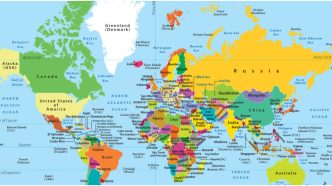
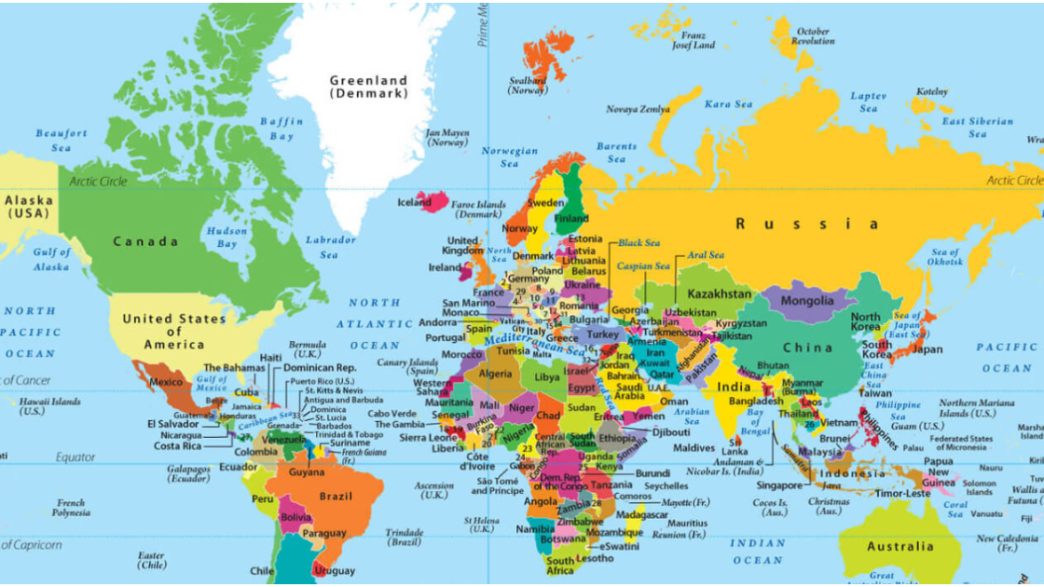
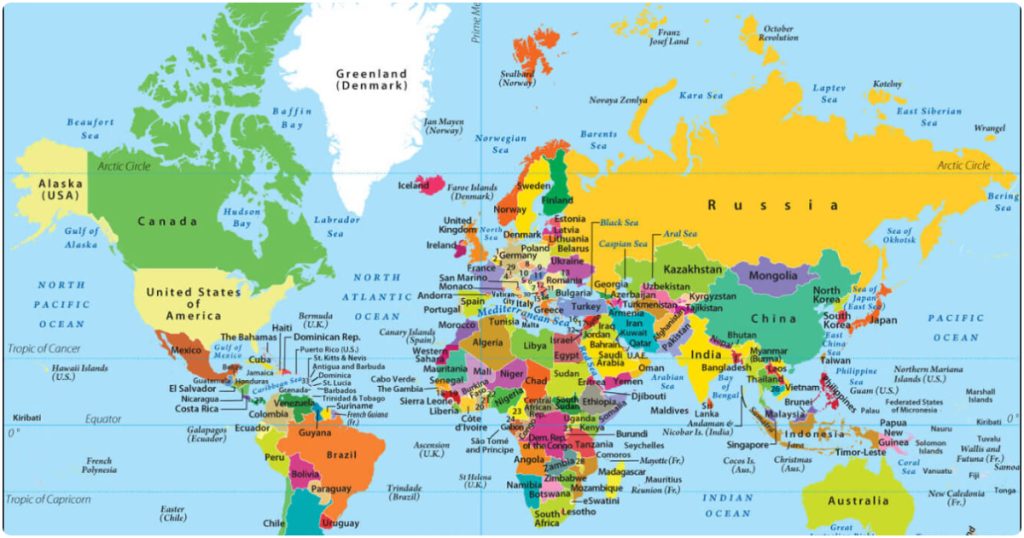
Gerardus Mercator created his famous projection in 1569. The Flemish cartographer designed it primarily for maritime navigation.
Its major advantage involved plotting routes using straight lines. However, that benefit came with significant distortions in landmass size. The distortion increases towards the North and South Poles.
Consequently, Greenland can appear almost comparable in size to Africa. In reality, Africa is about 14 times larger than Greenland.
Northern Europe and North America also appear disproportionately large. Africa, meanwhile, appears much smaller than its actual size.
The Mercator projection remains common in classrooms, media reports and digital platforms.
Critics argue that repeated exposure can influence perceptions of Africa. They believe those perceptions can affect attitudes towards the continent’s resources and opportunities.
The campaign therefore seeks to correct what supporters call a long-standing visual imbalance.
Equal Earth Offers a Different Perspective
Cartographers created the Equal Earth projection in 2018. The projection aims to preserve the relative areas of continents more accurately.
The African Union has also endorsed the approach. Its 54 member states adopted the projection earlier this year.
The bloc said Equal Earth represents continental sizes more accurately, particularly Africa. However, the new approach does not make Africa physically larger. Instead, it reduces the exaggeration affecting regions closer to the poles.
Campaigners have welcomed the development. The #CorrectTheMap campaign has pushed strongly for alternatives to Mercator.
“Africa’s misrepresentation on world maps is not just a cartographic error,” Lerato Mogoatlhe said.
She described the issue as a “narrative issue” that shapes how people view Africa. The campaign argues that Africa’s enormous geographical scale deserves greater recognition.
It also highlights the continent’s population, natural resources and economic potential.
READ ALSO: “I’m 99% African”: Tyrese Gibson Announces Africa Homecoming Trip, Burna Boy Connection
US Rejects the Map Campaign
Despite broad international support, Washington strongly opposed the resolution. US representative Yaryna Ferencevych criticised the General Assembly’s decision. She questioned why the UN was discussing a map created centuries ago.
“Instead of focusing on genuine problems of international peace, prosperity, or good relations,” she said.
Ferencevych argued that the initiative distracted from the UN’s core responsibilities. She also criticised references to reparations and “cognitive justice”. The United States described the broader initiative as ideological.
However, France took the opposite position. French Foreign Minister Jean-Noël Barrot announced plans to stop using Mercator.
“Changing the map obviously doesn’t change the world. Correcting a representation that distorts it is already an act of truth, Barrot said.
His comments strengthened the campaign’s argument for changing conventional maps.
Why the Map Debate Matters
Supporters say the debate extends beyond cartography. Kenyan geographer Kioko Muendo believes maps influence political and economic perceptions.
“Maps are more than just guides for travellers,” Muendo told BBC.
He argued that they shape how regions are perceived politically and economically. That concern sits at the heart of the African campaign.
Africa remains the world’s second-largest continent by land area. Yet common Mercator maps can make it appear smaller than northern regions.
The UN resolution attempts to address that visual imbalance. However, it remains non-binding and does not eliminate Mercator maps. Countries and organisations can still choose projections suited to their needs.
Nevertheless, the vote represents a major diplomatic victory for advocates of change. It also reinforces a simple message.
Maps do not merely show the world. They can influence how generations understand it.
READ ALSO: “Not the Freedom We Marched For”: 1956 Heroine Declares on South African Women’s Day 2026

About The Author