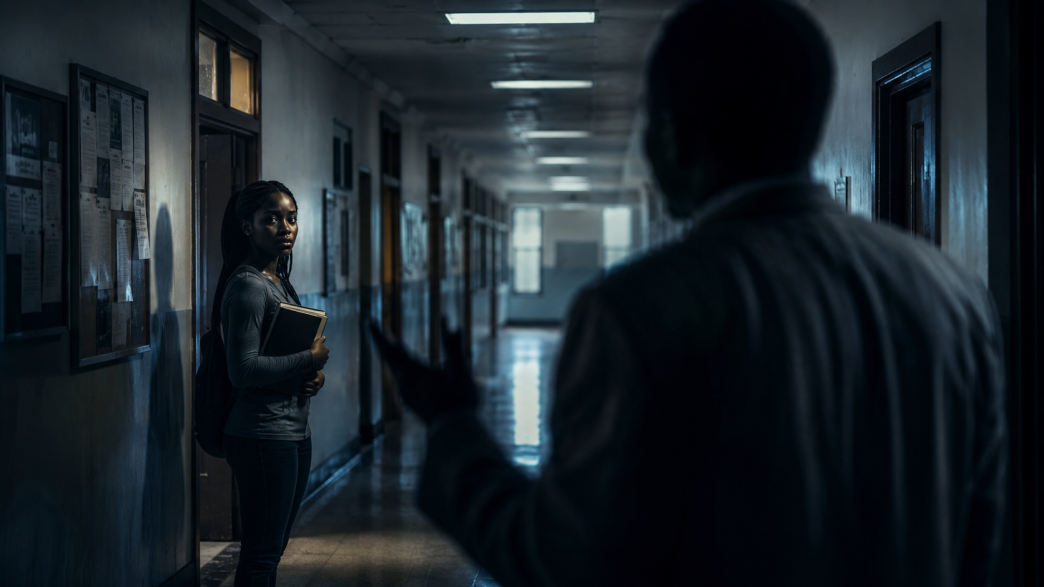
For years, female students in tertiary institutions across the country endured predatory sexual advances from male lecturers in silence. When the subject came up, it was usually in whispers, almost like campus folklore. Students traded stories in hostels and lecture halls, but victims rarely went public and even fewer lecturers were punished.
That began to change over the past decade. A series of investigations, leaked recordings, student protests and criminal prosecutions exposed what many had long described as one of the darkest abuses of power in Nigeria’s higher education sector. Some lecturers lost their jobs, one was jailed, while others faced criminal charges. Together, these cases forced institutions to acknowledge a problem they could no longer ignore.
1. The BBC’s UNILAG Expose 
Perhaps no case attracted as much international attention as the BBC Africa Eye documentary Sex for Grades in 2019. BBC reporter, Kiki Mordi, went undercover, posing as a teenage admission seeker. Hidden cameras captured two senior lecturers at the University of Lagos, Dr Boniface Igbeneghu and Dr Samuel Oladipo, making inappropriate sexual advances and suggesting that compliance could improve her chances of getting the academic opportunity she sought.
The documentary sparked outrage across Nigeria and beyond. Following an internal investigation, UNILAG dismissed both lecturers in 2021, sending one of the strongest signals yet that such conduct would not be tolerated.
2. Richard Akindele and the OAU Conviction
A year before the BBC documentary, Obafemi Awolowo University, Ile-Ife, was at the centre of another landmark case. Professor Richard Akindele, a lecturer and clergyman, was secretly recorded demanding sexual favours from a postgraduate student, Monica Osagie, in exchange for a passing grade. The recording went viral, triggering nationwide outrage and prompting the Independent Corrupt Practices and Other Related Offences Commission (ICPC) to prosecute the case.
Akindele pleaded guilty and was sentenced to two years in prison, making him one of the few Nigerian lecturers to receive a jail term in a sex-for-marks case.
3. The UNICAL Law Faculty Crisis
In 2023, the University of Calabar was engulfed by one of the biggest scandals in its history after dozens of female law students protested against the Dean of the Faculty of Law, Professor Cyril Ndifon. The students accused him of serial sexual harassment and demanded his removal.
The university suspended him, while federal authorities later arraigned him on charges that included alleged sexual harassment and attempts to obtain explicit images from students. The case became one of the most widely reported campus scandals in recent years and remains one of the strongest examples of students collectively speaking out against alleged abuse.
4. Another OAU Scandal
Obafemi Awolowo University returned to the headlines in 2020 when a lecturer, Olabisi Olaleye, was caught in a recorded conversation demanding sex from a student. The university investigated the matter and dismissed him after finding him guilty of gross misconduct.
The case reinforced concerns that dismissals and convictions had not eradicated the problem. The scandals have not been limited to Nigeria’s oldest universities. In recent years, institutions including the University of Abuja, now Yakubu Gowon University, Abubakar Tafawa Balewa University and Michael Okpara University of Agriculture have dismissed or sanctioned lecturers after investigations into sexual harassment allegations.
While the circumstances differed from one case to another, the pattern remained remarkably similar. Lecturers were accused of exploiting the unequal power relationship between themselves and their students. Each scandal has been followed by promises of reform. Universities have introduced sexual harassment policies, ethics hotlines and disciplinary committees. Bills seeking to criminalise sexual harassment in tertiary institutions have also received renewed attention.
However, the stories continue to emerge. The persistence of sex for marks points to deeper institutional problems, including the enormous power lecturers wield over students’ academic futures, fear of retaliation, victims’ reluctance to report abuse and the inconsistent enforcement of sanctions.
Most lecturers are dedicated professionals who do not exploit their students. But the actions of a small minority have damaged public confidence in Nigeria’s tertiary education system, giving rise to the cynical expression “sexually transmitted degrees.”
The biggest scandal is no longer that these cases happen. It is that, despite repeated exposures, dismissals, convictions and public outrage, they continue to happen at all.

About The Author