



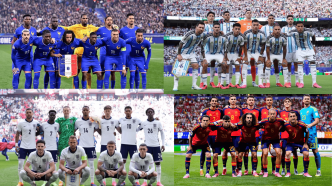
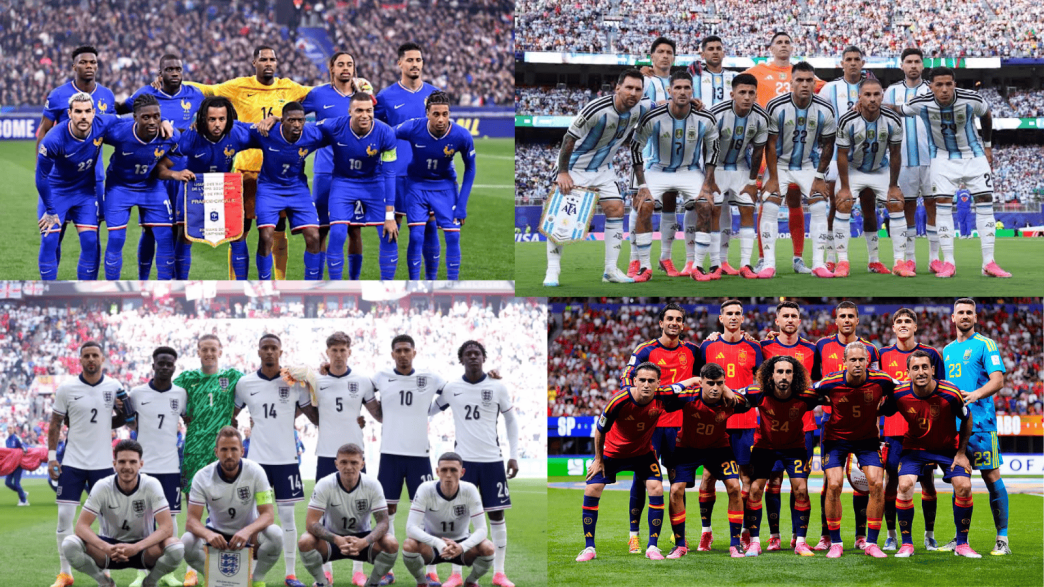
Football has always been tribal. It comes with the territory. Supporting your team has never been enough. You are also expected to viciously mock rival fans, lustily celebrate their heartbreak and remind them, at every opportunity, that their dreams have gone up in smoke. It is all part of the theatre.
But something about the 2026 World Cup feels different. The football has been wonderful, almost cinematic. The drama has been relentless, while the goals have been spectacular. Beneath all the excitement, however, lies an unusual level of bitterness among sections of the global fan base. At times, it feels as though many people are not watching to enjoy football. They are watching to make sure one particular player or the other does not succeed.
The two players attracting ill-will are Lionel Messi and Cristiano Ronaldo. The Messi-Ronaldo rivalry has produced perhaps the greatest sporting debate of modern times. For almost two decades, they dominated football in a way no two players ever had. Between them, they shared Ballons d’Or, Champions League trophies, league titles and goal-scoring records, forcing millions of supporters to choose a side. 
Argentina’s triumph at the 2022 World Cup appeared to settle the argument for many observers. It also deepened the resentment among sections of Ronaldo’s supporters, some of whom insisted, often with remarkable certainty, that FIFA had orchestrated the tournament to ensure Messi finally lifted the trophy.
As this World Cup began, many Ronaldo fans hoped history would swing back in Portugal’s favour. They imagined Ronaldo ending his international career with the one trophy that had always eluded him. Reality intervened. Portugal looked ordinary throughout the tournament, while Ronaldo, now in the twilight of his career, struggled to impose himself.
Messi, meanwhile, exploded into life, scoring a hat-trick in Argentina’s opening game, a brace in the second and another goal in the third as the defending champions took control of their group.
Portugal finished second, landed in the tougher half of the draw and were eventually eliminated by Spain. From that moment, the rivalry seemed to mutate into something resembling political allegiance, something like Ronadodients and Messified that we see in Nigerian politics.
There are no longer football fans. There are Messi people and Ronaldo people. That way, facts became optional and everything became propaganda. Argentina, it is claimed, received the easier draw because FIFA supposedly wanted Messi to win. Portugal were placed on the difficult side of the bracket because the authorities wanted Ronaldo eliminated. Every refereeing appointment became evidence, while every VAR decision became part of a wider conspiracy.
When Argentina came from two goals down to defeat Egypt, a result that denied Ronaldo supporters the ammunition they had hoped for, the conspiracy theories intensified. Every achievement required an explanation that did not involve football. Then the rivalry escaped football altogether and entered the realm of identity.
Supporting one player became part of who many people believed they are.
Some even attempted to politicise Argentina itself, attacking the country for its racial demographics. It was an odd argument, considering Portugal’s own complicated history, including its central role in the trans-Atlantic slave trade. Football debates had drifted into territory they were never meant to occupy.
Spain’s victory over Portugal should simply have been remembered as Spain defeating Portugal.
Instead, it became the starting point for another campaign. If Portugal could not win the World Cup, then Argentina absolutely must not. Social media quickly filled with declarations that France had to stop Messi. Others suddenly became passionate Spain supporters. Fans who had spent years mocking particular countries now found themselves cheering for them with astonishing enthusiasm.
The slogan was never officially written, but it might as well have been. Anyone but Argentina. The logic was straightforward. If Messi wins a second World Cup, comparisons with Ronaldo become even more difficult. Another argument disappears and another chapter of the debate closes.
For people who have spent years defending Ronaldo in countless online arguments, that possibility is almost unbearable. So Argentina’s opponents become temporary heroes. Kylian Mbappe has gained millions of extra supporters because a second World Cup would strengthen his own legacy while denying Messi another.
Spain become favourites because they stand between Argentina and history.
This is no longer about football, but about preventing history. The banter has often been hilarious, even if sometimes exhausting. One side posts edited images of referees wearing Argentina shirts, while the other responds with compilations of Ronaldo missing chances. Someone jokes that FIFA employees are secretly printing Argentina jerseys in the basement, while another says Ronaldo fan pages should register as emergency counselling centres every time Messi scores.
One meme claims VAR now stands for “Very Available for Argentina,” while another points out that Ronaldo supporters have changed national teams so often during the tournament that even immigration officials are struggling to keep up.
The internet has become a courtroom where every goal is treated as evidence and every referee as a suspect. The fascinating question is why people behave this way.
Psychologists have long argued that people derive part of their identity from the groups to which they belong. Once we identify strongly with a group, criticism of that group begins to feel deeply personal. The Messi-Ronaldo rivalry has become exactly that.
Many supporters are no longer defending footballers. They are defending themselves. To acknowledge that Messi has surpassed Ronaldo or vice versa is no longer justbchanging an opinion. It feels like admitting they spent years arguing the wrong case.
Human beings rarely enjoy that experience. Instead, they double down. Every success by the rival must be explained away. Every failure by their own hero must be excused.
Confirmation bias takes over. People eagerly collect information that reinforces what they already believe, while dismissing anything that challenges it. The result is an emotional investment far greater than football was ever meant to produce.

About The Author