



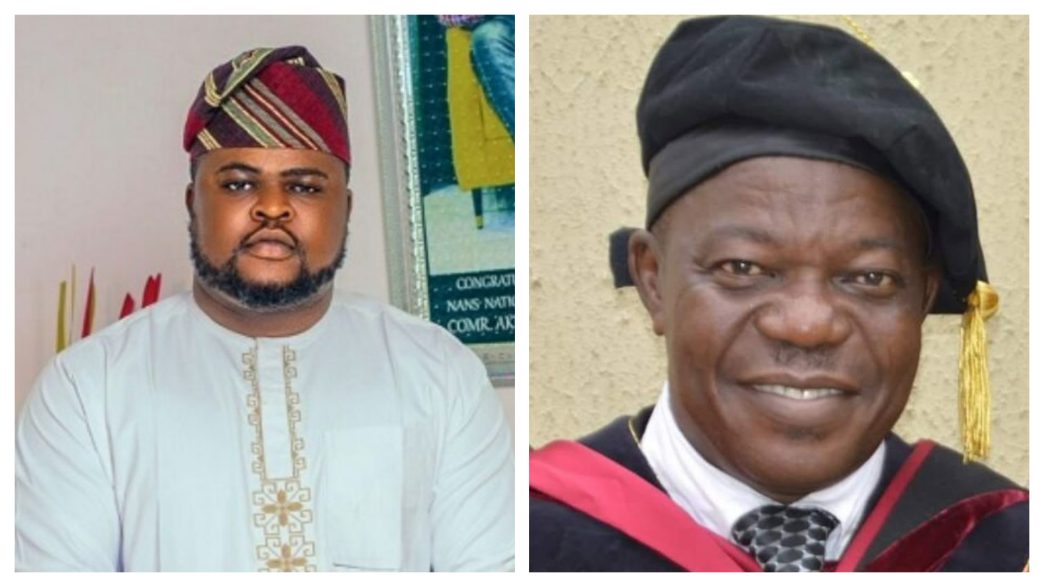
The National Association of Nigerian Students has raised the alarm about alleged fraud in the disbursement of NELFUND student loans at D.S. Adegbenro Polytechnic, Itori, Ogun State.
In a video addressed directly to President Bola Ahmed Tinubu, NANS President Akinteye Babatunde called out Dr. Rauf Adegoke, Rector of the institution, over what he described as a deliberate inflation of school fees on the NELFUND portal that is well above what students are actually being charged at the point of payment.
“The main reason why you wanted the loan to be available to students was to make life easier, for education to be encouraging for Nigerian students,” he said. “Now they are abusing the loans. They know for a fact that it is the students that will pay back this loan, and they are stealing from them. The balance of the money is being spent by the management.” 
The Figures He Cited
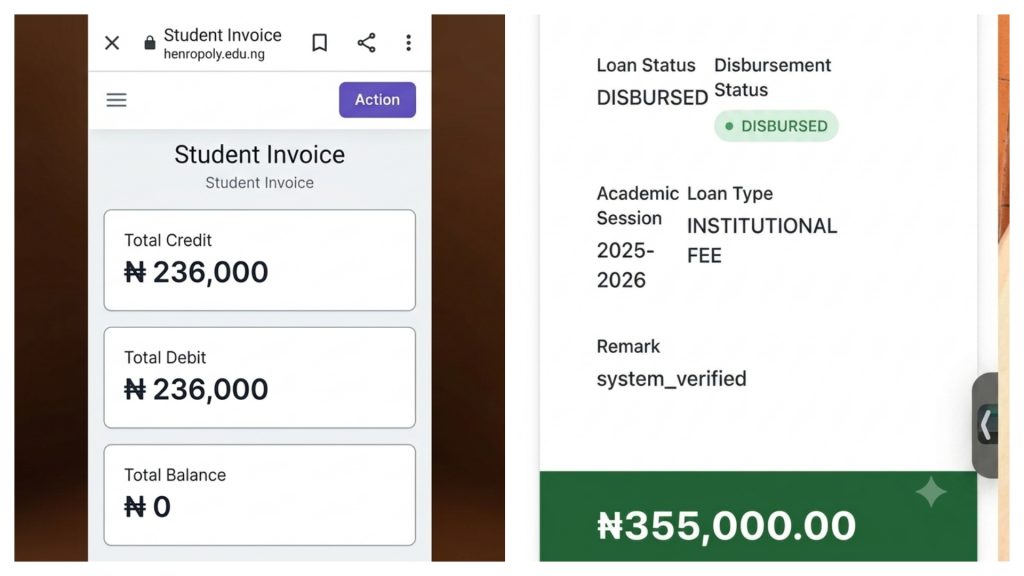
Babatunde said the institution charges HND I students ₦236,000 in school fees but uploaded ₦350,000 on the NELFUND portal, which is a difference of ₦114,000.
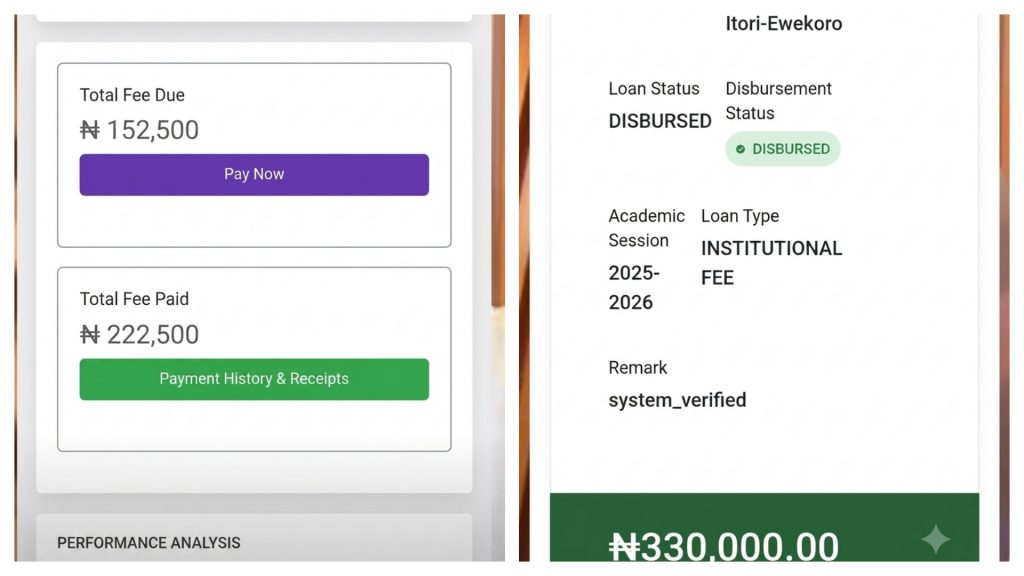
For ND II students, he said the school charges ₦152,000 but listed ₦330,000 on the portal, a gap of ₦178,000.
If accurate, this means NELFUND is disbursing significantly more than students actually owe in fees, with the excess funds allegedly being absorbed by management rather than returned to the students or the loan scheme.
He also raised a separate but related concern. When NELFUND has not yet paid, some institutions have reportedly been telling students to find money to pay from their own pockets, promising a refund once the loan comes in.
According to Babatunde, many students have complied, and the refunds remain unpaid.
“Many students have paid. Now for the refund, the management is not refunding them,” he said.
What Comes Next
Babatunde said NANS will publish a comprehensive list of all universities and institutions found to be involved in similar fraudulent activity. He also announced plans to petition the Economic and Financial Crimes Commission to investigate.
NELFUND was launched as part of the federal government’s effort to ease the financial burden on Nigerian students by providing accessible, government-backed education loans. The idea was straightforward: students borrow to cover fees and repay after graduation or when they get a job. What Babatunde is describing flips that purpose entirely: a system meant to protect students being used to extract money from the very people it was designed to help.
SEE ALSO: EFCC Says 6 Out of 10 Nigerian University Students Are Yahoo Boys; Is It True?
What Nigerians Are Saying
Nigerians online are not having it.
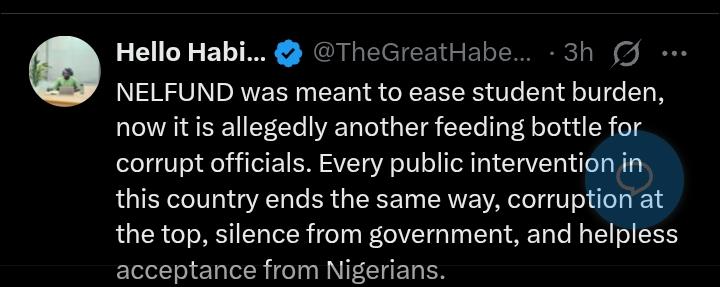
@TheGreatHabeeb put it bluntly: “NELFUND was meant to ease student burden; now it is allegedly another feeding bottle for corrupt officials. Every public intervention in this country ends the same way: corruption at the top, silence from the government, and helpless acceptance from Nigerians.”
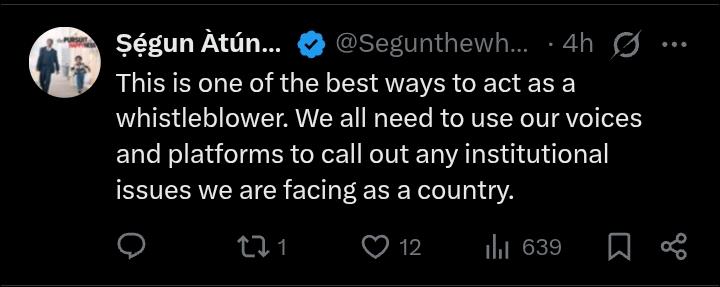
@Segunthewhale praised Babatunde’s approach, describing the video as one of the best forms of whistleblowing available. “We all need to use our voices and platforms to call out any institutional issues we are facing as a country,” he wrote.
@EleluAyoola was more cynical about the motives behind institutional resistance, suggesting that anyone calling out the system would face pushback designed to discredit them rather than address the allegations.
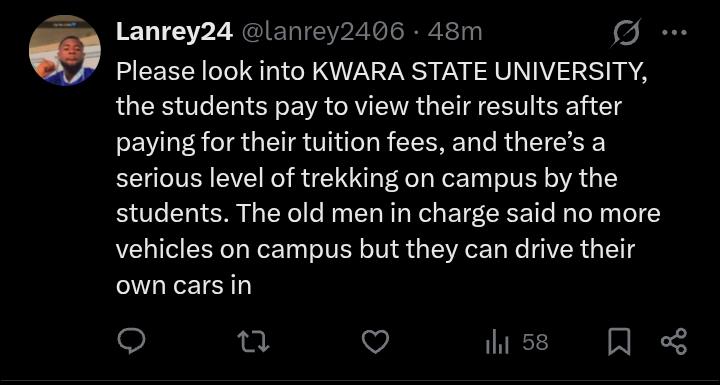
@lanrey2406 used the moment to widen the lens, calling attention to Kwara State University, where he alleged students are paying separately just to view their results after already paying tuition, and where a campus vehicle ban applies to students but apparently not to the administration.
SEE ALSO: PDP Backs Goodluck Jonathan for 2027: Is His Legacy at Risk?
D.S. Adegbenro Polytechnic and the office of the rector have not issued a public response to the allegations at the time of publication. NELFUND has also not commented. The EFCC petition, if filed, would make this a matter of formal investigation.
For the students at the center of it, who took out loans they did not know had been inflated, the question is not just who is responsible but who will make it right

About The Author