


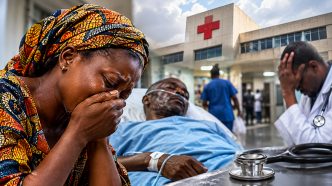
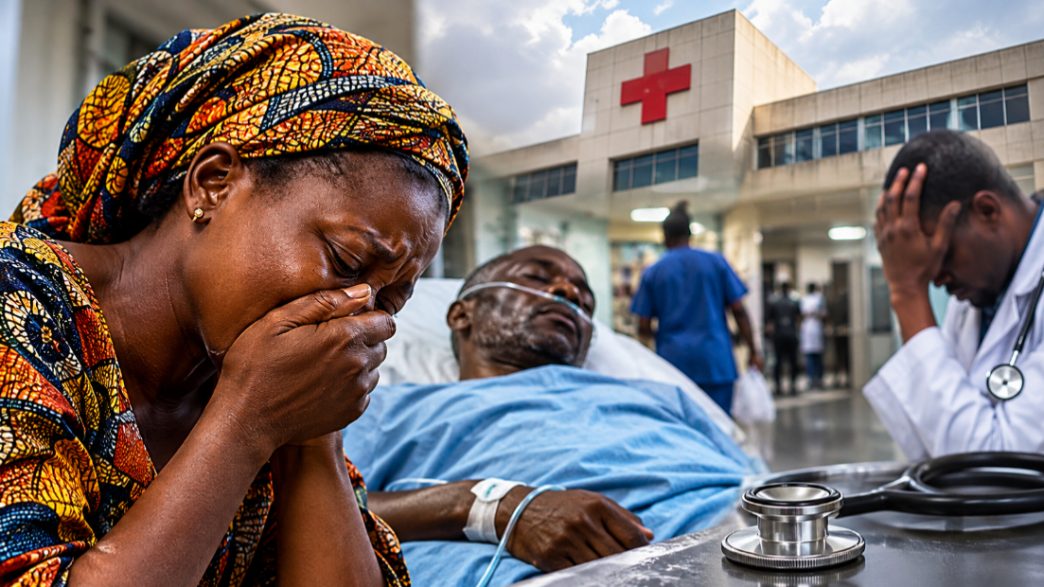
A man spent much of his life working in medicine, helping people and trusting the healthcare system he belonged to. But when it was his turn to receive care, that same system allegedly failed him in a way that cost him his life. That is the sad reality of medical negligence in Nigeria.
According to Chief Lara Owoeye’s account, her father died after medical personnel gave him the wrong medication in the wrong dosage. It is the kind of story that makes you stop and wonder: if someone who spent his life inside the medical profession could fall victim to such an error, what hope does the average patient have?
That question sits at the heart of the growing conversation around medical negligence in Nigeria, and it’s one that more Nigerians are beginning to ask with frightening urgency. 
Medical Negligence in Nigeria: When Hospitals Become Places of Fear
For many Nigerians, going to the hospital already comes with enough anxiety. There’s the cost of treatment, the possibility of being asked to buy supplies, the long queues and the uncertainty of whether the doctor will even be available. And now, like that’s not enough, patients and their families have another fear: what if the hospital itself makes things worse?
Stories of alleged wrong prescriptions, delayed treatment, surgical mistakes, misdiagnoses and patients struggling to get attention have fuelled growing frustration with the healthcare system.
And while medical errors happen in healthcare systems around the world, the consequences can become particularly devastating when hospitals operate under pressure, with inadequate resources, overstretched personnel and weak accountability.
SEE ALSO: The NYSC Ransom Economy: When a Graduate Becomes a Kidnapper’s Price Tag
Medical Negligence Cases Nigerians Cannot Forget Easily
The death of 21-month-old Nkanu Nnamdi, son of celebrated writer Chimamanda Ngozi Adichie, brought renewed attention to questions about patient safety and medical accountability.
The child died at Euracare Multi-specialist Hospital in Lagos on January 7, 2026. His family alleged that medical personnel administered excessive sedation and failed to monitor him properly. The Medical and Dental Council of Nigeria reportedly found a prima facie case of negligence and provisionally suspended three doctors.
The hospital, however, disputes the family’s account, and the case remains ongoing. Nevertheless, the tragedy reignited conversations about whether patients can confidently trust even the country’s top private hospitals. Because his mother is one of the most celebrated writers Nigeria has produced. She chose one of the best facilities she could find. Yet, it was not enough.
In a recent interview, Adichie said it plainly: “My feelings toward Nigeria have changed. I do not want to go back to Nigeria.”
In Kano, the death of Aishatu Umar raised another disturbing concern. Her family said she repeatedly returned to the hospital with pain but received painkillers. A subsequent investigation by the Kano State Hospitals Management Board reportedly confirmed that surgical scissors remained inside her body following an operation the previous September. Authorities suspended three hospital workers.
Road Accident Victim Dies Because of Bed Space
Then there’s the case of Olatunde Ojelabi in Lagos. On September 6, 2026, Ojelabi was driving his family to church when a road accident left him seriously injured. His brother says he reached the emergency unit at LASUTH before nine that morning and was left outside for more than six hours because there was no bed, and that the medical team stepped in only after he suffered a cardiac arrest. He died six days later, five days after his forty-sixth birthday.
However, LASUTH’s management denies that he was left unattended and says he was assessed and managed by its clinical teams.
These cases, and more, differ in their circumstances, and some allegations remain contested. But they share a common thread: families seeking answers after a medical emergency turned into a tragedy as shown in the video below.
Watch full video as seven Nigerians recount their medical negligence experiences on NBG AFRICA YouTube:
A healthcare system under pressure
It would be unfair to paint every Nigerian doctor, nurse or medical worker with the same brush. Many healthcare professionals work exhausting shifts under difficult conditions, often with limited equipment, inadequate staffing and patients arriving in desperate need of attention.
Nigeria also continues to struggle with the loss of trained medical professionals to countries offering better pay, working conditions and career opportunities. The doctors and nurses who remain often carry workloads that would overwhelm even well-equipped facilities.
But understanding the pressure healthcare workers face does not mean ignoring the consequences for patients.
ALSO READ: Dora Akunyili Won the Battle, But Nigeria Still Struggles With Counterfeit Products
A system cannot keep asking patients to be understanding when mistakes happen, beds are unavailable, staff are overwhelmed and families struggle to get answers. Compassion for medical workers and accountability for failures should not be mutually exclusive.
The most damaging consequence of medical negligence is not always the immediate tragedy. It’s what happens afterwards.
Families begin to question prescriptions, demand second opinions, record consultations and search online for information their doctors should be explaining. Some who can afford it seek treatment abroad. Others simply lose confidence in hospitals altogether. And for people who cannot afford private facilities or overseas treatment, that loss of trust can be particularly dangerous. They may delay seeking care, avoid hospitals or feel helpless when emergencies arise.
Healthcare depends on trust. Patients need to believe that when they walk into a hospital, someone will take their complaints seriously, make informed decisions and do everything possible to help them recover.
When that trust breaks, the consequences extend far beyond one patient or one hospital.
Medical negligence in Nigeria: Who is responsible when the system fails?
Medical negligence is not always a straightforward case of one careless doctor. Sometimes the problem involves inadequate staffing, poor supervision, faulty procedures, insufficient equipment, weak regulation or institutional failures that allow preventable errors to happen.
That makes accountability complicated, but not optional.
Patients deserve answers when something goes wrong. Hospitals must investigate complaints transparently, regulators must do their jobs, and healthcare professionals must face consequences where negligence is established.
Because the next person entering a hospital could be anyone: a child, a parent, a doctor, a teacher, a breadwinner or someone who simply needs help. And the question is no longer just whether Nigerian hospitals can treat patients. It’s whether Nigerians can still trust them to care for their lives.
READ ALSO: Exclusive: Chowdeck Riders Reveal Their Real Weekly Earnings After CEO’s ₦100,000 Salary Claim

About The Author