


Every August 20, some states in the southwest of Nigeria take a break from normal activities to mark Isese Day.
The day now has official recognition in several Yoruba states but the story behind it is much older than the public holiday. Lagos, Ogun, Oyo and Ogun states declared public holiday to celebrate 2026 isese day.
Isese is not a tradition that began with August 20. 
The word Ìṣẹ̀ṣe means “tradition” or “ancestral custom” in Yoruba. It refers to the traditional beliefs and practices passed down through generations. Isese therefore covers much more than worship. It includes customs, values, festivals, oral traditions and the relationship between people, their ancestors and the spiritual world.
Recent research by historian Akinwumi Ogundiran traces Yoruba indigenous religion, now commonly called Ìṣẹ̀ṣe or Òrìṣà religion, across roughly two thousand years. He places its development alongside changes in Yoruba politics, society and culture.
The Roots Of Isese Tradition
Traditional Yoruba religion did not exist as a single festival. It formed part of everyday life.
Communities maintained relationships with the divine, ancestors and different Òrìṣà. Religious practices also connected with kingship, family life, agriculture, healing and community affairs.
Ifá became one of the best-known systems within this tradition. Its oral corpus contains thousands of verses and forms a major source of Yoruba religious and intellectual knowledge.
UNESCO recognised the Ifá divination system as an intangible cultural heritage of humanity in 2008. The organisation describes Ifá as a system based on an extensive body of literary and mathematical knowledge.
The tradition also relied heavily on oral transmission. Knowledge moved from elders to younger generations through stories, praise poetry, proverbs, rituals, festivals and religious instruction.
This meant that Isese was never limited to what happened inside a shrine. It influenced how communities understood their history, responsibilities and relationship with the spiritual world.
READ ALSO: 6 Forgotten Nigerian Traditions That Sound Almost Unbelievable Today
Christianity and Islam Changed the Landscape
The religious landscape of Yorubaland began changing significantly before and during colonial rule.
Islam had already gained ground in parts of the region before British colonial rule. Christian missionary activity expanded rapidly during the 19th century.
The Christian missions brought a different religious system and challenged existing Yoruba religious practices.
Historian J.D.Y. Peel’s work on religious change in Yorubaland describes the encounter between Yoruba society and Christian missions as a major force in the region’s religious transformation.
Missionaries also used terms such as “idols,” “superstition” and “vanities” when describing elements of Yoruba indigenous religion. Historical records from missionary activity in Abeokuta show how converts were encouraged to abandon objects and practices associated with the religion of their ancestors. Those conversion didn’t change Yoruba tradition overnight.
Research on Yoruba women’s spirituality between 1842 and 1930, for example, found that conversion to Christianity did not automatically remove traditional beliefs and practices. Instead, people adapted, negotiated and sometimes retained elements of their earlier worldview.
The history of Isese is not simply a story of disappearance.It is also a story of survival and adaptation.
How Isese Day Became a Modern Celebration
Osun State’s official records show that the government declared August 20, 2013, a public holiday for traditionalists. The announcement described Isese Day as the peak of festivities among traditional religion adherents and linked the celebration to Odun Nla.
Osun repeated the declaration in 2014, saying the government had adopted the day as part of its effort to give different religious groups equal recognition.
The date was not necessarily created by the Osun government. Former Governor Rauf Aregbesola said in 2013 that August 20 was already the date used for the celebration, while his administration’s role was to recognise and support the traditionalists through a public holiday.
The recognition expanded across the South-West. Ogun State formally approved August 20 as Isese Day in 2023. The state House of Assembly gave legal backing to the declaration after Governor Dapo Abiodun had issued an executive order earlier that year.
Oyo State also approved August 20 as Isese Day in 2023. Governor Seyi Makinde approved the date annually and declared the first public holiday for the celebration that year.
Lagos joined Osun, Ogun and Oyo in declaring August 20 a work-free day for public servants in 2024. The growth of government recognition changed the visibility of Isese.
What Happens on Isese Day?
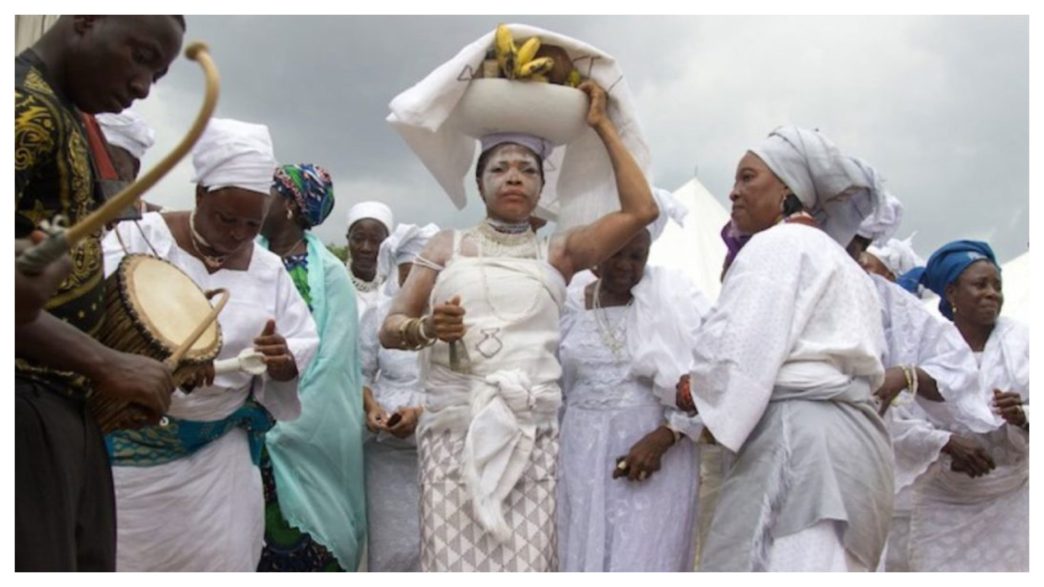
The celebration differs from one community to another. Traditionalists may visit sacred sites, hold prayers and perform rituals connected to their beliefs.
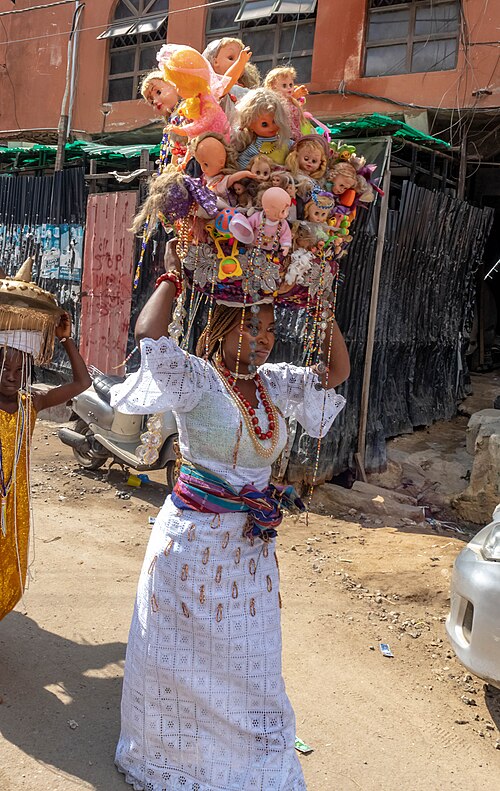
Communities also organise processions, traditional music, drumming, dancing, lectures and cultural displays. Osun’s official records have described parades, lectures and traditional clothing as part of the celebration.
For some participants, the day is primarily religious. For others, it is also an opportunity to reconnect with Yoruba history, language, customs and traditional institutions. That difference is important.
Not everyone who participates in Isese Day approaches it in exactly the same way.
SEE ALSO: 6 Ghanaian Traditions That Sound Almost Unbelievable Today

About The Author