Ghana is widely known for kente, highlife music, colourful festivals and the historic Ashanti Kingdom. Yet some of its most intriguing traditions rarely appear in everyday conversations.
These customs developed among different ethnic groups and cannot represent the entire country. Some remain celebrated parts of Ghanaian identity. Others have faced criticism, legal restrictions or pressure to change.
Together, they reveal a side of Ghanaian history that many outsiders and even some Ghanaians may not know. 
Trokosi system
Imagine receiving punishment for an offence committed before you were born.
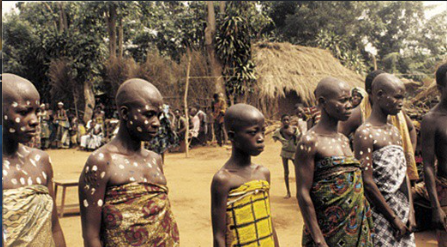
Under the Trokosi system, some families sent young girls to traditional shrines. The girls served as atonement for alleged crimes committed by relatives.
The practice existed mainly in parts of southeastern Ghana, especially within some Ewe communities. Similar systems also appeared in neighbouring Togo and Benin.
Once dedicated, a girl could spend years serving a shrine priest. Her duties often included domestic labour. Reports also documented denial of education, isolation from family and exposure to sexual abuse.
Ghana criminalised ritual servitude in 1998. However, UNICEF has reported that the practice persisted in some areas despite the prohibition.
Supporters once presented Trokosi as a religious method of restoring justice. Human-rights groups saw something different: girls losing their freedom for actions they did not commit.
Coffin design
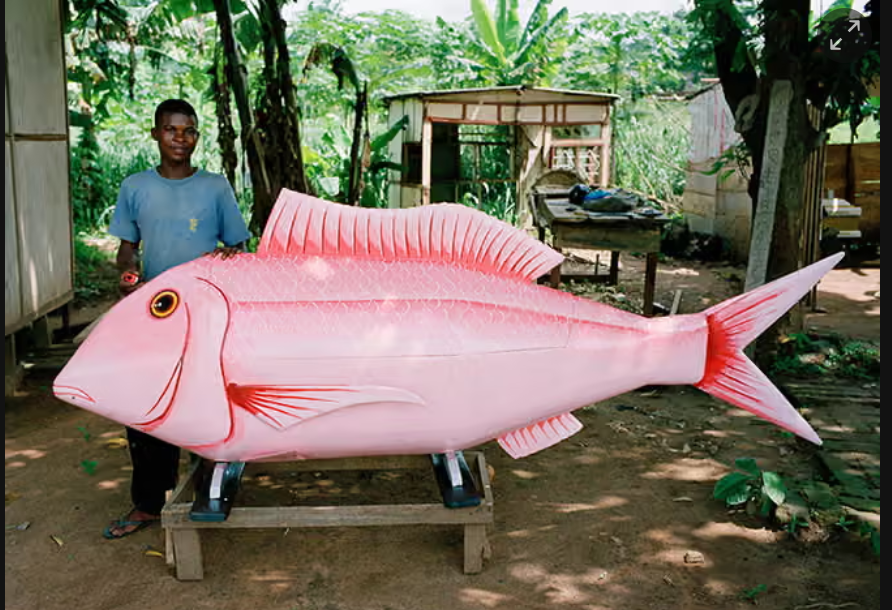
A coffin does not always have to look like a wooden box.
Among sections of Ghana’s Ga community, families commission coffins shaped around the deceased person’s work, status or ambitions. A fisherman may enter the grave inside a giant fish. A driver could receive a car-shaped coffin.
Other designs include birds, shoes, cameras, cocoa pods and airplanes.
These creations are often called fantasy or figurative coffins. In Ga, they are associated with the idea of “proverbial coffins” because their shapes carry messages about the person inside.
The design may celebrate an occupation, family identity or dream the deceased held while alive. It becomes a final biography told through wood and paint.
The modern form gained prominence around Accra during the twentieth century. Today, Ghanaian coffin makers have turned the tradition into an internationally recognised art form.
What looks playful to an outsider carries serious meaning. The coffin presents one last statement about how the person lived and how the family wants that life remembered.
ALSO READ: In Ghana, People MUST Dance at Funerals — Here’s Why
Dipo rite
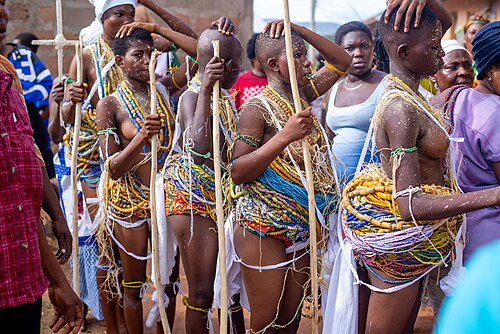
Among the Krobo people of eastern Ghana, a girl’s transition into adulthood could involve the Dipo rite.
The ceremony did more than mark physical maturity. It introduced girls to the community’s expectations of womanhood, morality and family responsibility.
Participants received instruction from older women. They learned traditional songs, dances and approved forms of behaviour. Beads, special clothing and ritual acts marked their change in status.
At the end, the girls appeared before the community and performed the Klama dance. Their new appearance announced that they had completed the transition.
The rite has attracted criticism over the participation of young girls and the public attention given to their bodies. Supporters, however, describe it as an important form of cultural education.
Dipo has changed over time. Yet it remains a powerful example of how some societies treated adulthood as a status that required public recognition rather than age alone.
Sacred animals
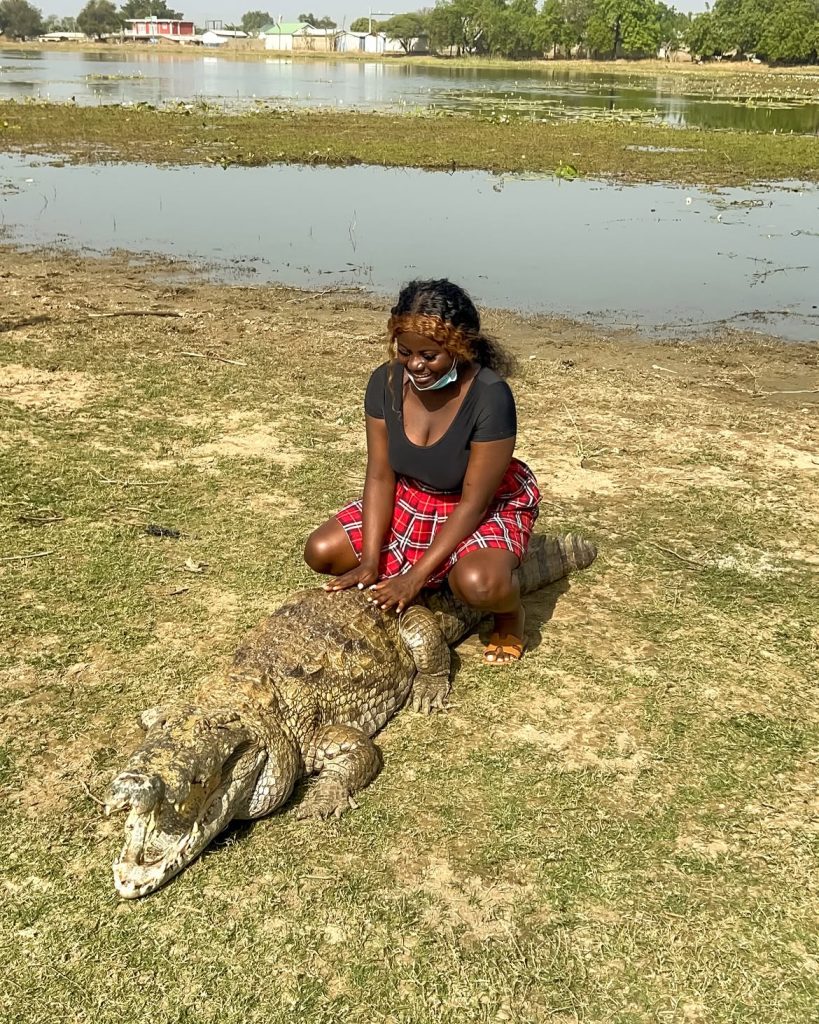
In most places, seeing a crocodile nearby would cause panic.
In Paga, a town in Ghana’s Upper East Region, crocodiles occupy a very different place in local life. Residents regard those living in the sacred ponds as protected animals tied to the community’s spiritual history.
Local accounts connect the tradition to stories of survival and ancestral protection. One popular story tells of a crocodile helping a man cross water or escape danger. In return, his descendants promised never to harm the animals.
The belief grew into a lasting bond between the town and its crocodiles.
Residents do not normally hunt or kill them. Visitors can approach the pond, watch the animals being fed and sometimes pose close to them under supervision. Ghana’s tourism authority describes the site as a sacred pool where the crocodiles remain protected.
For the people of Paga, the reptiles are not simply tourist attractions. They belong to a living tradition that connects animals, ancestors and community identity.
READ ALSO: 5 Most Shocking African Traditions
Flag Communication
Long before social media made public mockery easy, Fante military companies in Ghana communicated through flags.
These groups were known as Asafo companies. Each had its own leaders, shrines, symbols and identity.
Their flags displayed animals, people and dramatic scenes. Yet the pictures often carried coded messages drawn from proverbs.
A crocodile facing smaller fish could warn an opponent about challenging a stronger force. Other images celebrated victories, mocked rival companies or advertised courage.
The meaning was clear to those who understood the proverb, even when outsiders saw only colourful cloth.
Asafo flags also absorbed foreign symbols during colonial rule. Older examples sometimes carried the British Union Jack. Later flags adopted Ghana’s national colours after independence.
The flags served as military banners, historical records and instruments of rivalry. They allowed communities to tell stories without writing a single sentence.
Widowhood rite
The death of a husband did not always leave a widow free to mourn privately.
In parts of Ghana, widowhood came with prescribed rituals. These could regulate what a woman wore, where she stayed and how long she remained in seclusion.
Studies among the Talensi and Nabdam communities in the Upper East Region found that some widowhood rites continued during burial ceremonies. Certain practices restricted women’s movement and placed them under the control of family or ritual authorities.
Some customs aimed to separate the widow spiritually from her deceased husband. Others sought to prove loyalty or prepare her for life after his death.
However, the rites could also expose women to humiliation, forced marriage or disputes over inheritance. A 2024 study found that confinement and widow inheritance remained concerns in parts of the region.
Not every Ghanaian community follows the same customs. Many families have abandoned the most restrictive elements. Still, the survival of some rites shows how tradition can shape a woman’s life even at her most vulnerable moment.
THE GHANA MANY PEOPLE NEVER HEAR ABOUT
These customs do not tell one simple story about Ghana. Fantasy coffins celebrate identity. Asafo flags preserve history through art. The Paga crocodiles connect a community to its spiritual past.
Other practices raise harder questions. Trokosi and coercive widowhood rites show how a custom can carry religious meaning while causing real harm.
That difference matters. Culture is not frozen in time. Communities preserve what still gives them identity, reshape what no longer fits and sometimes fight to end what denies people their freedom.
Ghana’s lesser-known traditions reveal more than unusual rituals. They show how societies explain adulthood, death, justice, power and belonging—and how those explanations change across generations.
ALSO READ: 6 Forgotten Nigerian Traditions That Sound Almost Unbelievable Today

About The Author