

A blue-and-white cloth can look like Adire at first glance. Then you turn it over and notice that the design sits only on the surface. The same pattern repeats with machine-like precision across every metre. The seller calls it “original Adire,” but cannot explain how it was made or who made it.
That is the problem many buyers face. Adire is not simply a colour or a fashionable Yoruba-inspired print. It is a textile tradition built around resist techniques, named patterns, skilled labour and cultural knowledge. Some modern fabrics borrow Adire motifs without using a hand-dyeing process.
Look beyond the colour. Genuine hand-dyed Adire is created by keeping dye away from parts of the cloth through tying, stitching, folding, starch-paste painting or related resist methods. Machine prints reproduce a design on the fabric surface. Pattern variation, dye depth, texture, the reverse side, the maker’s explanation and the fabric’s provenance can help you judge what you are buying. No single visual clue proves authenticity. 
What Adire actually is
The Victoria and Albert Museum describes Adire as indigo-dyed cotton decorated through resist-dyeing. A maker first protects selected parts of the fabric. The cloth then enters the dye. When the resist is removed, the protected areas reveal the pattern.
The main techniques help you understand what to look for:
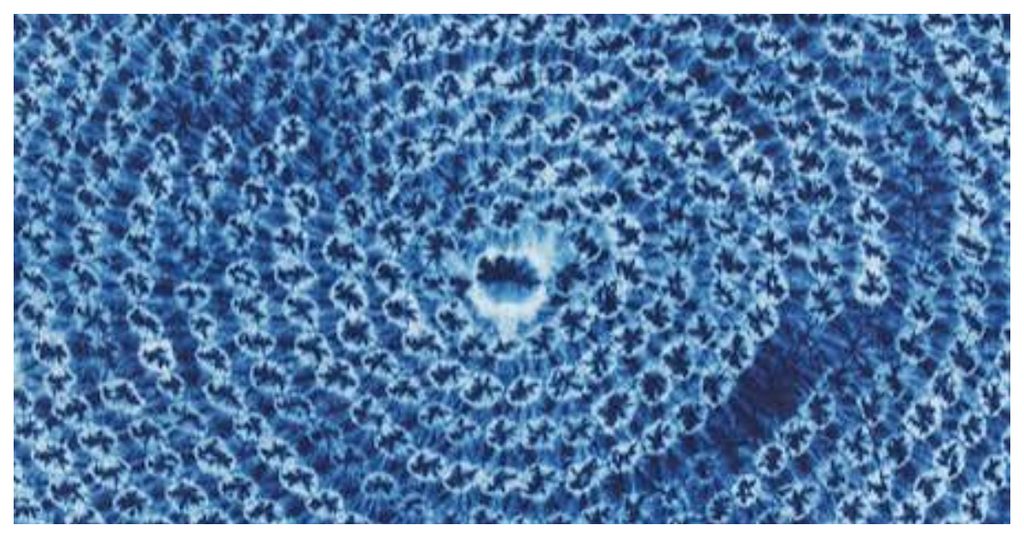
Adire oniko: The maker ties or binds parts of the cloth, sometimes around small stones, seeds or raised points. The tied areas resist the dye and may produce circles, stripes or other repeated forms.
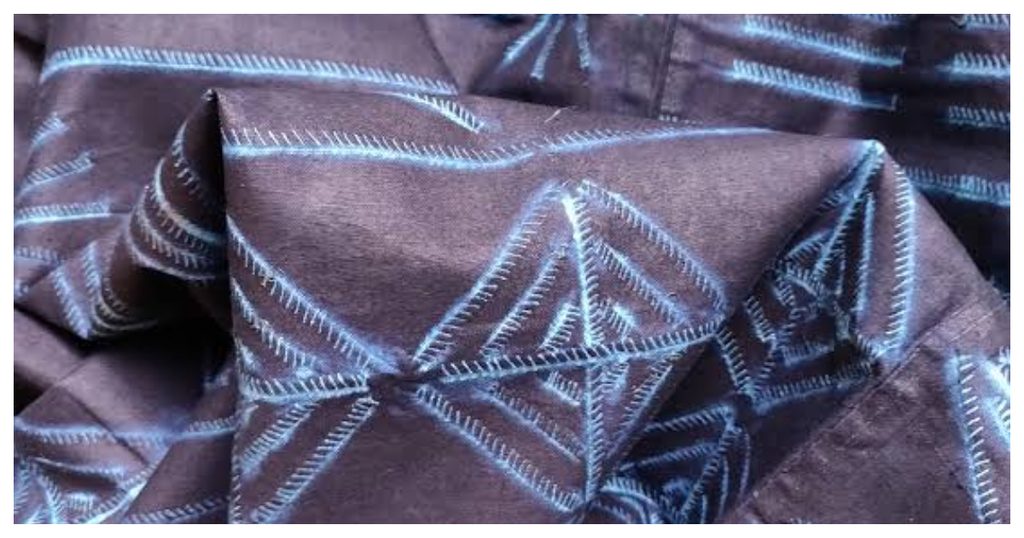
Adire alabere: The maker uses stitching as the resist. The stitching may be done by hand or with a sewing machine, so “machine-sewn” does not automatically mean “machine-printed.”
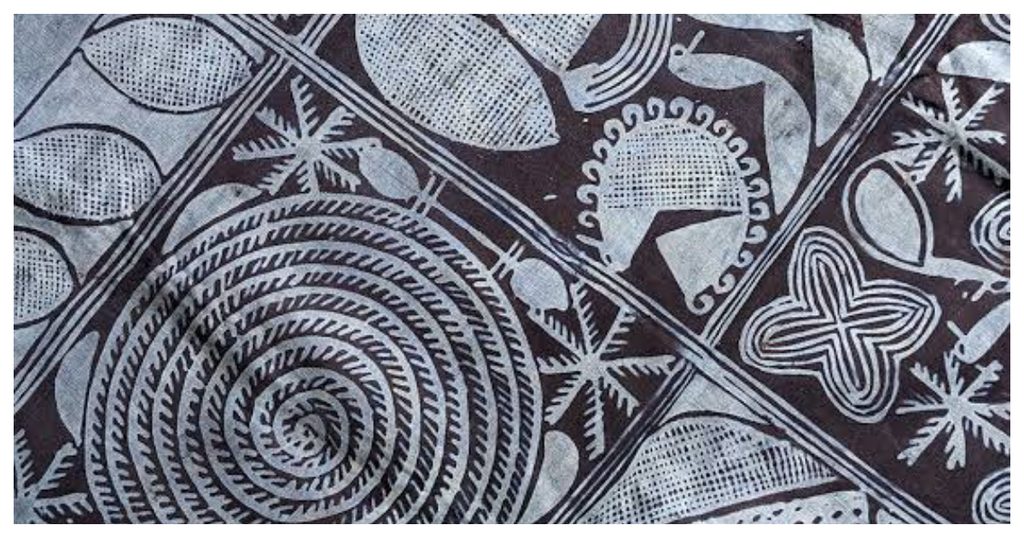
Adire eleko: The maker applies cassava-starch paste through a stencil or by hand. The paste prevents dye from reaching selected areas. Depending on the method, the underside may not show the same design as the front.
A fabric can also be hand-resisted with synthetic dye. Therefore, “hand-dyed” and “naturally dyed” do not mean exactly the same thing. Ask the seller which claim they are making.
A machine-printed fabric may still be attractive and useful. The problem starts when a printed imitation is sold as hand-dyed Adire without clear disclosure.
How to tell hand-dyed Adire from a machine print
Use several clues together. Treat each clue as evidence to investigate, not as a final laboratory test.
1. Study the pattern repeat
Hand-resist work often contains small variations in spacing, edges, dye concentration or alignment. Those differences can reflect tying, folding, stitching or hand-applied paste.
Machine printing tends to reproduce the same motif at the same interval. Perfect repetition does not automatically prove a print because a stencil or careful stitching can also create repeated designs. It is one clue, not a verdict.
2. Examine the edges of the design
Look closely at the border between the dyed and protected areas. Hand-applied resist may leave slight variation in the edge. A flat, uniform surface pattern with identical edges across a long length may indicate printing.
However, a very neat design may come from a skilled stencil or a well-executed stitch-resist process. Do not reject a cloth only because it looks precise.
3. Turn the fabric over
Check whether colour, texture or resist marks appear on the reverse. A dyed cloth may show colour penetration or changes in tone rather than a design sitting only on the surface.
This test needs care. Adire eleko can have cassava paste applied to one side, leaving the underside plain blue after dyeing. A pale reverse does not automatically prove that the cloth is machine-printed. Ask the seller which technique produced the design.
4. Look for depth and tonal variation
Repeated dyeing can create rich indigo tones. Hand-dyed cloth may show subtle differences in blue, especially where the resist, folding or immersion affected the dye.
A completely flat colour is not conclusive because modern makers use different dyes and finishing methods. Use colour variation alongside the pattern, texture and seller’s explanation.
5. Feel the fabric
Check whether the cloth feels like cotton, a synthetic blend or another material. Texture can also change after starching, washing and finishing, so touch alone cannot authenticate Adire.
If you want cotton, ask to see the fibre information. Do not assume that every blue tie-dye fabric is cotton or that every hand-dyed fabric uses natural indigo.
6. Inspect the hem and finishing
Some hand-painted Adire cloths have marks, signatures or maker information on the hem or underside. Their absence does not make a cloth fake, but a named maker or workshop gives you stronger provenance than a vague claim that the item is “imported original.”
Check the stitching, selvedge, seams and finishing. A seller who knows the cloth should be able to explain its technique, origin and care requirements.
7. Ask for the making story
Ask simple questions before you pay:
- Was the cloth tied, stitched, folded, starch-resisted, block-printed or machine-printed?
- Who made it and where?
- Is it hand-dyed, naturally dyed or both?
- Is the base fabric cotton or a blend?
- Does the pattern have a name or a known interpretation?
- Will the indigo bleed during the first wash?
- How should you store and wash it?
A seller who cannot answer every question may still have a genuine product. However, you should not pay a handmade premium for a claim the seller cannot explain.
ALSO SEE: Did You know Ankara Fabric is not Originally African? Here’s the Truth
How to Read Adire Before You Buy
Reading Adire means looking at more than whether the cloth matches your outfit. You are also reading its method, pattern, maker and context.
Read the technique
Words such as oniko, alabere and eleko tell you how the resist may have been created. Ask the seller to describe the process in plain language. If the answer is only “it is original because it is blue,” you need more information.
Read the motif
Adire patterns can refer to plants, animals, objects, places, proverbs, events or everyday life. Some designs have names that are familiar across communities. Others may carry a family, workshop or local interpretation.
Do not assume that one symbol has exactly one meaning everywhere. Ask the maker or seller: What is this motif called, and what does it mean in this maker’s tradition?
Read the layout
Look at the squares, borders, repeated symbols, open spaces and direction of the design. A pattern may tell a story through repetition or contrast. It may also have been created for a particular garment, event or customer.
A modern designer may adapt an older motif. That does not automatically make the new piece inauthentic, but the seller should be honest about whether it is a traditional pattern, a contemporary interpretation or simply a printed design inspired by Adire.
Read the maker and place
Ask whether the cloth came from a named dyer, workshop or community. A clear answer about where the fabric was made is more useful than a generic label such as “African print.”
For an expensive or collectible piece, request the maker’s name, workshop details or a record of the production process. Provenance will not answer every question, but it helps you understand what you are paying for.
Read the care instructions
Hand-dyed indigo may bleed during early washes. Ask whether the cloth should be washed separately, whether it should stay out of direct sunlight and whether the colour will change with use.
Care advice also reveals whether the seller knows the fabric. A responsible seller should tell you how to protect the cloth rather than promise that the colour will never change.
YOU MIGHT ALSO LIKE: Coral Beads Stylish Comeback: How to Layer Them Like a Pro
What an Adire maker says about reading the cloth
Ayodeji Basirat Atinuke, an Adire maker from Abeokuta, told Anadolu Agency: “Adire is not just a pattern but an identity.”
She also explained that motifs can reflect values, proverbs, observations and scenes from daily life. That is a useful reminder for buyers. When a seller tells you only that a cloth is “original,” ask what the pattern communicates, how the resist was made and who carried the work from blank cotton to finished cloth.
An expert’s explanation should not replace your own inspection. It should help you ask better questions and understand why two fabrics with similar colours may have different value.
How to buy Adire with confidence
Before buying, take a clear video of the front, reverse, hem, texture and full pattern. Save the seller’s description and ask for the production details in writing. If the seller says the cloth is hand-dyed, ask what they mean by that claim.
Buy from a named artisan, workshop, cooperative, museum shop or seller who can explain the production chain when authenticity matters to you. If you are buying for an event and mainly care about colour and appearance, a machine-printed Adire-inspired fabric may suit your budget. Just make sure the description is honest.
READ ALSO: Okrika Outfit Ideas in Nigeria: How to Look Expensive, Wash Thrift Clothes and Remove the Smell

About The Author