




“We dey manage” used to be a modest line for Nigerians. But now, as the cost of living keeps rising, it is our survival language.
Food and fuel prices, transport, and almost every cost in the country haven’t been the same in recent years. The only thing that seems to keep falling is the value of the Naira, with rates changing faster than WhatsApp statuses.
For many Nigerians, stepping out of the house is always a financial decision. You have to consider the cost of transport, feeding, and the ‘usual unusual’ expenses. For young people just becoming financially independent, even breathing is expensive. 
For millions of Nigerians earning less than ₦200k monthly, the pressure is worse. Their salaries don’t increase with inflation, but the market prices do. Feeding alone can wipe out your entire income. For those with families, it’s worse.
So how do people earning under ₦200,000 survive in Nigeria today? These are their real stories.
DID YOU MISS: Part 2: Who Are the 2.4%? What Jobs Pay Above ₦200k in Nigeria?
Mr Kelvin — The Teacher Who Never Has Enough
Mr Kelvin earns ₦70,000 a month as a secondary school teacher. He’s married, with two children who attend the same school where he teaches. The moment his salary drops, the money already has owners. Debts, cooperative society payments, and household bills specifically.
- ₦20,000 goes to debt servicing.
- ₦20,000 goes into his cooperative.
- ₦5,000 covers house bills.
- ₦15,000–₦20,000 goes to food.
On paper, the math doesn’t work. So you can imagine how bad it gets in real life. He borrows constantly from people, loan apps, and he has to buy things on credit. If you’re familiar with how these things work, you know the pressure never stops.
Mr Kelvin has adopted a survival system that is simple but gets exhausting. He depends on cooperative savings, side hustles through private lessons, and borrowing to fill gaps. He saves, but only through his cooperative.
There’s no free money, no buffer, no breathing space. He is constantly rotating his money. For him, he borrows, repays, rinse and repeat.
Mr Bright — The Man Who Built a Structure for Survival
At 45, Mr Bright earns ₦150,000 as a driver and admin support staff. Married with three kids, he believes the economy forces discipline, even in family planning. His system of surviving the economy is ‘structure.’
Once his salary enters, he divides it:
- ₦15,000 for tithe
- ₦30,000 saved for school fees
- ₦35,000 for feeding
- ₦20,000 for black tax savings
- ₦20,000 for his wife
- ₦20,000 for house upkeep
He also operates separate accounts for different expenses, sets clear boundaries, and has emergency rules. Family requests go through the black tax account. If it’s empty, the answer is no.
He only borrows from loan apps when emergencies hit. Emergencies like car repairs or business needs for him and his wife. His real protection is income diversification. He leverages his side gigs, his wife’s nursing income, and her businesses.
Priscilla — The Small Girl With ‘big gods’
At 26, Priscilla earns ₦60,000 as a Front-Desk Officer. Once her salary comes in, she sends money to her ajo group first before anything else. She lives alone, is single, and gets rare support from her parents.
Priscilla admits that her salary might finish the same day it enters. Her survival system isn’t budgeting. She has her support network. Admirers who send money, her thrift savings, and occasional parental help. Although the latter, for her, often comes with emotional strings and judgment.
Peace — Budgeting, Admirers, and Controlled Borrowing
Peace earns ₦80,000 in admin support. Once her salary drops, she pays tithe and sends money home to her mum. Then comes food, NEPA bills, other forms of black tax, transport, and her personal care expenses.
She budgets for every expense and sets money aside for everything. Still, the money is never enough.
Overall, she manages her salary by budgeting, admirers, personal savings habits, and controlled spending. She doesn’t borrow often. She saves occasionally, but they are rarely from her salary. Most of her savings come from these external supports.
Michael — Survival with Discipline and Future Vision
Michael earns ₦89,000 as a security worker and lives in the company accommodation. The first thing he buys once his salary drops is foodstuffs. He budgets ₦45,000 monthly for that. Then black tax takes ₦29,000 as he has two siblings in the university.
Even though his money finishes quickly, he manages to survive through labour hustles. He would wash cars for co-workers, help neighbours, and do odd jobs.
But what separates Michael is vision. He has two savings accounts. One for family and one for himself. His personal savings are untouchable. He’s reserved it for future business. Good to see that the current state of the economy hasn’t killed his long-term thinking.
He tries to save ₦20k–₦25k. However, when certain emergencies hit, he has to break his savings and still borrow from apps.
ALSO READ: Part 1: What is the Real Average Salary in Nigeria? (And Why Do Only 2.4% Earn ₦200k and Above)
How Nigerians Under ₦200k Survive
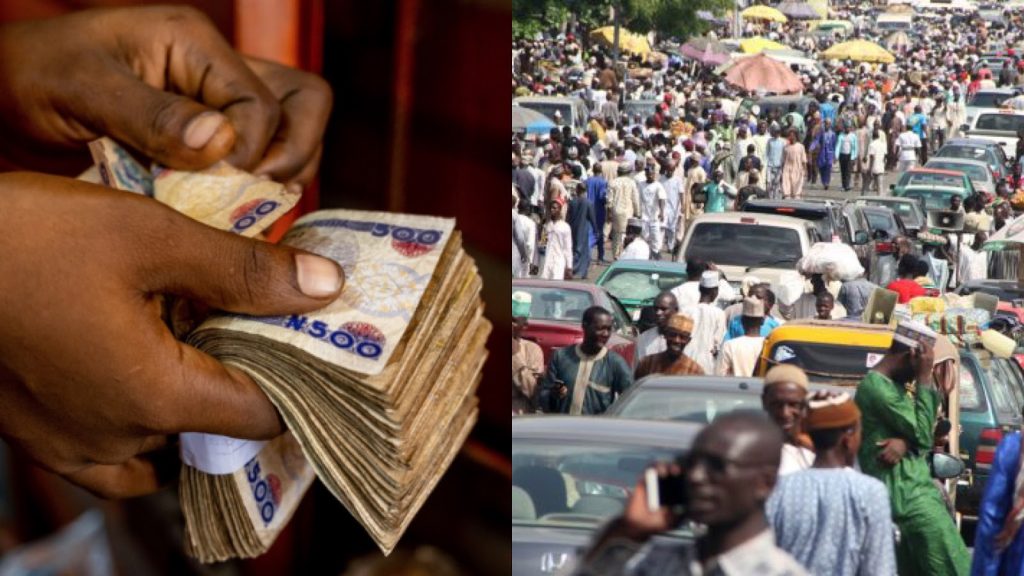
Overall, Nigerians survive through systems they’ve built, not their salaries. Some of these systems are:
- Cooperative societies
- Thrift savings
- Admirers and social support
- Budgeting
- Multiple income streams and side hustles
- Loan apps (as last resorts)
- Controlled borrowing
How to Survive in Nigeria on Less Than ₦200k Monthly
If these stories teach anything, it’s that survival here isn’t about your income size alone. You have to build a structure and get disciplined with it.

1. Buy Essentials in Bulk
Bulk buying reduces long-term spending and helps with budgeting. Non-perishables, household items, and staples cost less in bulk. If money is tight, you can split bulk purchases with someone.
2. Automate Your Savings
If you don’t save first, you won’t save at all. Thrift systems, cooperative societies, and automated transfers protect your money from impulse spending and emergencies.
3. Spread Your Income Sources
Relying on one income stream is financial suicide in this economy. Even small side hustles reduce pressure and create safety nets.
4. Find Cheaper Alternatives
Switch brands, change energy sources, and reduce high-maintenance costs. You can maintain quality of life without spending high.
5. Live Below Your Earnings
Not at your earnings. Below them. Lifestyle inflation kills your finances faster than low income in Nigeria.
6. Don’t Delay Necessary Purchases
Inflation is always faster than your plans. If it’s essential and inevitable, buying earlier is often cheaper than waiting.
7. Practice Minimalism
Intentional living reduces pressure, maintenance costs, and mental stress. When you consume less, you have more control.
8. Eliminate Money Pits
Habits that drain money without returns must go. Stop impulse buying, emotional shopping, status spending, unnecessary subscriptions, and lifestyle pressure spending.
Survival is Winning
Survival in Nigeria today might often depend on how you manage a 200k salary or less. It is clearly no longer about your ambition or wishes. Snap out of them and build real systems. Get disciplined, leverage your community, and adapt.
Still, it’s a sad situation for many Nigerians earning under ₦200k monthly. For them, life isn’t about growth. They just want to stay afloat. That alone is a full-time job.

About The Author