


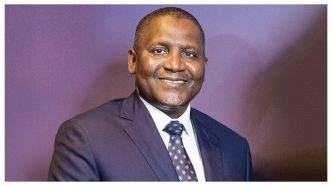
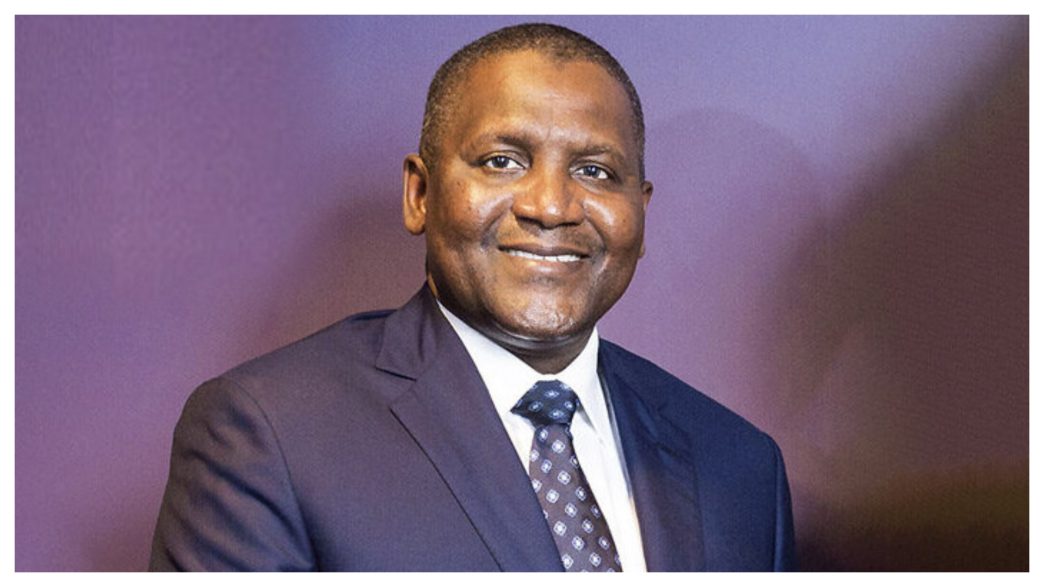
Aliko Dangote is not just Africa’s richest man; he is the architect of a business empire that touches almost everything Nigerians eat, drink, build, and drive.
Dangote began his entrepreneurial journey at the age of eight by using his pocket money to buy sweets, which he then sold at a profit. In 1977, he formally started his business with a loan from his uncle, initially trading in commodities such as fish, sugar, salt, and rice. By the 1990s, he shifted focus towards manufacturing.
According to Forbes, his net worth stands at $28.5 billion as of 2026 and Dangote group is worth $32.6B. But the numbers are only part of the story. 
The Dangote Group has committed $22.6 billion from a planned $45 billion capital expansion program across Africa. By 2030, Dangote targets a group valuation of $250 billion and annual revenues of $100 billion. Behind those figures are real businesses employing thousands of Africans.
Here is a breakdown of the many businesses under the Dangote umbrella.
Logistics & Infrastructure
Greenview Development Nigeria Limited (GDNL)
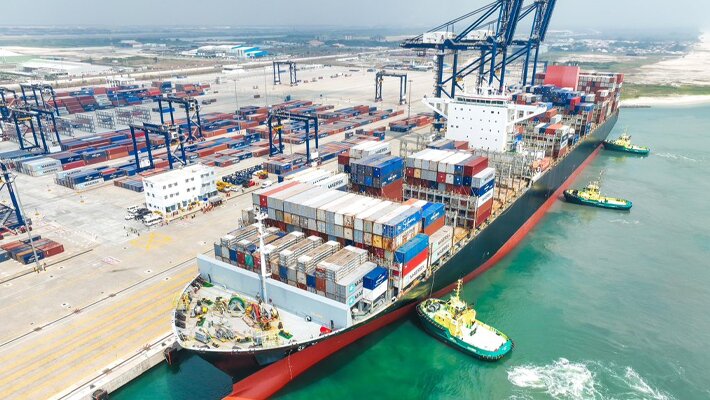
According to the Nigerian Ports Authority (NPA) public records and the Dangote Group’s website, GDNL is the terminal operating arm of the Dangote Group, responsible for operating Terminal E at the Lagos Port Complex in Apapa. The terminal predominantly handles bulk cargo for the Dangote Group’s flour and sugar industrial processing and bagging plants. The concession agreement with the NPA runs for 25 years.
Dangote Sinotruk West Africa Ltd
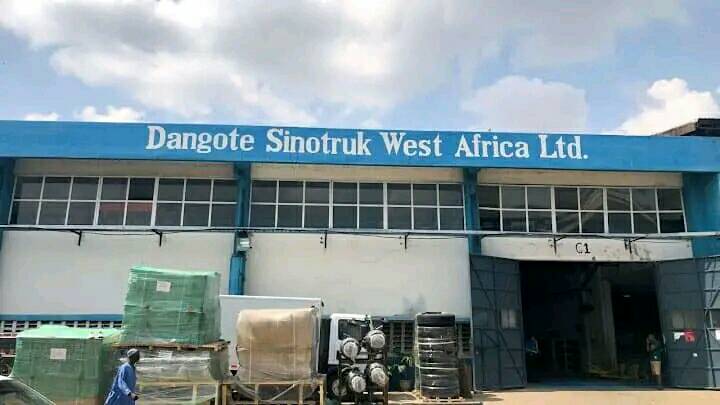
A joint venture with Chinese manufacturer Sinotruk, this truck assembly plant in Ikeja, Lagos, assembles heavy-duty commercial vehicles. According to the Dangote Group’s website and industry reports, the plant has an installed capacity to produce 10,000 trucks annually, creating about 3,000 jobs across Nigeria.
Bloomberg has reported that Dangote is committed to buying 10,000 CNG trucks, with the first 1,500 arriving in mid-2026. The plant features specialized welding and painting shops to fabricate and paint trucks and trailers, targeting 40 to 60 percent local content, according to company disclosures.
The group also holds a majority stake in Peugeot Automobile Nigeria (PAN) in Kaduna, where light vehicles are assembled. This asset forms a key part of the group’s broader industrial holdings.
Food & Consumer Goods
NASCON Allied Industries
NASCON Allied Industries Plc is a Dangote subsidiary that produces and markets salt, seasonings, and vegetable oil for industrial and domestic use. According to NGX filings, NASCON witnessed an impressive 325 percent increase in profit during its 2023 financial year, reflecting the deep-rooted strength of its consumer goods market share.
Tomato Processing
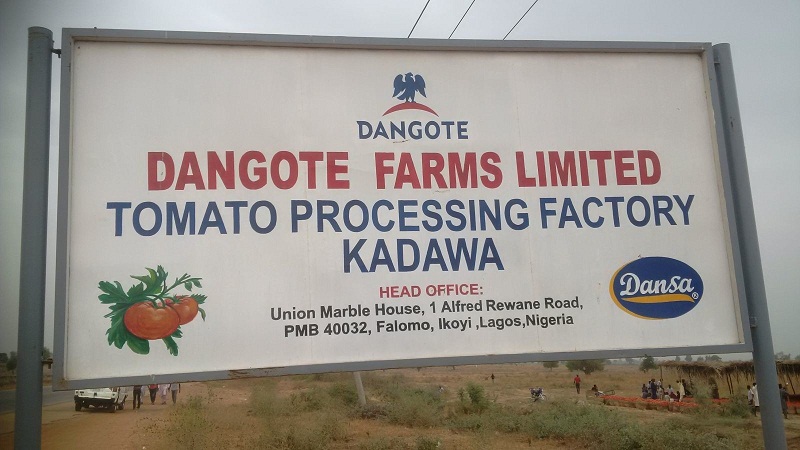
The group operates a large-scale tomato processing factory in northern Nigeria, designed to support local agriculture and reduce the country’s heavy reliance on tomato paste imports. According to disclosures within the food processing division of the Dangote Group’s official website, the facility plays an important role in local supply chains.
Dangote Rice
Part of the group’s food consolidation strategy, Dangote Rice is involved in large-scale rice production and processing across Nigeria. The company’s involvement in rice production is documented in NGX filings and Dangote Group press releases.
Dangote Sugar Refinery
One of the largest sugar producers in Africa, Dangote Sugar serves both domestic consumers and major industrial beverage and confectionery brands. According to the Nigerian Exchange (NGX) filings and the company’s annual reports, the company has been part of a proposed merger with NASCON and Dangote Rice Limited to create a giant food conglomerate.
Bloomberg has reported that the group is also investing $162 million in a large-scale sugar refinery and a 25,000-hectare irrigated farming project in Ghana’s Bono Region.
Energy & Heavy Industry
These are his primary and most well-known business enterprises.
Dangote Petroleum Refinery
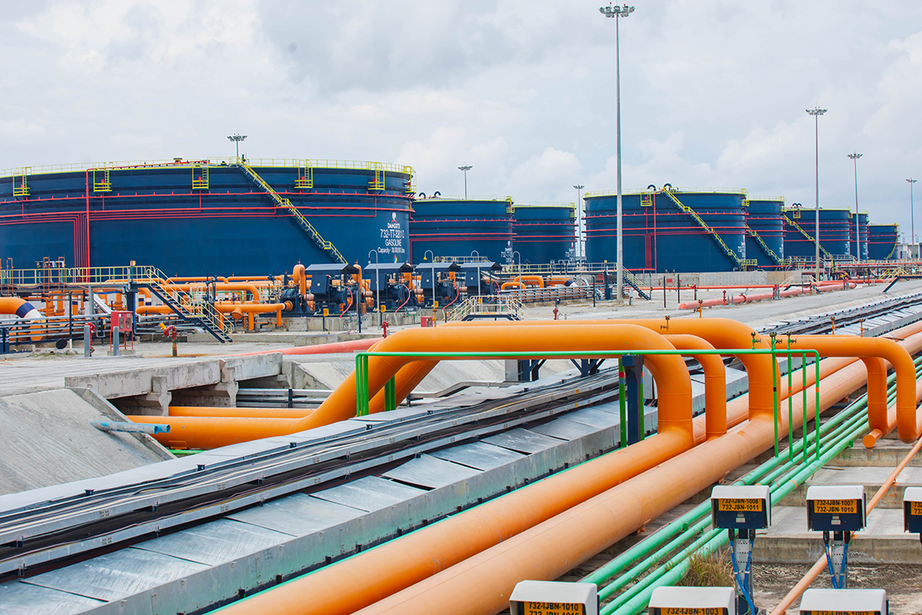
The crown jewel. This $20 billion to $22 billion mega-facility is the largest single-train refinery in the world, processing 650,000 barrels of crude oil per day from its strategic base in the Ibeju-Lekki Free Zone. Following its highly anticipated launch, the refinery officially commenced commercial production in 2024, according to company data and Reuters reports.
But Dangote is not stopping there. Bloomberg and industry analysts tracking West African industrial growth report that plans are already underway to expand the facility’s capacity to 1.4 million barrels per day over the next 30 months. This upgrade would make it surpass India’s Jamnagar Refinery to become the world’s largest oil refinery by capacity. Alongside fuel production, the complex is scaling its polypropylene output from 900,000 metric tons to 2.5 million metric tons per annum.
Operationally, the facility has already hit the ground running. Public records from the Nigerian Ports Authority indicate the refinery has handled roughly 800 vessels since its launch, with a target of 600 tanker calls annually at full capacity.
Furthermore, it has successfully met elite Euro VI fuel standards, aligning its output with the highest global environmental benchmarks.
Dangote Cement
This is the cornerstone of Dangote’s wealth. According to the company’s 2025 annual report and its official website, Dangote Cement was founded in 1992 and is sub-Saharan Africa’s largest cement producer. The company has an integrated production capacity of approximately 55 million tonnes per annum.
The company operates across ten African countries: Nigeria, Ethiopia, Tanzania, Zambia, Senegal, Cameroon, South Africa, Congo, Ghana, and Sierra Leone . In Nigeria alone, it runs major plants at Obajana (Kogi State), Ibese (Ogun State), and Gboko (Benue State). These locations are publicly listed on the Dangote Cement website.
Dangote has said that Nigeria used to be the world’s second-largest importer of cement. Now the country exports more cement than any other African nation. The company is targeting production of 80 million tonnes by 2030, a figure disclosed in its investor presentations.
Dangote Fertilizer
According to the Dangote Group’s official website, the Dangote Fertilizer complex is a massive petrochemical facility capable of producing 3 million metric tonnes of granular urea annually. It is the largest producer of fertilizer in Africa.
Reuters and Bloomberg have reported extensively on Dangote’s fertilizer ambitions. The group is expanding its fertilizer footprint beyond Nigeria. In Ethiopia, Dangote has increased planned investment in a fertilizer plant from $2.5 billion to more than $4 billion . The expanded package includes a 110-kilometre pipeline, a 120-megawatt power plant, a polypropylene packaging facility, and a two-million-tonne NPK fertilizer blending plant . Construction is already advancing at the Gode site, according to the Pan African News Agency (PANA).
The Expansion Plan
Dangote is not resting. According to Bloomberg and Reuters, a $45 billion expansion programme covering 2026 to 2030 is underway, spanning refining, petrochemicals, fertiliser, cement, and energy infrastructure.
Bloomberg has also reported that the group is eyeing Kenya for a $17 billion, 650,000 barrels-per-day oil refinery in Mombasa. The Pan African News Agency (PANA) has reported that in Southern Africa, Dangote is leading a $1 billion investment programme covering cement production, power generation, and a 2,000-kilometre petroleum pipeline linking Namibia to Zimbabwe.
SEE ALSO: What to Know About Dangote’s Son-in-Law, Jamil Abubakar, and His New Role as MD at Dangote Group
The Bottom Line
Aliko Dangote started in 1977 with a small trading firm. Today, his businesses employ thousands across Africa. He has built a refinery that is changing Nigeria’s fuel landscape. He has made Nigeria a cement exporter instead of an importer. He is expanding into new countries and new sectors every year.
About The Author