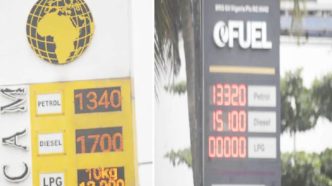
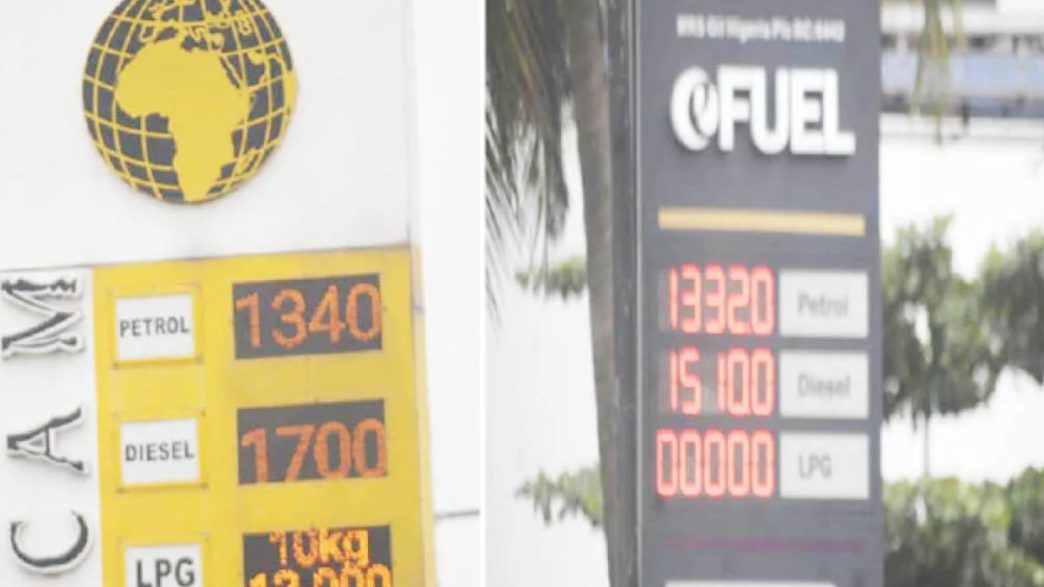
Sometimes, doesn’t it feel like you fill up in Lagos, drive to Abia, and when you want to get a refill over there, it seems the pump is charging you for the journey itself because fuel price differs from state to state in Nigeria? Relax, you’re not imagining it.
Fuel price in Nigeria changes with location because the downstream petroleum sector is deregulated, so the government no longer sets one national price. Refiners, depot owners and marketers set their own, and geography adds a surcharge.
The gap is real. On NNPC’s October 8 price list, a litre cost ₦1,355 in Lagos and Rivers, ₦1,370 in Abuja and ₦1,435 in Yobe. Same company, same product, different postcode. 
How deregulation & distance affect fuel price in Nigeria
President Bola Tinubu’s government ended the petrol subsidy in May 2023, and the market has set prices ever since. The legal backbone is the Petroleum Industry Act 2021. Section 205(1) says wholesale and retail prices should follow unrestricted free-market conditions, as the downstream regulator, NMDPRA, keeps reminding everyone.
So NMDPRA says it neither fixes pump prices nor issues price templates. It still carries a whistle, though. Section 216 lets it act against price-fixing and abuse of market dominance, and it has opened channels for Nigerians to report exploitative pricing.
In short, stations choose their prices, but they can’t choose to play dirty.
READ ALSO: From ₦20 to ₦1,400: History of Petrol Price Hikes in Nigeria Since 1999
Distance is a price tag too
Also, need you be reminded that fuel doesn’t teleport?
Most of it starts at coastal depots and refineries, then rides tankers to the rest of the country. Dangote’s 700,000-barrel-a-day refinery sits in Lagos, so the farther a station is from the coast, the longer and costlier the ride.
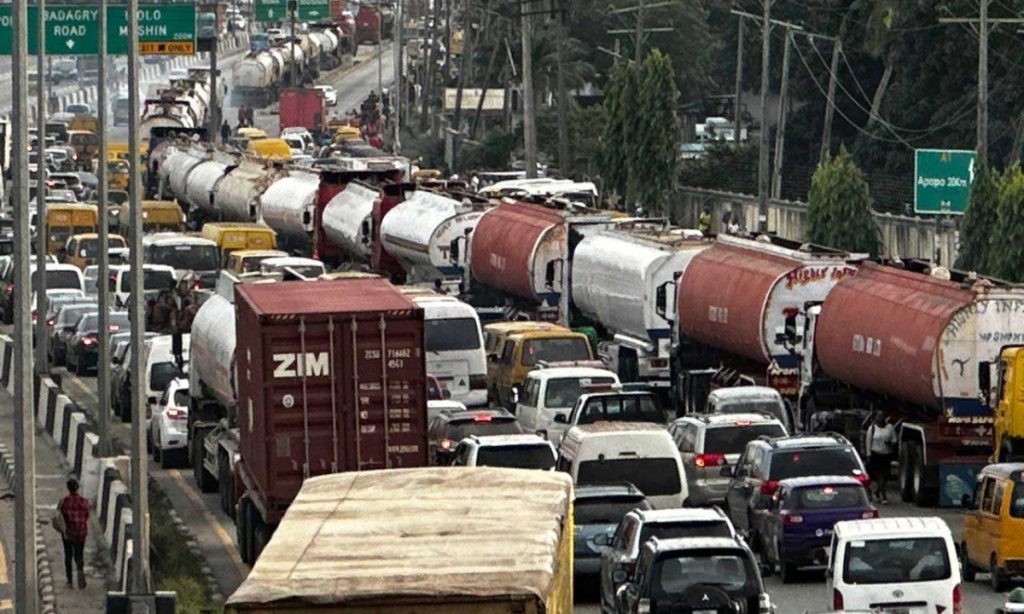
NMDPRA’s coordinator for Sokoto and Kebbi put it plainly in July. Because of poor roads and long distances, fuel loaded at the coast can take about 10 days to reach Sokoto. Every day on the road adds cost, and someone has to pay it. A petroleum equalisation arrangement once helped spread such costs nationwide, but NMDPRA’s chief executive has said the government scrapped it. Now the haulage bill lands in the pump price.
You can see the effect on NNPC’s list. Yobe sits at ₦1,435, Niger at ₦1,433, and Borno, Gombe, Nasarawa and Sokoto at ₦1,430. Lagos stays at ₦1,355. On a 40-litre tank, the Lagos-to-Yobe gap is ₦3,200, enough to make you reconsider your vacation plans.
Dangote, NNPC & the Domino effect
The refinery’s gantry price, which is what marketers pay at the loading point, works like the first domino. Dangote raised its petrol price by ₦85 on September 12, from ₦1,265 to ₦1,350, then trimmed it by ₦25 to ₦1,325. NNPC adjusted its pump prices after each move. Marketers then add transport, storage and their own margin.
Global crude prices, pushed up by the conflict in the Gulf, keep nudging every number.
Dangote has tried to shrink the distance problem. Its free delivery scheme began with Lagos, Ogun, Rivers, Kaduna, Delta and Abuja, then reached Kano, Imo, Anambra and Nasarawa in August. Blueprint reports a 250,000-litre minimum purchase, so big buyers benefit first. Marketers have applauded the move and asked for expansion into more northern states.
Still, free delivery to a marketer isn’t free fuel at your station. The marketer decides how much of the saving reaches you. If you don’t like it, well, then become a marketer yourself.
SEE ALSO: Why Fuel Prices in Nigeria Stays High as Marketers Cut Rates
Even one city can’t agree on a price
Abuja shows how messy it gets.
In late September, some NNPC outlets were selling at ₦1,405, while stations on the Kubwa Expressway, at Air Junction and in Wuse Zones 4 and 5 charged ₦1,395. Timing matters too, because stations sell stock they bought at earlier depot rates.
NMDPRA’s Sokoto coordinator noted that the prices he monitors often come from fuel loaded more than a week earlier.
October added a twist. Access to NNPC’s ₦66 discount at some Abuja outlets depended on how customers paid, so the price on the board and the price you pay can differ.
Fuel price in Nigeria by state: the ranking keeps moving
You’re probably thinking at the moment: fuel in Nigeria is expensive everywhere, but Lagos sells the cheapest. Wrong!
National Bureau of Statistics (NBS) data says it’s more complicated. In February 2026, Lagos recorded the lowest average at ₦966.61 and Yobe the highest at ₦1,134.73. In March, Lagos again came cheapest at ₦1,162.71, with Anambra the dearest at ₦1,441.22. By May, the national average had jumped to ₦1,596.25, Edo topped the table at ₦1,722.91 and Adamawa sat at the bottom at ₦1,469.83.
Rewind to June 2025 and Lagos ranked third-highest.
One caveat: NBS collects prices from outlets across all 774 local government areas, so its averages can differ from a single company’s price list. Different yardsticks, different answers. Crude prices, exchange rates and supply shocks reshuffle the map as much as distance does.
Is anyone fixing fuel price in Nigeria?
Well, the government says yes, sort of. On October 8, Finance Minister Taiwo Oyedele announced a 30-day, ₦66-per-litre discount at NNPC stations, funded from NNPC Retail’s margin rather than public money. He also said the government is negotiating a ₦1,350 ceiling on petrol’s ex-gantry or landing cost.
NNPC has extended the discount to October 31, and officials insist none of this revives subsidy. NNPC also adds that the offer creates no uniform national pump price.
READ MORE: Petrol Discount or Subsidy: What Nigerians and Transporters Need to Know
Critics aren’t clapping loudly, though. TUC President Festus Osifo has questioned the ceiling proposal, and the Alliance for Economic Research & Ethics calls the discount modest, at about 4.7% of a ₦1,400 litre.
Supporters of deregulation argue it ends costly subsidies and invites competition. Fair enough, but NMDPRA itself blames price swings partly on single-source domestic refining. Marketers also accused major importers in July of coordinating prices around ₦1,350, and the regulator has since drafted rules against collusion.
So, why does fuel price in Nigeria differ?
Because no one sets a national price anymore, and every litre arrives with its own travel history. Deregulation hands pricing to the market, then distance, roads, refinery moves, marketer margins and global crude shocks do the rest.
Supporters see competition at work. Critics see a thin market where consumers absorb the volatility. Both sides can point to evidence.
For now, compare before you pump, check NNPC’s price list and app, and don’t be shocked when your pump keeps its own opinions. Fuel price in Nigeria will keep moving, and so will the map.

About The Author