The Nigerian Electricity Regulatory Commission (NERC) has sparked debate online after promoting its new net-billing regulations, which allow eligible electricity consumers to earn credits by exporting excess solar power to distribution companies (DisCos).
In a post on X, the commission encouraged Nigerians with qualifying solar installations to take advantage of the scheme to reduce their monthly electricity bills.
However, the announcement attracted criticism from Nigerians who questioned the scheme’s eligibility requirements, its practical benefits and the country’s persistent electricity supply challenges. 
While some commenters questioned the rationale behind connecting privately generated electricity to the national grid, others argued that the policy appeared inaccessible to ordinary households.
NERC: How net billing regulations 2026 work
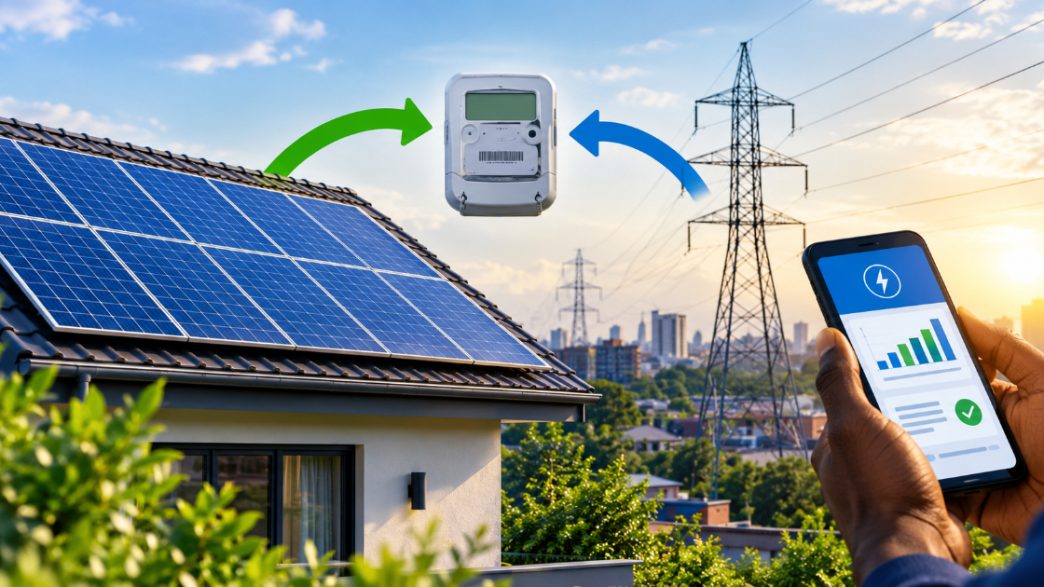
Released on June 3, 2026, the Net Billing Regulations 2026 establish a framework that allows eligible customers to export surplus electricity generated by renewable energy systems, primarily solar installations, to their distribution networks.
Under the arrangement, qualifying customers, known as prosumers, can receive credits for electricity they supply to the grid. These credits can then offset charges on their electricity bills.
“Turn your excess solar energy into savings with NERC’s Net Billing regulations!” the commission wrote, directing interested consumers to its website for details about the Net Billing Regulations 2026.
However, the scheme comes with specific requirements. According to NERC’s published guidelines, participating solar installations must have a minimum capacity of 50 kilowatt-peak (kWp) and a maximum of 1.5 megawatt-peak (MWp).
Customers must also obtain approval from their distribution company, execute a net-billing agreement and complete the required registration and technical procedures before exporting electricity.
Crucially, the system does not offer a one-for-one exchange between electricity imported from the grid and electricity exported to it. Consumers continue to pay the applicable retail tariff for electricity they consume, while exported electricity earns credits calculated under a separate tariff framework.
The regulations therefore target qualifying solar installations rather than every household that owns a few panels.
READ MORE: Aso Rock Switches to Solar — But What About Ordinary Nigerians?
Nigerians question eligibility and benefits of the scheme
The announcement prompted several users to question whether the policy would benefit ordinary consumers or primarily serve businesses and large solar installations.
One commenter, Bello, highlighted the minimum capacity requirement, arguing that a 50kWp threshold would make participation difficult for most Nigerian solar users.
Another user, CYSCO, questioned the need to connect an industrial solar installation to the grid, suggesting that businesses investing in substantial solar capacity might prefer to operate independently.
Tera also challenged the incentive behind the arrangement, asking why consumers who already provide their own electricity should need to reduce their monthly bills through a scheme involving the grid.
The commenter argued that NERC should instead explain how consumers could earn money by supplying their surplus electricity.
Other reactions reflected broader frustration with the electricity sector. Some users accused distribution companies of failing to provide reliable power and questioned why consumers should contribute privately generated electricity to a system they believe has not adequately served them.
One commenter argued that Nigerians already pay electricity bills and taxes without receiving dependable service, while another criticised the proposal as an attempt to benefit from electricity generated by citizens.
Can solar users really earn from excess electricity?
Despite the criticism, the regulations introduce a formal mechanism for eligible customers to receive compensation for surplus electricity supplied to distribution networks.
Germany’s international development agency, GIZ, noted in July 2026 that the framework could help organisations with grid-connected solar systems make better use of electricity they produce but do not immediately consume.
For businesses with large solar installations, surplus generation can occur during weekends, holidays or periods of low electricity demand. The net-billing arrangement offers a way to convert some of that otherwise unused energy into bill credits.
However, the scheme does not guarantee cash payments to participating consumers. Under the regulations, export credits generally offset electricity bills, while unused credits can be carried forward subject to the applicable rules.
Participation also depends on technical feasibility, regulatory approval, metering requirements and the capacity of the relevant distribution network.
These conditions mean that consumers must establish whether their installations qualify before expecting financial benefits.
NERC faces questions over Nigeria’s electricity challenges
The reaction to the net-billing announcement highlights a wider challenge facing Nigeria’s electricity sector: public confidence remains closely tied to the reliability and affordability of electricity supply.
For some commenters, the opportunity to earn credits from excess solar power represents a potentially useful incentive for renewable energy investment. Others remain sceptical, arguing that consumers should not have to find alternative ways to secure electricity after investing in private power systems.
The debate also raises questions about how effectively the new framework will operate in practice, particularly for businesses considering the cost of installation, connection and compliance.
Although NERC’s regulations establish a formal route for eligible solar users to export electricity, their broader success will depend on implementation, transparent billing and the willingness of qualifying consumers to participate.
For now, the commission’s announcement has opened a conversation about whether Nigeria’s solar users can turn surplus electricity into savings while helping address the country’s wider power challenges.
READ ALSO: Lagos Set for 24/7 Electricity as FG Unveils Energy Zones Pilot

About The Author