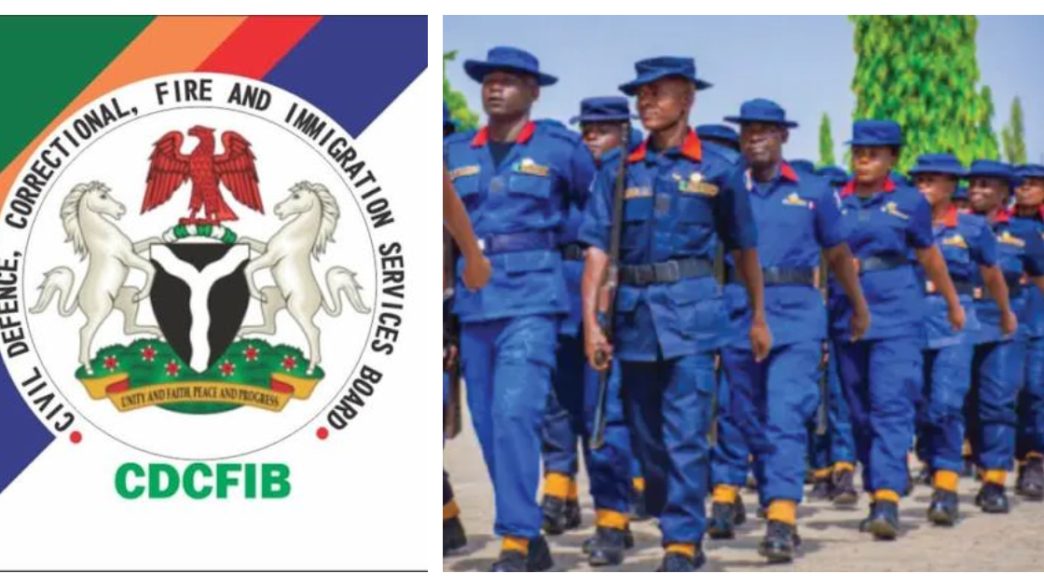
If you applied to join the Civil Defence, Immigration, Correctional or Fire Service, your phone is about to get busy. Some of those messages will be genuine. Others will come from people who want your money, and recruitment scams always spike whenever the portal opens.
The Civil Defence, Correctional, Fire and Immigration Services Board (CDCFIB) reopened its recruitment portal on Wednesday, October 28, 2026. Altogether, it is filling 30,150 positions across the Nigeria Security and Civil Defence Corps, the Nigeria Immigration Service, the Nigeria Correctional Service and the Federal Fire Service.
So before you click any link or pay anybody, read this. 
The Official Portal
The Nigeria Immigration Service has said the CDCFIB portal is the only legitimate channel for the ongoing exercise. It also told the public to disregard any other portal, website, link or advertisement.
Also, look closely at every link you receive. Real government sites end in .gov.ng. That matters because fraudsters build pages that look almost identical to the real portal, so one extra letter or a different ending is all it takes to fool you.
What This Stage is For
This is not a fresh application window. According to the notice on the official portal, the 2024/2025 recruitment exercise has reached its final stage. The portal is open from October 28 to November 14, 2026, for candidates who have already passed the earlier stages.
Here is what the portal asks genuine candidates to do:
- Check their status using their Screening ID and National Identification Number (NIN).
- Review and confirm the documents they uploaded earlier.
- Choose a preferred state and location for screening.
- Book a date and time for the drug test on the National Drug Law Enforcement Agency (NDLEA) portal.
The Board will then publish results on the official recruitment portal once screening ends. So if you didn’t write the computer-based test and pass the stages after it, nobody can “add your name” now. Anyone who offers to do so is lying.
The Drug Test Is Free
Many people will fall for this part. The Board says the federal government covers the full cost of the NDLEA drug test, and the official portal states it in capital letters: FREE OF CHARGE.
As a result, any message asking you to pay for “test kits”, “medical forms” or “screening fees” is a scam. Delete it.
ALSO SEE: Got the Wrong Item From an Online Vendor? How to Get Your Money Back in Lagos
6 Signs You Are Dealing With Recruitment Scams
Fraudsters change their stories, but the patterns stay the same. In particular, watch out for:
- A request for money at any stage. The Board’s secretary, Major General Abdulmalik Jibril (Rtd), urged candidates to reject any payment request linked to the exercise and report it to security agencies.
- Links that don’t end in .gov.ng, or that misspell “cdcfib”. Copy-cat sites are common.
- “Insider” offers. Someone claims to know a director, a commandant or “somebody at the Ministry” who can secure your slot for a fee. In June 2026, the Board said applicants should pay no money to any individual, agent, group or organisation.
- Fake invitation letters and SMS. In April 2025, the Federal Fire Service said it had intercepted several fake invitation letters, text messages and emails. It also warned that anyone who turns up at screening with a forged letter faces arrest and prosecution.
- Fake dates and venues. In December 2025, the Board disowned a circulating notice that gave false screening dates in January 2026, complete with a fake e-signature of its secretary.
- Pressure and secrecy. “Pay before midnight or lose your slot” is a classic line. Real government processes don’t run on urgent WhatsApp deadlines.
What to Do If Someone Asks You to Pay
First, don’t pay, and don’t send your NIN or bank details to anyone outside the official portal. In addition, the Board has warned applicants to ignore any message requesting payment or personal details outside its official platforms.
Next, take these steps:
- Screenshot the message, the phone number and any account details the person sent.
- Go to the nearest police station and report it, because the Board wants payment demands reported to security agencies.
- Warn your family WhatsApp group. Parents and relatives are often the ones who get the “we can help your son” call.
Already paid? Call your bank right away and ask whether they can trace the transfer. After that, file a police report and keep a copy.
Recruitment scam only works when someone pays. The real process costs you nothing but time and paper work. know someone waiting on this recruitment? Send this to them.
READ ALSO: Wangiri Scams: What Nigerian Phone Users Should Know Before They Call Back

About The Author