



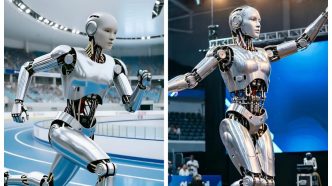
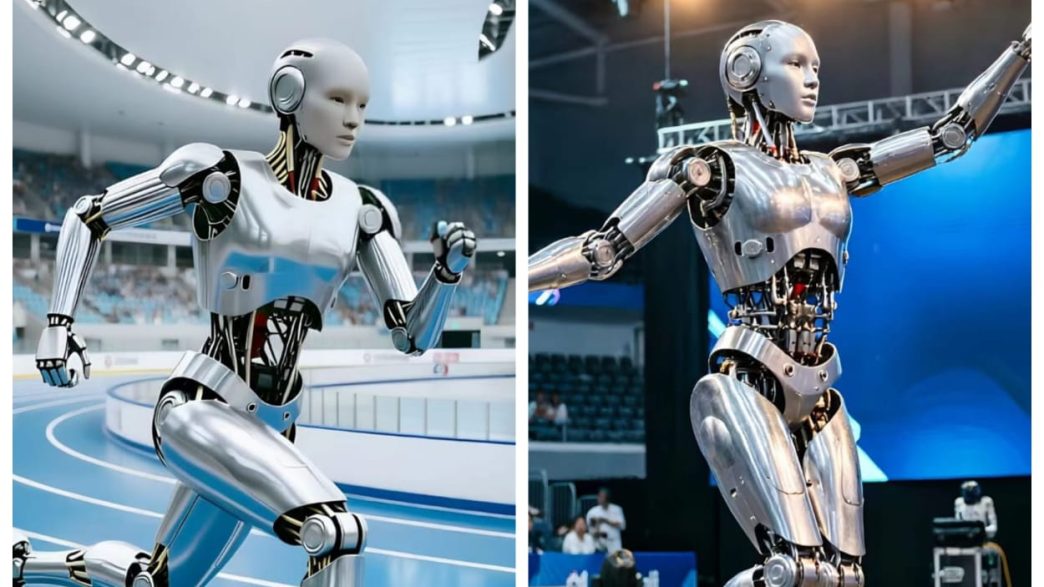
A robot has just done something that sounds almost impossible, it ran 100 metres faster than Usain Bolt.
At the World Humanoid Robot Games in Beijing, China, on August 22, a Chinese humanoid robot called Tiangong Ultra completed the distance in 9.39 seconds, faster than Bolt’s 9.58-second human world record set in 2009.
But there is a catch. 
Tiangong Ultra stumbled after crossing the finish line, while another robot that also posted a faster-than-Bolt time collapsed and had to be carried away on a stretcher. That contrast may be the most interesting thing about the Games.
The robots are becoming remarkably capable, but they are also showing just how far they still have to go. And that is why the world is watching.
What Are The World Humanoid Robot Games?
The second World Humanoid Robot Games opened in Beijing on August 22 and will run until August 26. This year’s event features 2,056 humanoid robots from 666 teams across 16 countries and regions, competing in 51 events.
The competitions include running, football, table tennis, weightlifting, tug-of-war and other challenges designed to test what humanoid machines can actually do. The scale is a major jump from the 2025 inaugural Games.
But the event is not simply a strange version of the Olympics. It is also a technology showcase.
For the companies and researchers developing these machines, every race, kick, jump or fall provides an opportunity to test how well robots can sense their surroundings, maintain balance, make decisions and perform physical tasks.
In other words, the Games are offering the public a glimpse of what happens when artificial intelligence gets a body.
READ ALSO: Is Pope Leo’s AI Warning An Indictment of Technology?
Why Are The Robots Attracting So Much Attention?
The 100-metre sprint is an obvious reason. But the robots have already produced another remarkable result. On August 23, Tiangong completed the 400-metre large-group race in 38.15 seconds, faster than the human 400-metre world record of 43.03 seconds.
That result comes with the same important qualification, robot and human athletic performances are not directly comparable because they compete under different conditions and rules. Still, the figures illustrate how quickly humanoid machines are improving in physical performance.
Tiangong Ultra’s 9.39-second run immediately produced headlines because it was faster than the fastest time ever officially recorded by a human.
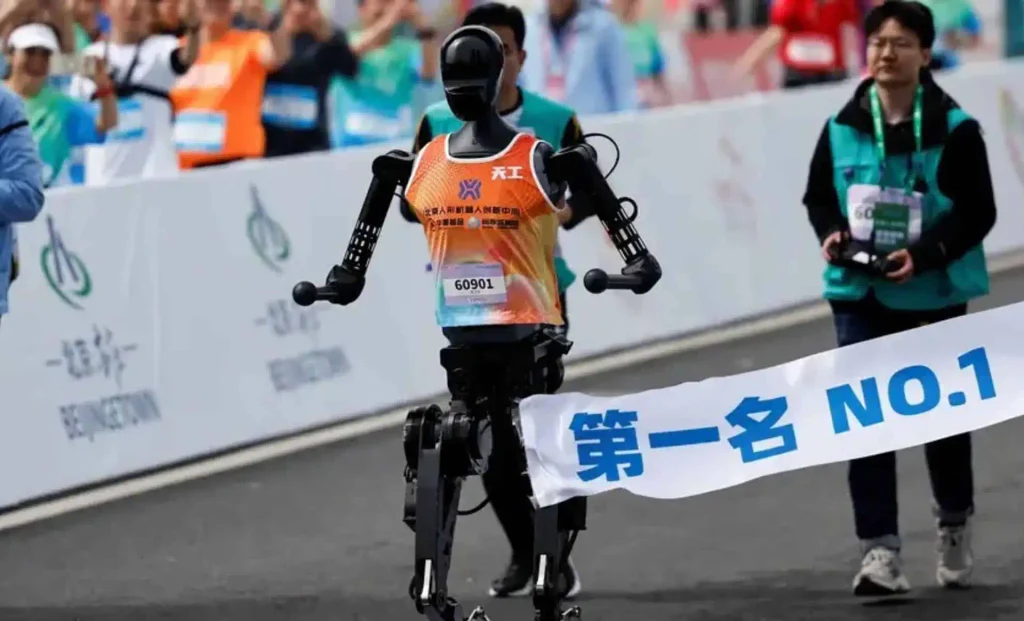
But speed alone does not make a robot useful.
A machine that can run extremely fast but cannot safely stop, navigate a crowded environment or perform a practical task is still a long way from replacing a human worker. And that is becoming an important part of the Games. Today’s challenges are testing robots on practical tasks, including connecting cables, charging electric vehicles and performing service and factory-related work.
That is why some of the most revealing moments at the Games may not be the spectacular ones.
Robots have been seen falling, crashing into barriers and struggling with coordination. During the football events, some machines have also demonstrated how difficult it remains for robots to understand and react to a rapidly changing environment.
The failures are important because they show the difference between a controlled demonstration and real-world intelligence.
Why China Is Putting Robots On The World Stage
China’s role in the Games is difficult to ignore.
The country has become one of the world’s biggest forces in robotics manufacturing and is now pushing aggressively into humanoid robots.
The Games are being held alongside the 2026 World Robot Conference in Beijing, where around 3,000 robotic products are being showcased.
For China, therefore, the spectacle is about more than entertainment. It is also an opportunity to demonstrate the country’s growing technological capabilities and its ambitions for the humanoid robotics industry.
Reuters has described China’s robot competitions as evolving from relatively modest science and technology events into major showcases of the country’s robotics ambitions. The sheer numbers at the 2026 Games tell part of the story.
Most of the participating teams are Chinese, reflecting the size of the country’s robotics ecosystem. China is also looking beyond competitions. Its companies are working to develop robots that can eventually be used in manufacturing, logistics and consumer applications.
READ ALSO: Investors at UBA Business Series Identify Africa’s Next Billion-Dollar Opportunities
This Is Bigger Than Robots
The most important word surrounding the Games may not actually be “robot.” It is AI.
For years, much of the public conversation about artificial intelligence has focused on chatbots that can write, generate images, analyse information or answer questions.
Humanoid robots represent another stage. They bring AI into the physical world. This is sometimes called embodied AI.
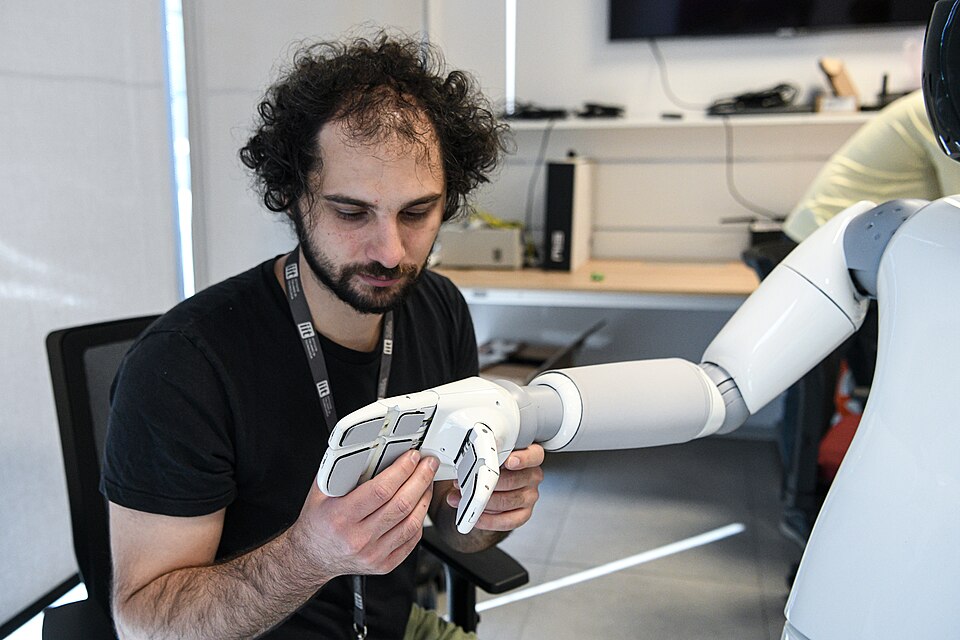
Instead of simply responding to a text prompt, an embodied AI system has to understand its surroundings, process information and decide what physical action to take.
A robot working in a warehouse, for example, would need to identify an object, determine how to pick it up, avoid obstacles and move it to the correct location.
That is considerably more complicated than generating a paragraph of text.
And it explains why humanoid robots have become such a major area of interest.
What Could Humanoid Robots Eventually Do?
The possibilities are enormous.
Humanoid robots could eventually be used in factories, warehouses and dangerous industrial environments. They could potentially assist with repetitive tasks, logistics, cleaning and some forms of care.
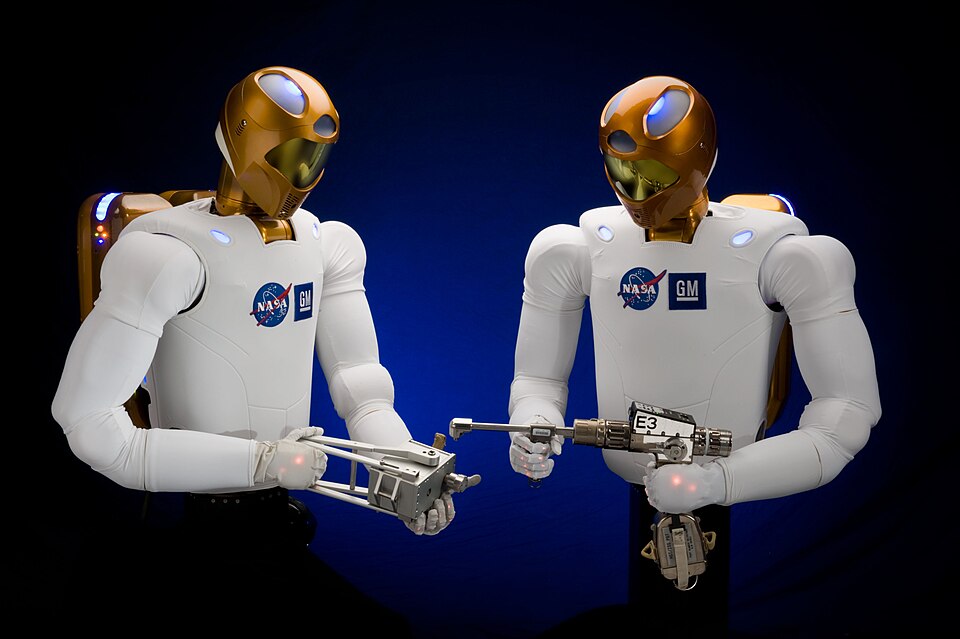
But the word “eventually” matters.
Today’s robots are impressive, but they are not yet the fully independent machines portrayed in science-fiction films. The spectacular sprint in Beijing does not mean a robot is ready to walk into an office, understand every instruction from a human and perform an entire job without supervision.
Researchers and companies still have to solve major problems involving reliability, safety, energy use, cost, dexterity and decision-making.
The challenge now is moving from “Can a robot do this once?” to “Can it do this safely and reliably every day?”
That is a much harder test.
What Does This Mean For The Future Of Technology?
The Beijing Games offer a glimpse into a possible new phase of the AI revolution. More than a sporting spectacle, they are becoming a test of whether humanoid robots can move from impressive demonstrations to useful, autonomous machines in the real world.
The first wave of generative AI put artificial intelligence inside our computers and phones. Humanoid robots could take the technology into the physical world. That could transform industries in ways that are difficult to predict. It could also create new questions about employment.
If robots eventually become capable of performing certain repetitive or physically demanding jobs, some workers may face disruption. At the same time, new jobs will emerge around designing, programming, maintaining, training and supervising these machines.
For countries such as Nigeria, the conversation should not simply be about whether robots will take jobs. It should also be about whether young Africans will be prepared to build, operate and manage the technologies creating those jobs.
The Race Has Only Just Begun
The image of a humanoid robot beating Usain Bolt’s time is spectacular. But perhaps the more important race is happening outside the stadium.
China, the United States, Japan, Europe and other technology powers are competing to determine who will develop the most capable, affordable and commercially useful humanoid robots.
The Beijing Games provide an entertaining way of watching that race unfold. The robots may fall. They may crash. They may still need humans to rescue them from the track.
But every stumble also provides data. And every improvement brings the technology a little closer to a world in which artificial intelligence is no longer confined to a screen.
The question may no longer be whether AI will enter the physical world. It may simply be how soon — and who will be ready when it does.
READ ALSO: Office Vlogs and TikTok Fame: Why Young Nigerian Professionals Are Risking Their Careers.

About The Author